CNC Machining of Aerospace Structural Parts: Frames, Brackets, Ribs, Beams
Last updated: October 7, 2026
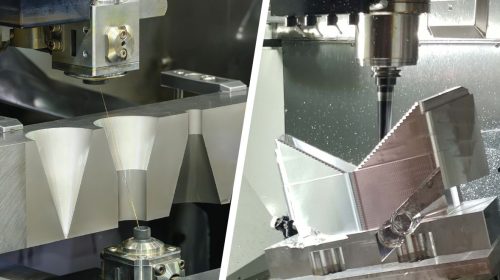
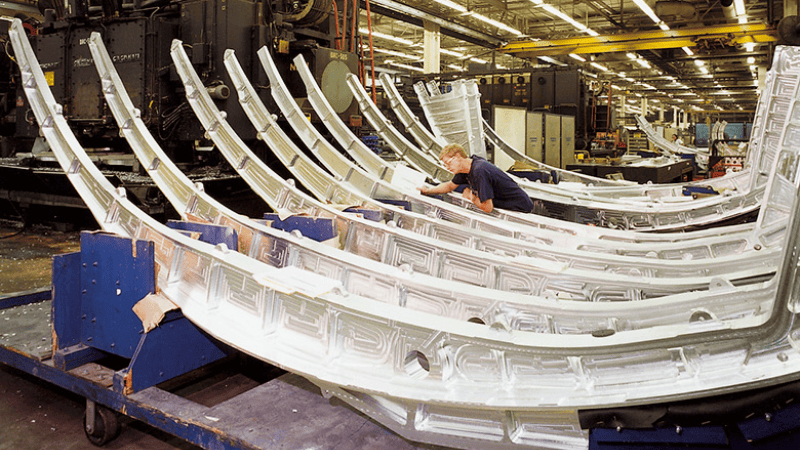
An airframe is a load path. Skin, frames, stringers, ribs and spars share flight and ground loads, while fittings and brackets tie systems, interiors and equipment into that structure. For decades many of these parts were built up from sheet, angles and rivets. Today a large share is machined from a single plate or forging: one monolithic part replaces an assembly, with fewer fasteners, fewer joints to inspect and tighter tolerances. From a manufacturing point of view, three questions decide the result: which parts are machined, from which alloys, and how distortion, thin walls and inspection are handled. For production parts, see the aircraft structural components we machine.
What are the five main structural components of an airplane?
The FAA’s Pilot’s Handbook of Aeronautical Knowledge (chapter 3) groups the airplane into five major components:
- Fuselage: carries crew, passengers and cargo, and joins every other component. Most modern aircraft use semi-monocoque construction, where skin, frames and stringers share the load.
- Wings: generate lift, which travels through skin and ribs into the spars, then into the fuselage at the wing attach fittings.
- Empennage: the tail, with horizontal and vertical stabilizers, elevators and rudder; its hinge fittings must hold alignment along the hinge line.
- Landing gear: absorbs touchdown, taxi and braking loads and passes them into the airframe.
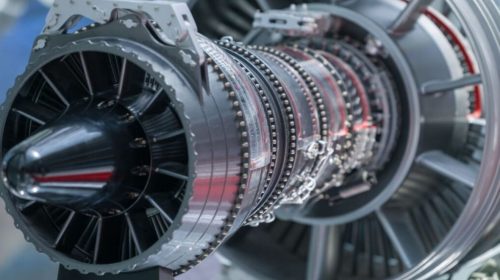
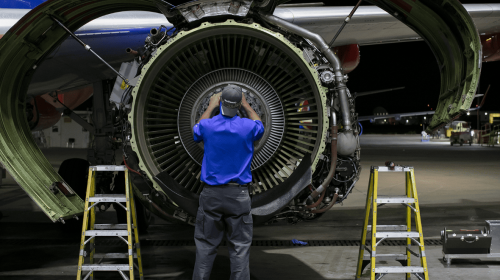
- Powerplant: the engine, its mount and the nacelle; the mount is structural because it transfers thrust into the airframe.
Within these components, engineers separate primary structure, whose failure would endanger the aircraft (spars, frames, main attach fittings), from secondary structure (fairings, many brackets and panels) and, on some programs, tertiary parts such as interior brackets that carry little load.
Structural parts that are CNC machined
Frames and bulkheads
Frames are the ring-shaped members that keep the fuselage in shape; bulkheads close it off or carry pressure. Machined frames are typically 7050-T7451 or 7075-T7351 plate. The challenge is size against stiffness: a long, thin, pocketed part moves as material comes off, and its hole pattern must line up with the skin and stringers at assembly.
Ribs
Ribs give the wing its airfoil shape and carry loads from the skin to the spars. Machined ribs are pocketed to save weight, with thin webs and flanges. Holding web thickness and flange perpendicularity without chatter is the main machining task.
Spars and beams
Spars run along the wing and carry bending loads; floor beams and keel beams do similar work in the fuselage. They are long parts, often several meters, machined from thick plate or extrusions. Straightness after machining and the position of attachment holes along the length drive the process plan.
Stringers and longerons
Stringers and longerons run lengthwise and stiffen the skin. They are usually extruded, then machined locally at joints, cutouts and run-outs, where a pocket or a tapered end is milled into an otherwise standard section.
Fittings
Attach and hinge fittings carry concentrated loads through lugs, clevises and bushing bores. They are compact but highly loaded, so they often move to titanium Ti-6Al-4V or 15-5PH stainless steel. Bore size, position and perpendicularity to the bearing faces are the critical features.
Brackets
Brackets attach equipment, harnesses, ducts and interior parts to the structure. They are the most numerous machined structural part on an aircraft, and the most varied in shape. Bracket families, materials and drawing requirements: aerospace brackets we machine.
Need structural parts machined to print? AeroCNCParts machines brackets, fittings, mount blocks and reinforcements to your drawing, from first article to repeat batches. Send your drawing.
Types of aircraft brackets
| Type | Function |
|---|---|
| Angle / L and clip | Join two members at an angle; clips tie frames to stringers |
| Channel / U | Cradle a part or span between two faces |
| Z and offset | Bridge two parallel faces at different heights |
| Mounting / equipment | Carry avionics boxes, sensors, racks |
| Harness and cable routing | Hold wiring and lines at a set distance from structure |
| Interior | Armrest, overhead bin and partition attachments |
The same bracket can be made three ways:
| Method | Best for | Limits |
|---|---|---|
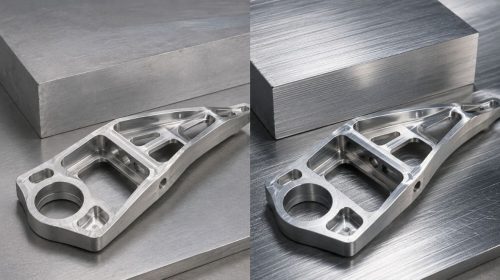
| Machined from plate | Loaded brackets, integrated features, tight hole patterns | More material removed per part |
| Formed sheet metal | Simple, thin, lightly loaded brackets | Bend tolerances; few integrated features |
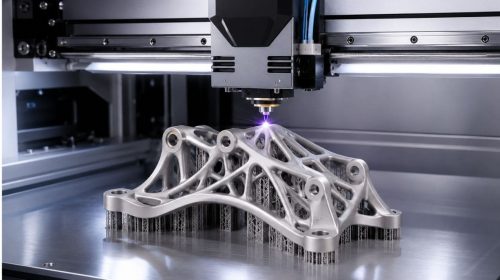
| Additive manufacturing | Topology-optimized shapes | Process qualification; interfaces still need machining |
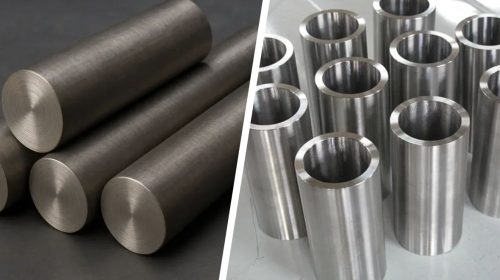
Materials for machined structure
| Alloy | Where it is used | Why |
|---|---|---|
| 7050-T7451 plate | Thick frames, ribs, fittings | Keeps toughness and stress-corrosion cracking (SCC) resistance through thick sections |
| 7075-T7351 plate | Frames, brackets, fittings | Stress-relieved and overaged: less distortion and better SCC resistance than T6 |
| 2024-T351 | Tension-loaded parts | Fatigue and damage tolerance |
| Ti-6Al-4V (AMS 4911) | Highly loaded fittings, parts next to carbon fiber | Strength for its weight; galvanic compatibility with CFRP |
| 15-5PH (AMS 5659) | Pins, lugs, high-load fittings | Strength with corrosion resistance |
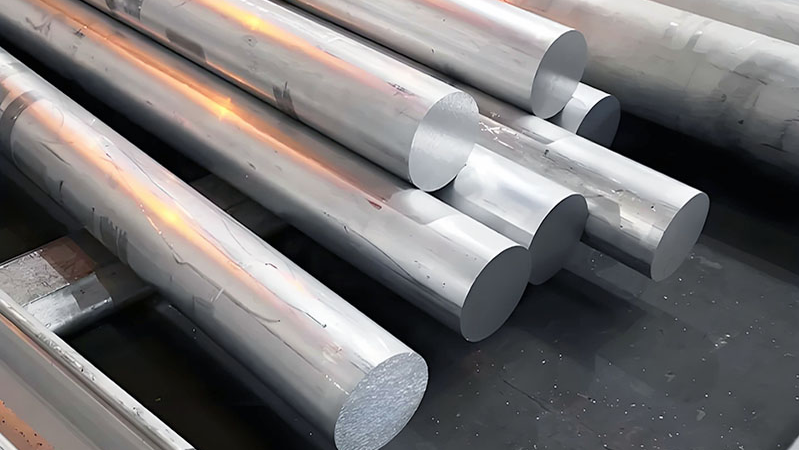
Stress-relieved tempers matter most on thick, hogged-out parts. A T6 plate carries quench stresses that are released unevenly as pockets are cut, so the part bows or twists. The T7351 and T7451 tempers are stretched after quenching to relieve those stresses, and overaged for SCC resistance, at a small cost in peak strength. For grade selection, see 7075-T6 vs 2024-T3; for cutting practice, how to machine aerospace aluminum alloys.
Titanium Ti-6Al-4V conducts heat poorly, so heat concentrates at the tool tip: tool wear and thermal distortion are controlled with coolant, cutting parameters and rigid fixturing. More on the alloy: titanium in aerospace. Aluminum-lithium alloys are an industry trend for lighter frames and skins.
Grade and application notes: aluminum aerospace parts and titanium aerospace parts.
Machining challenges and how they are handled
Buy-to-fly ratio
A machined frame or rib can remove up to about 90% of the starting plate. Toolpaths are planned for high material removal in roughing, then lighter, stable finishing passes.
Residual stress and distortion
Removing material releases the stress left in the plate. The usual answers: start from stress-relieved plate, rough both faces in balanced passes, flip the part, let it rest between roughing and finishing, then finish with light clamping so the part is not machined while sprung.
Thin walls, floors and chatter
Thin webs vibrate under the cutter. Support from the fixture, the order in which pockets are cut, tool length and cutting parameters keep walls to thickness and surfaces free of chatter marks.
Undercuts and angled flanges
5-axis machining reaches undercuts, joggles and angled flanges in one setup, so features share one datum scheme instead of being stacked across several fixtures.
Large parts
Long spars, beams and frames need machine travel, fixturing and thermal stability over their full length; see large-part machining.
Burrs, edge breaks and fastener holes
Edge breaks are drawing features and are machined, not left to hand finishing. Fastener holes are held to size, position and surface finish, because a poor hole wall shortens fatigue life at the joint.
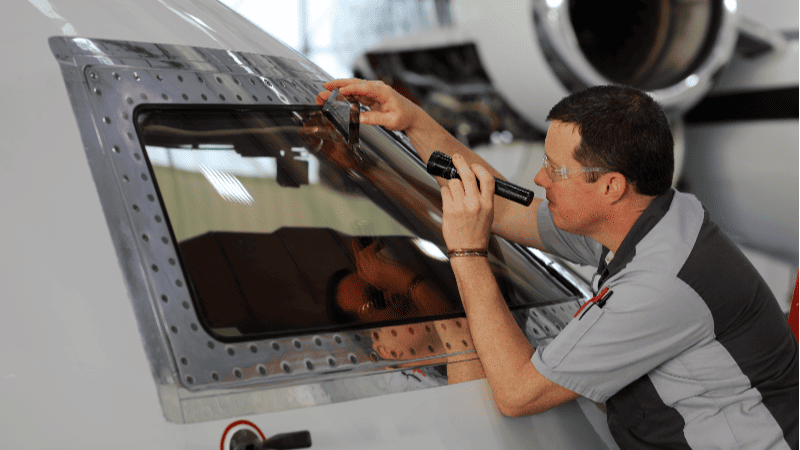
Inspection and documentation
- CMM for hole position, profile tolerances and datum relationships, read to ASME Y14.5.
- Flatness and straightness on mating faces and long members.
- First article inspection documented in an AS9102-style report, with a ballooned drawing.
- Material traceability: mill certificates, heat and lot records carried to the finished part.
- Eddy-current checks where the drawing or the customer’s process requires them.
Other methods: inspection methods for aerospace parts.
Finishing structural parts
- Chem film (MIL-DTL-5541): corrosion protection that keeps aluminum conductive, often under primer.
- Anodizing (MIL-A-8625): Type II for corrosion protection, Type III for wear faces.
- Primer: applied per the drawing, or by the customer.
- Shot peening (AMS 2430): on fatigue-sensitive parts where the drawing requires it.
Other finish callouts: surface finishing requirements for aerospace-grade components.
Request a quote for structural parts
Upload your drawing and 3D model. Tell us the material spec, finish, quantity and required documentation (material certs, FAI, CoC). NDA available on request.
FAQ
What are the five main structural components of an airplane?
The fuselage, wings, empennage, landing gear and powerplant, as grouped in the FAA’s Pilot’s Handbook of Aeronautical Knowledge.
Why are aircraft structural parts machined from solid plate?
A monolithic machined part replaces a riveted assembly. It cuts part count and fasteners and holds tighter tolerances.
What causes distortion in machined aluminum structural parts?
Residual stress in the plate, released as material is removed. Stress-relieved plate and balanced machining sequences reduce it.

Kim
Kim oversees engineering operations, including complex process planning, DFM reviews, and solving challenges associated with high-precision aerospace parts. He specializes in strict tolerance control and machining complex geometries essential for avionics, turbine components, and structural frames. Outside of work, he enjoys the precision and strategy of playing snooker.