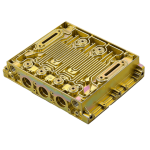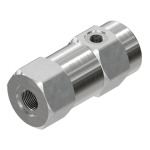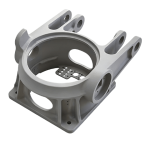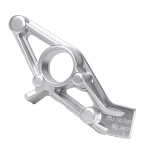
Shot Peening Service for Aerospace Parts

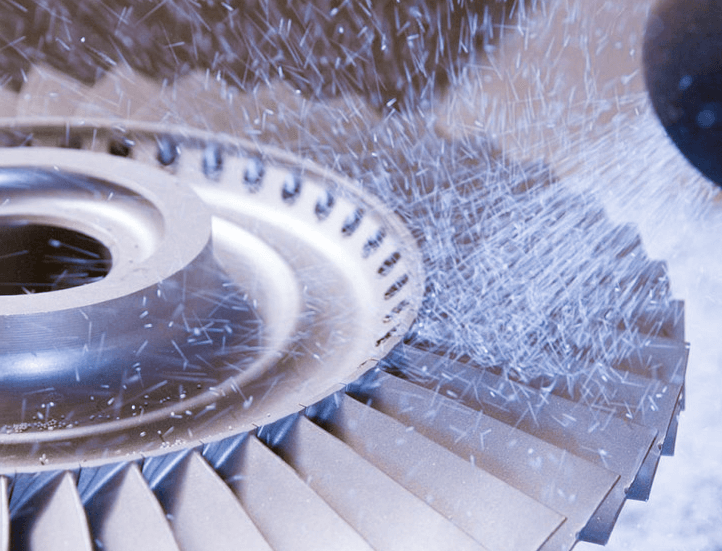
Shot peening strengthens aircraft components by creating compressive forces on the surface. It enhances metal fatigue strength, reduces the risk of cracking, and extends operational life across structural and propulsion components.
What it is

Shot Peening Process for Reliable, Long-Life Aerospace Components

This precision technique projects small, rounded particles at high velocity onto the metal surface. Instead of cutting or removing material, it slightly reshapes the surface layer, introducing beneficial stress that enhances durability. We perform this controlled impact method with AS9100-compliant automation to ensure uniform coverage and consistent performance.

  • Dimensional Note:

    No measurable material removal occurs, maintaining each component’s precise geometry and tolerance.

Benefits

Why Choose Our Passivation

Enhanced Corrosion Resistance

Forms a protective layer on stainless steel, ensuring long-term resistance in harsh aerospace environments.

Improved Part Longevity

Extends parts’ lifespan by minimising corrosion and oxidation, reducing maintenance and replacement frequency.

High Precision Compatibility

Passivation doesn’t alter dimensional tolerances, maintaining the ±0.005mm precision required for aerospace parts.

Optimised for Critical Applications

Essential for mission-critical components like connectors and housing that are exposed to corrosive conditions.

Improved Surface Finish

Enhances adhesion for coatings like alodine, ensuring superior finishing and consistent performance

Supports Full Traceability

Integrated with Lot control, FAI, and CMM reporting to ensure complete documentation and quality assurance.

Technical Specs

Shot Peening Service Specs

Peening Strength

Adjusted between 0.004 and 0.024 A-inch for targeted compression

Coverage Rate

98–100% surface exposure for complete strengthening.

Shot Type

Maintained between Ra 0.3–2.0 µm for coating readiness.

Dimensional Impact

None; process only alters internal stress states.

Standards

Verified through MIL-S-13165 and aerospace testing protocols.

Case

Key Aerospace Use Cases

  • Landing Gear Struts

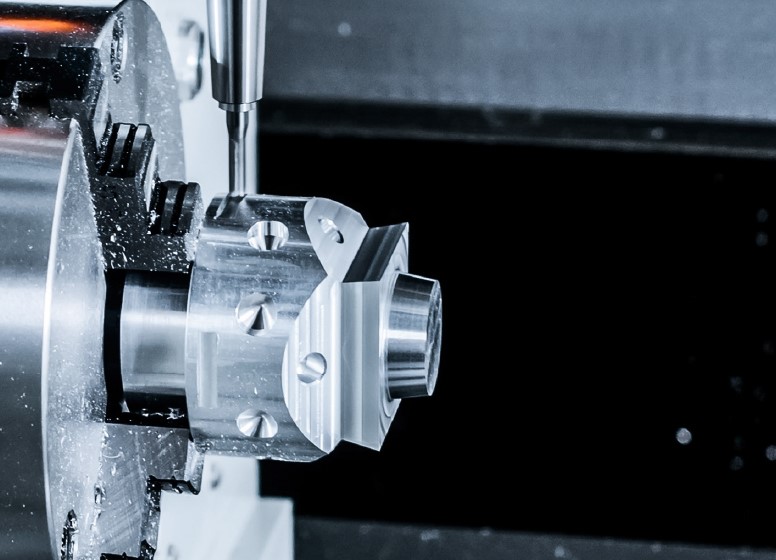
    Heavy-duty turning enhancing fatigue life under high impact loads.

    Steel 300M, 4340
  • Turbine Engine Disks

    Precision turning ensuring resistance to high-cycle rotational fatigue failure.

    Inconel 718, Titanium 6Al-4V
  • Structural Wing Spars

    Deep pocket milling preventing stress corrosion cracking and fatigue.

    Deep pocket milling preventing stress corrosion cracking and fatigue.
Case

Compare Before and After Shot Peening

Before
After
Quality & Compliance

Quality Assurance and Process Traceability

  • AS9102 FAI compliant for AMS 2430 standards with precise control of compressive stress layers.
  • Certified test reports for Almen Intensity (Arc Height), Saturation Curves, & Visual Coverage (%).
  • 100% traceability via Lot ID, Media Sieve Analysis, & Real-time Nozzle Pressure/Velocity Logging.
AS9100D

Aerospace-aligned quality system

ISO 9001

Documented and auditable processes

Applications

Typical Applications for Aerospace Shot Peening

Landing Gear Supports

Reinforces impact resistance for repeated landings.

Landing Gear Structures

Compressor Blades and Rotors

Improves resistance to thermal cycling and vibration.

Engine Rotating Parts

Transmission Shafts

Prevents torsional fatigue under continuous load.

Power Transmission Shafts

Fasteners and Bolting Systems

Reduces the risk of microscopic surface cracking.

Aerospace Fasteners
Compare Finishes

Choosing the Right Shot Peening for Your Parts

Type Purpose Media Hardness Surface Effect Common Use
Conventional Peening Strengthens surfaces through controlled impact. High Matte texture Structural hardware.
Glass Bead Peening Cleans and refines surfaces with minimal roughness. Medium Soft Sheen Aluminum housings.
Ceramic Bead Peening Adds high-intensity stress with a refined finish. High Smooth appearance Jet Engine Parts
Laser Peening Produces deeper compressive layers via pulse energy. Low Polished Look Heavy-load components.
FAQ

Shot Peening FAQs

Common Questions on Shot Peening for Precision Parts

Which materials respond best to shot peening?
Aluminum, titanium, stainless steel, and nickel alloys exhibit substantial improvements in fatigue strength.
Does this process change the shape or dimensions of the part?
No. Shot peening affects only subsurface stress conditions, keeping geometry unchanged.
Can peened parts receive coatings afterward?
Yes. The finish remains ideal for later treatments such as anodizing, painting, or plating.
How do you control consistency?
Automated systems track pressure, velocity, and coverage, supported by Almen strip verification and complete documentation.
Why is your company trusted by aerospace clients?
Because we deliver traceable, certified surface enhancement using calibrated systems that meet the toughest aerospace validation requirements.