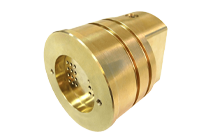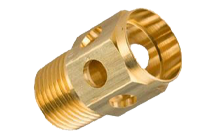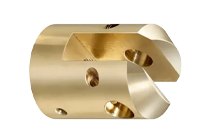
High-Quality Brass for Aerospace Components

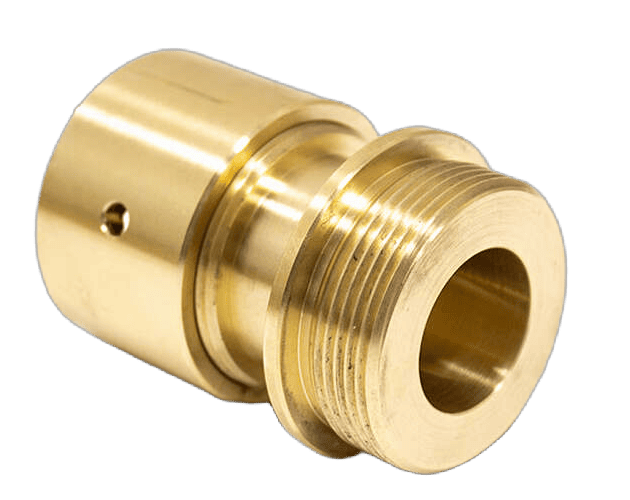
Brass is a relatively malleable alloy with excellent corrosion resistance and thermal and electrical conductivity. It can be easily machined to form intricate structures, maintains high accuracy and milling precision, and supports a variety of surface treatments.
Request Technical Review
What it is

AeroCNCParts’s Capabilities in Machining Brass for Aerospace

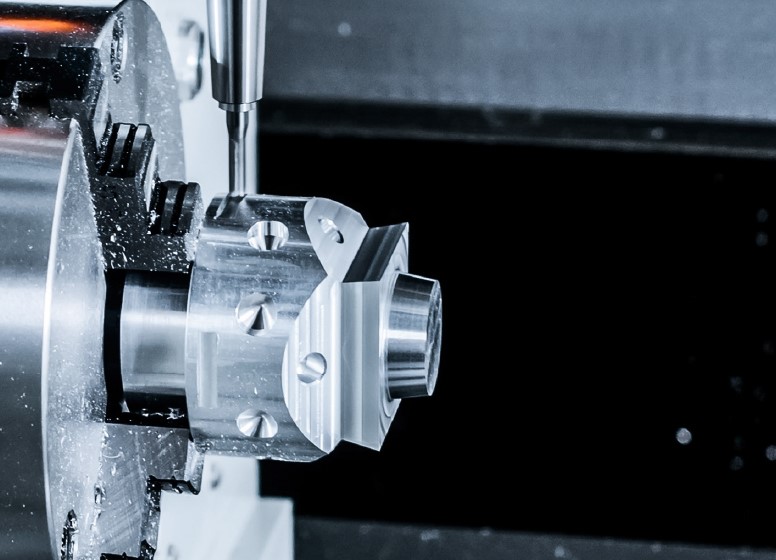
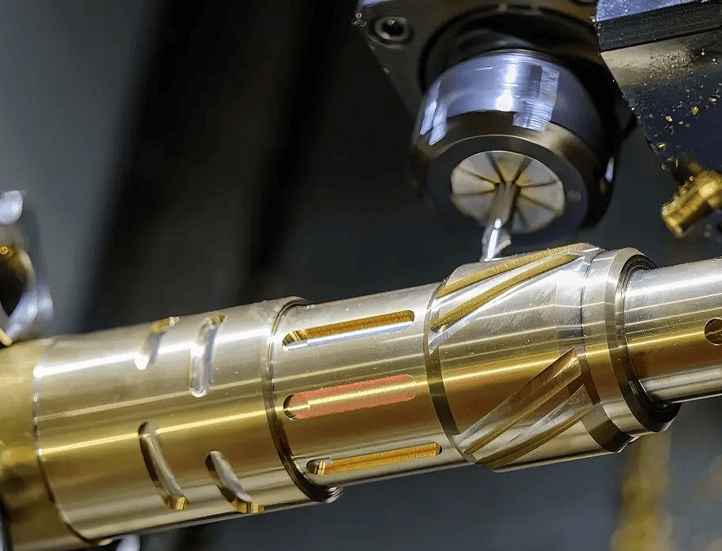
AeroCNCParts produces AS9100D-certified brass components with ±0.005 mm accuracy using advanced 5-axis CNC centers. Every batch undergoes strict CMM inspection, FAI validation, and full lot traceability, ensuring consistent, flight-ready performance.

  • Multi-axis CNC milling for intricate brass designs
  • Full FAI and traceable documentation per batch
  • Surface enhancement with passivation, polishing, or plating
  • ISO 9001 and ITAR-compliant processes
At a Glance

Brass Key Properties

Density

8.4 – 8.7 g/cm³

Ultimate Tensile Strength

320 – 550 Mpa

Yield Strength

200 – 400 Mpa

Hardness

70 – 120 HB

Elastic Modulus

100 – 110 GPa

Machinability

Excellent

Weldability

Moderate

Corrosion Resistance

Very Good

Finishes

Typical Surface Treatments for Brass

Polishing

Smooths and shines the surface

  • Provides smooth, low-friction surfaces for precise fittings and connectors.

Passivation

Removes surface iron to improve corrosion resistance

  • Reduces surface impurities, enhancing corrosion and chemical resistance.

Plating

Adds a thin metal layer for protection or appearance

  • Reduces surface impurities, enhancing corrosion and chemical resistance.
Advantages

Brass Material Advantages

  • High Machinability

    Supports intricate CNC operations with consistent results and minimal tool wear.

  • Durability in Harsh Environments

    Resists corrosion and oxidation in humid, marine, and chemical-exposed applications.

  • Thermal and Electrical Performance

    Excellent conductor of heat and electricity, suitable for fluid, electrical, and thermal systems.

  • Low Friction Wear Resistance

    Reduces galling and ensures reliable performance in moving parts.

Comparison

H62 VS C360 & H59

High-level comparison of common aerospace brass alloys. Always align to your program spec.

Grade Strength Corrosion Resistance Fracture Toughness Machinability Note
H62 Moderate Very Good High Excellent Standard for fittings, connectors, and general hardware.
C360 High Good Good Excellent Free-machining brass for threaded components, hydraulic, and pneumatic parts.
H59 Moderate Very Good Moderate Very Good Decorative or structural alloy requiring moderate strength and corrosion resistance.
FAQ

Frequently Asked Questions

What precision tolerances can AeroCNCParts achieve on brass parts?
AeroCNCParts maintains ±0.005 mm accuracy through multi-axis CNC machining and thorough CMM inspection.
Which brass alloys are best suited for aerospace connectors and fittings?
H62 is ideal for standard strength parts, C360 for free-machining threaded components, and H59 for moderate-load structures.
Can AeroCNCParts provide surface treatments to improve wear and corrosion resistance?
Yes. AeroCNCParts offers polishing, passivation, and nickel or chrome plating tailored to aerospace requirements.
Are brass components suitable for hydraulic and high-pressure systems?
Yes. Properly selected alloys maintain strength, corrosion resistance, and dimensional stability under high pressure.
Does AeroCNCParts supply full documentation and traceability for aerospace brass parts?
Every batch comes with material certification, FAI, and complete lot traceability to meet aerospace supplier audits.