Electropolishing for Aerospace Parts
An ultra-clean, burr free electrochemical finishing process designed for aerospace components needing extreme smoothness, corrosion protection, and wear resistance.
An ultra-clean, burr free electrochemical finishing process designed for aerospace components needing extreme smoothness, corrosion protection, and wear resistance.
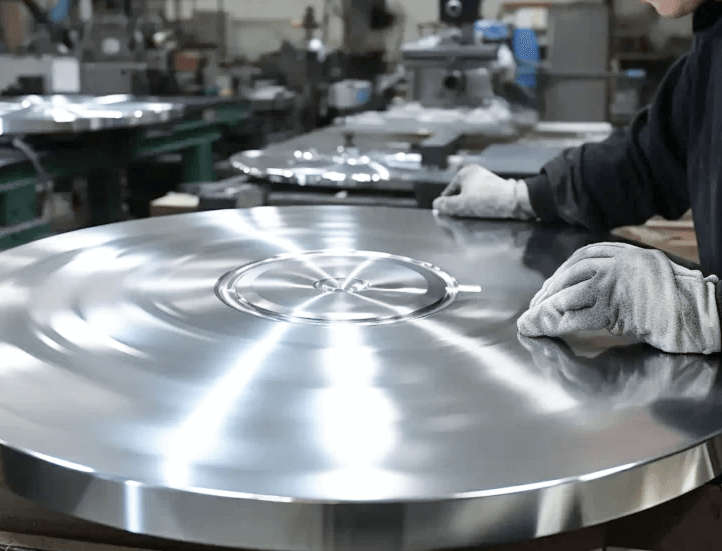
Electropolishing is a controlled electrochemical process that gently removes microscopic layers from metal surfaces. It enhances corrosion resistance, reduces surface roughness, and yields a clean, uniform finish on aerospace parts manufactured to AS9100 and NADCAP standards.
Material removal averages 0.0001–0.001 inches (2.5–25 µm), preserving tight tolerances and dimensional accuracy critical to flight hardware.

Creates a passive, protective surface layer that extends the service life of components in demanding environments.

Eliminates surface irregularities and enhances performance in load-bearing aerospace structures.

Delivers contaminant-free surfaces that meet stringent NADCAP cleanliness requirements.

Uniform metal removal supports tolerances as fine as ±0.005 mm.

Produces a high-gloss, reflective finish for visible or decorative aerospace parts.

Smooth surfaces resist oxidation at high operating temperatures.
Surface Roughness
Reduces Ra by up to 80%, giving aerospace parts a bright, smooth finish.
Tolerance Impact
Consistent removal enables ±0.005 mm dimensional accuracy.
Oxidation Resistance
Promotes a stable passive layer, boosting corrosion protection.
Material Removal Rate
Typically 0.1–5 microns per minute, adjusted to part geometry and current density.
Reflectivity
Creates a mirror-like surface that improves visual inspection.
Standards
Compliant with AS9100 and ISO9001, with FAI, and ITAR support.

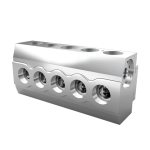
Polishing internal cross-holes to optimize fluid flow dynamics.
Stainless Steel 17-4 PH, 15-5 PH
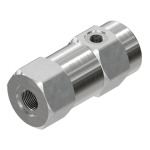
Precision turning requiring ultra-clean surfaces for contamination control.
Stainless Steel 316L, 304L
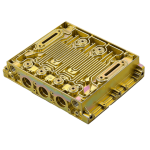
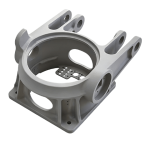
Complex 5-axis milling reducing surface roughness for efficiency.
Stainless Steel 17-4 PH
Aerospace-aligned quality system

Documented and auditable processes

Enhanced smoothness improves fuel flow and minimizes clogging in extreme aerospace conditions.
Ultra-Smooth Finish
Removes internal roughness, reducing turbulence and contamination in fluid passages.
Internal Polishing
Boosts corrosion protection and fatigue life in critical load-bearing parts.
High Fatigue Life
Provides a smooth, accurate surface that improves assembly reliability and electromagnetic performance.
High-Tolerance Fit| Polishing Type | Purpose | Thickness Control | Wear resistance | Surface roughness | Notes |
|---|---|---|---|---|---|
| Electropolishing | Electrochemically dissolves high points for a uniform surface. | High | Strong | Ultra smooth, mirror-like | Preferred for tight-tolerance aerospace components. |
| Chemical polishing | Uses a chemical reaction to smooth the surface. | Moderate | better | Smooth but less uniform | Cost-effective for simple shapes. |
| Mechanical polishing | Abrasively removes material for shaping. | Low | better | Smooth but may leave micro-scratches | Useful for initial finishing before precision polishing. |
Common Questions on Electropolishing for Precision Parts

Full material traceability, 100% inspection, AS9100-ready process