7075-T6 vs 2024-T3: Which Aluminum Grade Wins for Fatigue Resistance?
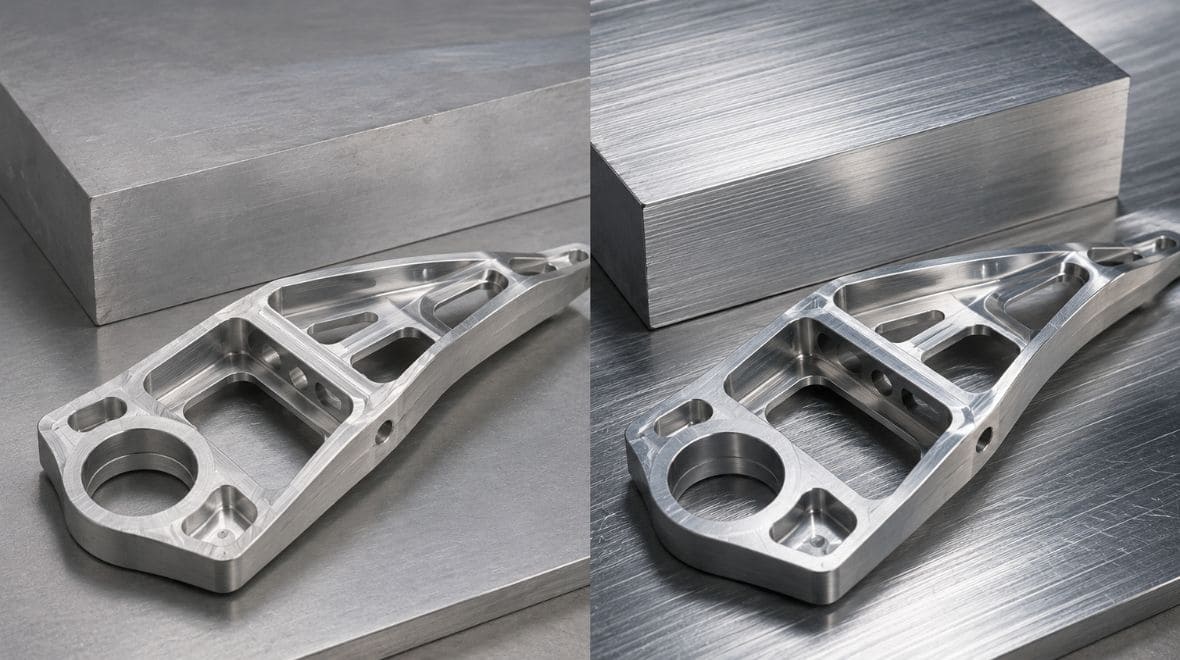
Two of the most widely used aluminum grades in aerospace are 7075-T6 and 2024-T3. While both are high-performance alloys, they offer varying properties and advantages that dictate their unique applications.
This post explains which wins for fatigue resistance between 7075-T6 vs 2024-T3.
What is Fatigue Resistance?
Fatigue resistance is the ability of a material to withstand consistent load cycles, vibration, and stress without cracking or deforming, and while still maintaining performance.
It is essential in aerospace applications since it ensures structures like wings, landing gear components, frames, brackets, etc. can survive continuous cycling without failing.
What is 7075-T6?
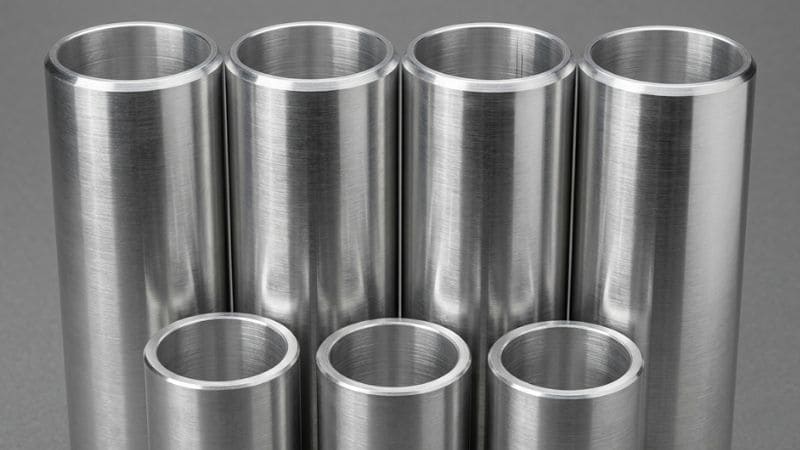
7075-T6 is a high-aluminum grade consisting of zinc as the main alloy, together with other elements like magnesium and copper.
The T6 present indicates that the material has undergone some heat treatment processes and artificial aging to enhance its mechanical properties. While it is also lightweight, its strength is comparable to that of steel.
Performance Characteristics of 7075-T6
- It has excellent tensile strength and is very hard and resistant to wear.
- Due to its zinc and magnesium components, it is highly resistant to fatigue and, as such, valuable for aerospace load-bearing and stress components.
- It has low resistance to corrosion compared to 2024-T3. Processes like anodizing help improve that.
- It offers good machinability with CNC processes, allowing for tight-tolerance parts.
- It has a density of 2.81 g/cm³.
Aerospace Applications of Aluminum 7075-T6
Wing Spars: This part must withstand bending and consistent stress, and as such, aluminum grade 7075-T6 is used.
Landing Gear Parts: Gear components must resist consistent impact and load, so the high fatigue resistance of the alloy becomes valuable.
Aircraft Frames, Brackets, and Connectors: These parts require high-strength and fatigue-resistant material due to their load-bearing nature.
What is 2024-T3?
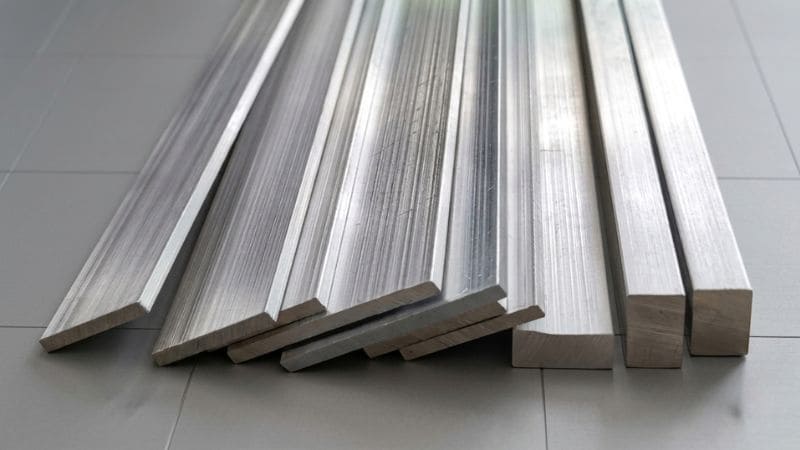
2024-T3 is another aluminum grade material with copper as its main alloy, together with other elements like magnesium.
The T3 in the material also shows that it has gone through heat treatment and natural aging. It is a valuable metal in aerospace because of its high strength and machinability.
Performance Characteristics of 2024-T3 Aerospace
- It offers good strength and fatigue resistance, although not as high as 7075-T6.
- Its machinability is excellent, which is why it can be used for complex geometry aerospace structures.
- 2024-T3 has good corrosion resistance and fracture toughness compared to 7075-T6.
- It has a density of 2.78g/cm³and its moderately thermally stable.
Applications of Aluminum 2024-T3
Internal Frames and Connectors: Due to the material’s low weight, strength, and machinability, it is used for internal frames and connectors.
Aircraft Fuselage Skin: 2024-T6 is also used for fuselage skin due to its fatigue resistance and machinability.
Rivets and Fasteners: Also used for riveted joints and fasteners because of their high strength and ability to withstand stress.
7075-T6 vs 2024-T3 Chemical Composition
Zinc Alloying Elements
In 7075-T6, zinc is the main alloying element with about 5.1 to 6.1%. This helps improve the material strength through precipitation hardening. 2024-T3 only contains a small amount of zinc.
Copper Content Differences
2024-T3 contains 3.8 to 4.9% copper, whereas 7075-T6 only contains a small amount. This copper content helps improve toughness, strength, and fatigue resistance.
Microstructural Phase Analysis
When viewed with a microscope, 7075-T6 has a fine precipitate pattern that prevents movement of atoms, whereas 2024-T3 allows movement in its microstructure, which helps it improve its fracture toughness and prevent cracking.
7075-T6 vs 2024-T3 Fracture Toughness
Crack Initiation Resistance
7075-T6 is very hard, which helps it prevent cracks in stressful applications. However, once the crack happens, parts become heavily affected. 2024-T3 resists cracks better.
Stress Intensity Factors
Stress intensity factors measure how long the material can tolerate or withstand cracks when exposed to consistent load and stress before it finally breaks down. 2024-T3 offers a better stress intensity factor.
Toughness Value Analysis
2024-T3 offers higher fracture toughness, which makes it the best durable option.
7075-T6 vs 2024-T3 Strength Comparison
Ultimate Tensile Strength
7075-T6 has a higher tensile strength of about 572 MPa, while 2024-T3 has about 483 MPa.
Yield Strength Metrics
Yield strength measures the point at which a material permanently breaks down. While 7075-T6 has a yield strength of 73,000psi, the other aluminum grade has 47,000psi.
Strength Weight Ratios
Both materials have a good strength-to-weight ratio. 7075-T6 has a density of 2.81 g/cm³, while the other grade has 2.78 g/cm³.
Static Load Limits
When a part requires higher strength but only needs to support static load without moving or bending, 7075-T6 is the best option. For example, a floor beam.
7075-T6 vs 2024-T3 Fatigue Strength
Cyclic Stress Resistance
While both aluminum grades can withstand cyclic stress, 2024-T3 offers better resistance because its molecular nature can survive crack growth.
Fatigue Resistance Limit
2024-T3 has been tested to survive fatigue resistance limits up to 20,000psi. 7075-T6 might not reach the same limit before it starts to deform.
Fatigue Life Cycles
Also, 2024-T3 offers a better fatigue life cycle. When operated consistently under stress for a good number of years, it can still maintain performance compared to 7075-T6.
7075-T6 vs 2024-T3 Stress Corrosion
Environmental Risks
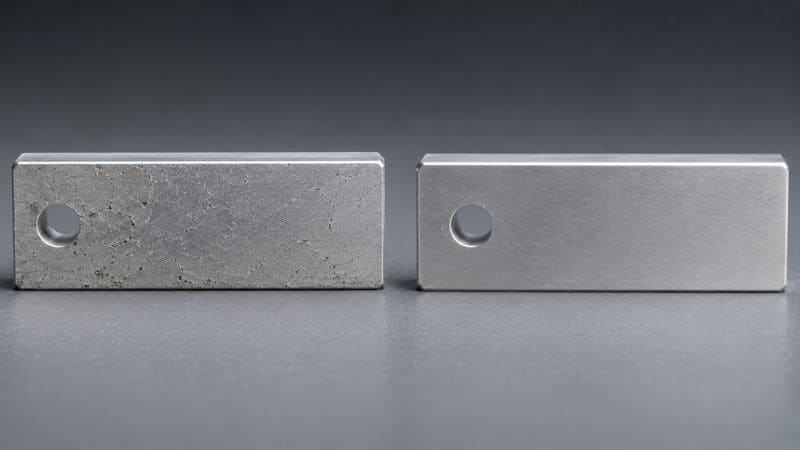
Both materials contain alloy materials like zinc and copper, which makes them more prone to corrosion. However, processes like anodizing help enhance their resistance.
Exfoliative Corrosion Damage
7075-T6 is also more susceptible to exfoliation corrosion, where the metal most outer parts crack and peel off, especially in humid conditions.
Stress Corrosion Cracking
7075-T6 is more prone to stress corrosion cracking. When consistently used in corrosive aerospace conditions, it will most likely fail before 2024-T3.
Comparison Table of 7075 T6 and 2024 T3 Properties
| Properties | 7075-T6 | 2024-T3 |
| Ultimate Tensile Strength | 540-590 MPa | 450-490 MPa |
| Fatigue Resistance | Good | Very Good |
| Hardness | High | Medium |
| Corrosion Resistance | Moderate | Moderate |
| Machinability | Excellent | Good |
| Primary Alloy | Zinc | Copper |
| Yield Strength | 470-520 MPa | 320-360 MPa |
| Fracture Toughness | Lower | Higher |
| Applications | Landing gear, wings, brackets, etc. | Rivets, connectors, aircraft frames |
7075-T6 vs 2024-T3: Which Aluminum Grade Wins for Fatigue Resistance?
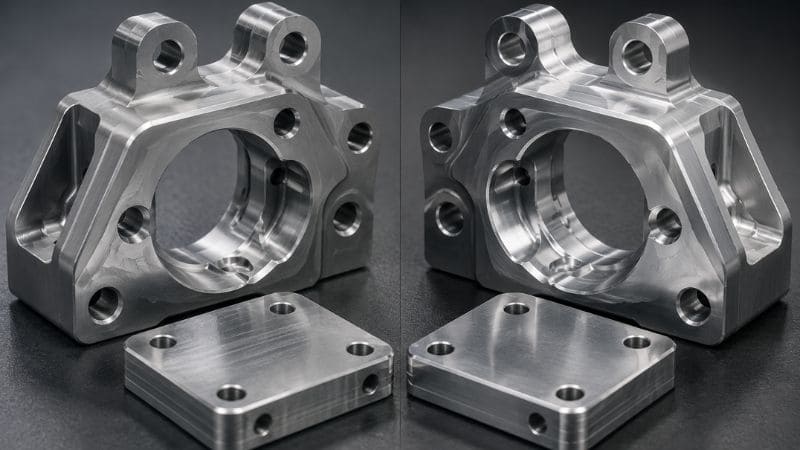
Selecting between 7075-T6 vs 2024 T3 depends on your specific applications and project requirements. While 7075-T6 offers high strength and hardness, which makes it suitable for high-load components, 2024-T3 offers better fracture toughness and fatigue resistance, which allows it to survive applications requiring consistent vibration, stress, and cycles without cracking or deforming.
Conclusion
Understanding the key difference between 7057-T6 vs 2024-T3 is key to choosing the right one. While 7075-T6 offers better strength and hardness, 2024-T3 has the best fatigue resistance and fracture toughness.
AeroCNCParts helps you ensure your parts meet AS9100 and ISO 9001 standards by utilizing advanced CNC machining facilities and high-grade certified material from aluminum alloys to titanium, PEEK, Inconel, and following full inspection. We offer FAI and PPAP support, worldwide delivery, and no MOQ policy. Contact Us Now.

Robert
Robert specializes in the mechanical properties and thermal resistance of aerospace metals and high-performance plastics. He has extensive experience with flight-grade materials, including Aluminum 7075, Titanium (Ti-6Al-4V), Inconel, and PEEK. He optimizes machining strategies for difficult-to-process materials to ensure structural integrity under extreme conditions.