Inconel 718 vs. Inconel 625: How to Choose the Right Superalloy for your Aerospace Application
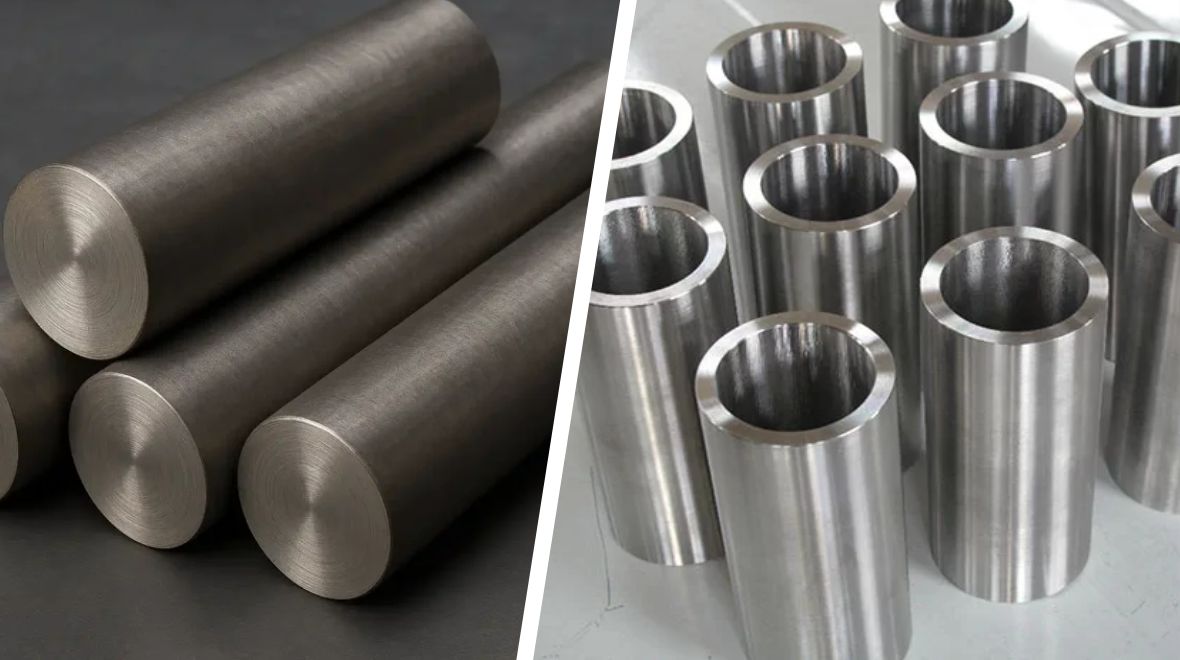
Inconel 718 vs Inconel 625 are two competing nickel-based superalloys. Both superalloys are constructed for high temperatures and high pressures, as well as having great corrosion resistance, but differ in their intended applications.
In this blog, we will look at Inconel 718 vs Inconel 625, their properties, and the key differences between them. These considerations are important when choosing a superalloy for aerospace engineering.
What is Inconel 718
Inconel 718 is a superalloy specifically manufactured to withstand heat and other environmental conditions that require a superior thermal resistance. Its ability to withstand extreme temperature, pressure, and cyclic load conditions makes it one of the most trusted materials in the aerospace sector. We rely on Inconel 718 to make high-performance aerospace components because it stays strong in conditions that would damage other materials.
Key Properties of Inconel 718
Good mechanical properties: The alloy can retain tensile strength of approximately 1240-1380 MPa (180-200 ksi) after proper heat treatment and remains structurally stable at temperatures up to 650°C
(1200°F).
Excellent Corrosion and Oxidation Resistance: It roughly contains 50-55% nickel, 17-21% chromium, and 4.75-5.5% niobium, which form a strong protective oxide layer. This composition allows it to resist oxidation up to about 980°C (1800°F) and perform well in environments exposed to salt spray, jet fuel, and combustion engines.
Exceptional Creep Resistance: Inconel 718 has a gamma double-prime precipitation-strengthening mechanism. It can maintain structural stability for long-duration exposure above 600°C.
High Fatigue Strength: Typical fatigue strength can exceed 600 MPa (87 ksi) depending on heat treatment and surface condition.
Dimensional Stability: Its low thermal expansion coefficient (~13 µm/m-°C) and strong metallurgical structure help components maintain dimensional accuracy.
Inconel 718 Chemical Composition Table
| Element | Range (%) |
| Nickel + Cobalt (Ni + Co) | 50.0 to 55.0 |
| Chromium (Cr) | 17.0 to 21.0 |
| Molybdenum (Mo) | 2.8 to 3.3 |
| Niobium + Tantalum (Nb + Ta) | 4.75 to 5.50 |
| Cobalt (Co) | Up to 1.0 |
| Aluminum (Al) | 0.20 to 0.80 |
| Titanium (Ti) | Between 0.65 and 1.15 |
| Carbon (C) | Up to 0.08 |
| Iron (Fe) | Balance |
| Manganese (Mn) | Up to 0.35 |
| Silicon (Si) | Up to 0.35 |
| Phosphorus (P) | Up to 0.015 |
| Sulfur (S) | Up to 0.015 |
| Copper (Cu) | Up to 0.30 |
What is Inconel 625?
Inconel 625, a nickel-based superalloy, is commonly used in aircraft engineering. It is used to build components that meet the criteria of aviation and space technology. It is found in engines, airframes, and other critical systems, enabling engineers to push the boundaries of aircraft and spacecraft design while maintaining performance and dependability.
Key Properties of Inconel 625
High Strength Across Temperatures: In the annealed condition, it typically offers tensile strength around 827-930 MPa (120-135 ksi) and yield strength around 414-517 MPa (60-75 ksi). The alloy retains structural stability in service environments approaching 980°C (1800°F).
Exceptional Corrosion Resistance: Inconel 625 contains roughly 58% nickel, 20-23% chromium, 8-10% molybdenum, and 3-4% niobium, which gives it outstanding resistance to pitting, crevice corrosion, and oxidation.
Good Creep and Fatigue Resistance: Although this alloy is not precipitation-hardened like Inconel 718, it still performs well under sustained loads and cyclic stress due to solid-solution strengthening from molybdenum and niobium.
Temperature Versatility: Maintains mechanical stability across a wide temperature range from cryogenic conditions to about 980°C (1800°F).
Weldability and Fabrication: Inconel 625 doesn’t need post-weld heat treatment. It resists weld cracking and maintains corrosion resistance after welding.
Inconel 625 Chemical Composition Table
| Element | Range (%) |
| Nickel (Ni) | Balance |
| Chromium (Cr) | 20.0 to 23.0 |
| Molybdenum (Mo) | 8.0 to 10.0 |
| Niobium + Tantalum (Nb + Ta) | 3.15 to 4.15 |
| Cobalt (Co) | Up to 1.0 |
| Aluminum (Al) | Up to 0.40 |
| Titanium (Ti) | Up to 0.40 |
| Carbon (C) | Up to 0.10 |
| Iron (Fe) | Up to 5.0 |
| Manganese (Mn) | Up to 0.50 |
| Silicon (Si) | Up to 0.50 |
| Phosphorus (P) | Up to 0.015 |
| Sulfur | – |
Inconel 718 vs Inconel 625: What are the Major Differences?
Weldability and Fabrication
Inconel 625 is relatively easy to weld, shape, and machine. It enables the production of highly complicated parts while keeping the same levels of performance.
Inconel 718 is the opposite, and it is extremely demanding. Inconel 718 needs cautious welding, and we frequently need to perform post-weld heat treatments at 720-260°C to help the item retain its strength.
Machinability
In our experience, Inconel 625 is the far easier material to machine; it feels predictable and tolerant, which is both a time and cost-saving exercise. Its machinability is roughly 40-50% of that of carbon steel.
Inconel 718 is more difficult to machine, requiring special tooling and more difficult machining. Its machinability is quite low, at roughly 25-30%.
Surface and Coating Requirements
Inconel 625 has very little, and often zero, need for additional surface treatments due to its superior corrosion and oxidation resistance.
In contrast, we often need to provide additional surface corrosion protection, sometimes with coatings such as electropolishing, passivation, PVD, or thermal spray coatings, when Inconel 718 components will go into a marine or other chemically aggressive environment.
Thermal Behavior
Inconel 718, with a thermal conductivity of ~11.4 W/m ·K, enables us to design better turbine blades by improving heat transfer.
On the other hand, Inconel 625 has a lower thermal conductivity of ~9,8 W/m ·K, which is better for parts that require thermal insulation, such as ducting, exhausts, and heat shields.
Weight Considerations
While both alloys are heavy, Inconel 718 has a higher density of ~8.19 g/cm³, which is a consideration for weight-sensitive components.
Therefore, Inconel 625 with a density of ~8.44 g/cm³ is better for components where a small weight advantage is critical.
Vibration and Fatigue Performance
In high-cycle vibration environments such as rotating turbine shafts, Inconel 718 is our preferred choice because it has better fatigue performance.
Although Inconel 625 is very strong, we often only use it for the components that are not subject to as much cyclical stress.
Formability
Due to their nickel content, both 718 and 625 are highly formable and permit stamping, cold forming, and shaping without loss of strength. 718 has resistance to post-weld cracking and strain aging, so high strength after forming is retained.
Both alloys are also capable of rolling into wires and forming into honeycombs, seal rings, bellows, springs, and high-performance fasteners for aerospace, oil and gas, and other demanding industries.
Cost and Availability
In comparing Inconel 718 vs Inconel 625, we find that Inconel 625 is often more accessible and economical to procure in sheets, plates, rods, and tubes.
Inconel 718 is very strong, but is often more expensive and more difficult to procure in the desired geometries.
Inconel 718 vs Inconel 625 Summary Table
| Characteristics | Inconel 718 | Inconel 625 |
| Strengthening Method | Precipitation hardened | Solid-solution strengthened |
| Typical Yield Strength | Very High | Moderate |
| Maximum Service Temperature | Moderate high-temperature range (Up to 700°C) | Higher temperature capability (Up to 980°C) |
| Corrosion Resistance | Excellent | Extremely High |
| Density | ~8.19 g/cm³ | ~8.44 g/cm³ |
| Elastic Modulus | High | Moderate |
| Ductility | Moderate | Higher, more forgiving during forming |
| Impact Resistance | Good | Very Good |
| Magnetic Properties | Slightly magnetic in some conditions | Generally non-magnetic |
| Dominant Alloying Additions | Niobium (Nb), Titanium (Ti), Aluminum (Al) | Niobium (Nb), Molybdenum (Mo) |
| Typical Aerospace Parts | Structural high-load components | Fluid and exhaust systems |
Aerospace Applications of Inconel 718
In aerospace engineering, Inconel 718 is often chosen for parts that experience high levels of stress and rotational forces.
Typical applications are:
- Turbine disks
- Compressor blades
- High-strength fasteners
- Jet engine shafts
- Structural engine parts
Aerospace Applications of Inconel 625
In aerospace systems where high temperatures and corrosion are a concern, Inconel 625 is often specified.
Typical applications are:
- Exhaust ducts
- Fuel manifolds
- Engine exhaust systems
- Heat shields
- Parts of environmental control systems
Inconel 718 vs Inconel 625: Choosing the Right Superalloy for your Aerospace Applications
Comparing Inconel 718 vs Inconel 625 allows us to optimize materials for their working environment. Inconel 718 is our preference for parts subjected to intense non-rotational and rotational stresses, as well as for certain fatigue situations, due to its superior strength and fatigue performance from precipitation hardening.
Inconel 625 is our preference for components with elevated operating temperatures, corrosive gas environments, or complex geometries, as solid-solution structures offer superior corrosion resistance and better formability.
The combination of both alloys provides the best strength, resistance, and versatility for the aerospace sector.
Conclusion
Choosing between Inconel 718 vs Inconel 625 depends on the needs of our aerospace components. We select the best alloy to ensure strength, reliability, and performance in every part. Understanding the properties of each superalloy allows us to make informed choices for even the most demanding applications.
At AeroCNCParts, we provide high-quality, precision aerospace components made from either alloy. Contact us today for trusted solutions that are suited to your specific projects.

Robert
Robert specializes in the mechanical properties and thermal resistance of aerospace metals and high-performance plastics. He has extensive experience with flight-grade materials, including Aluminum 7075, Titanium (Ti-6Al-4V), Inconel, and PEEK. He optimizes machining strategies for difficult-to-process materials to ensure structural integrity under extreme conditions.