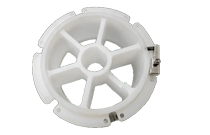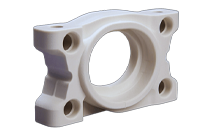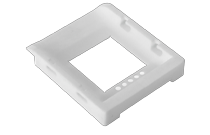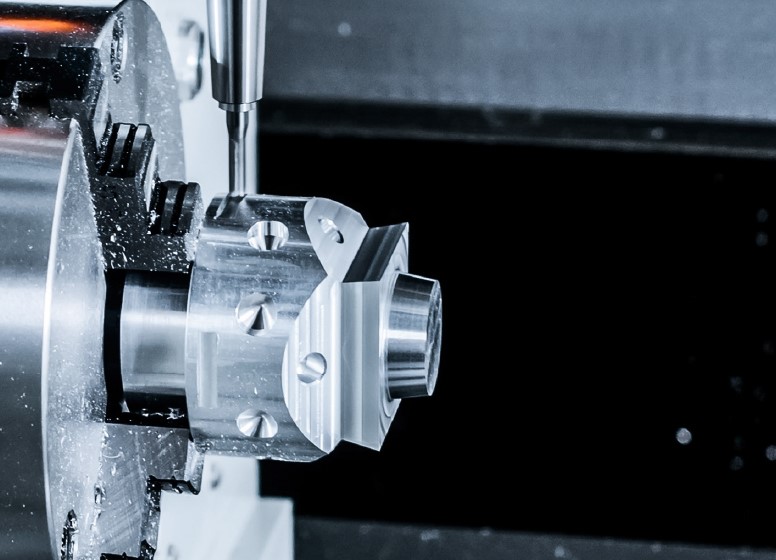
Advanced PTFE Material for Aerospace Parts

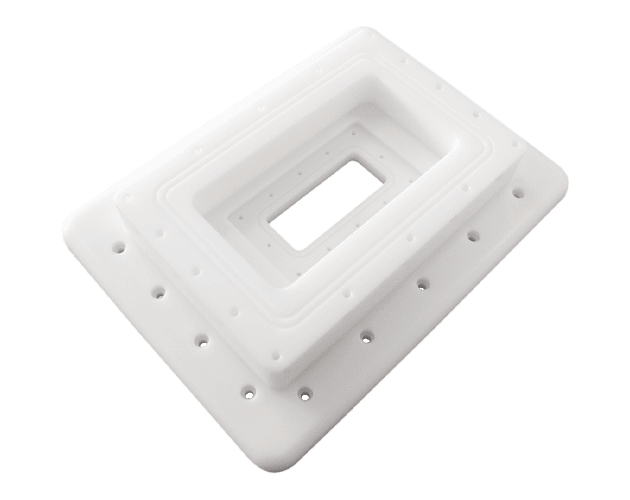
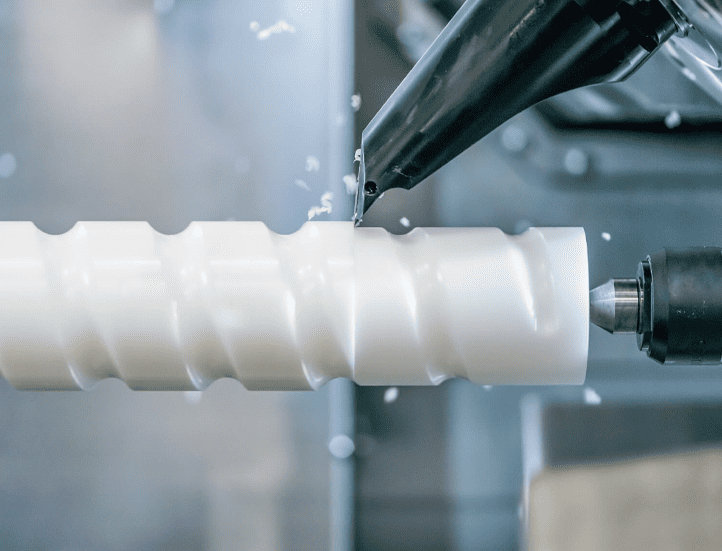
PTFE is known for its low friction coefficient, chemical inertness, exceptional dielectric strength, and stability across extreme temperatures. It machines effectively under regulated cooling methods and aligns with many treatment options.
Request Technical Review
What it is

AeroCNCParts’s Aerospace-Grade PTFE Machining Expertise

AeroCNCParts offers precise PTFE machining with tolerances of up to ±0.005 mm, backed by AS9100D and ISO 9001 certifications. Our NADCAP-compliant finishing and complete material traceability ensure reliable performance for high-integrity aerospace assemblies.

  • Complete batch documentation and traceability
  • Expertise in thin-wall PTFE structures
  • 100% inspection with CMM and 2.5D equipment
  • FAI support under ITAR registration
At a Glance

PTFE Key Properties

Density

2.1 – 2.3 g/cm³

Tensile Strength

20 – 35 Mpa

Elongation at Break

200 – 400 %

Hardness

50 – 60 Shore D

Elastic Modulus

0.5 – 0.8 Gpa

Dielectric Strength

60 – 100 kV/mm

Friction Coefficient

0.04 – 0.10

Corrosion Resistance

Excellent

Finishes

Common Surface Treatments for PTFE

Passivation

Cleans surface; boosts corrosion resistance.

  • Removes surface contaminants and enhances corrosion protection when PTFE is integrated with metal housings.

Alodine Coating

Adds a thin, corrosion-protective chromate layer.

  • Provides enhanced corrosion resistance and bonding compatibility when PTFE is used with metal inserts.

Polishing

Smooths and shines the surface.

  • Produces a smooth, low-friction surface ideal for dynamic seals and bearing applications.
Advantages

Advantages of Inconel

  • High Quality

    NADCAP compliant with full traceability ensures reliable aerospace performance.

  • Wide Thermal Range

    Maintains dimensional stability and lubricity from cryogenic to high-temperature operations.

  • AS9100 Certified

    Certified to AS9100D & ISO 9001, AeroCNCParts delivers precise PTFE machining to ±0.005 mm.

  • Low Friction Performance

    Minimizes wear and energy loss in moving assemblies such as valve seats and bearings.

Comparison

Virgin PTFE VS Glass-Filled & Carbon-Filled

High-level comparison of common aerospace PTFE. Always align to your project spec.

Type Mechanical strength Corrosion Resistance Wear Resistance Machinability Note
Virgin PTFE Moderate Excellent Low Excellent Best for electrical insulation and chemical barriers.
Glass-Filled PTFE High Very Good Good Good Enhanced dimensional stability and compressive strength.
Carbon-Filled PTFE High Excellent Excellent Moderate Superior wear resistance for dynamic and sliding applications.
FAQ

FAQs about PTFE Machining

Can AeroCNCParts machine PTFE with metal inserts for hybrid parts?
Yes. AeroCNCParts uses controlled plasma etching and press-fit techniques to ensure strong bonding between PTFE and metal substrates.
What is the maximum service temperature of PTFE components?
PTFE retains its performance up to +260 °C, making it suitable for thermal insulation and fluid sealing in engines.
Is PTFE suitable for use in oxygen or fuel systems?
Yes, its non-reactive nature makes it safe and stable in contact with oxidizers and aerospace fuels.
Can PTFE be used for load-bearing structures?
It’s ideal for low-load, high-friction applications; reinforced grades, such as carbon-filled PTFE, are better suited for moderate loads.
How fast is AeroCNCParts’s PTFE production turnaround?
Lead times typically range from 4 to 7 days, depending on the geometry and post-processing requirements.