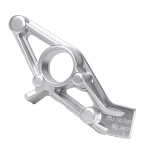
Ultrasonic Cleaning for Aerospace CNC Parts
Precise high-frequency sound wave cleaning technique. Capable of eliminating contaminants from intricate and complex aerospace components.
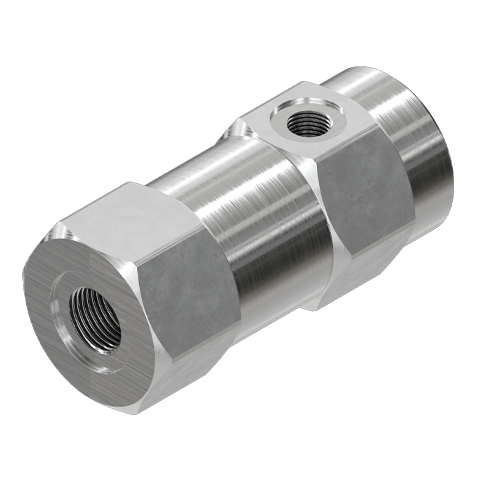
Precise high-frequency sound wave cleaning technique. Capable of eliminating contaminants from intricate and complex aerospace components.
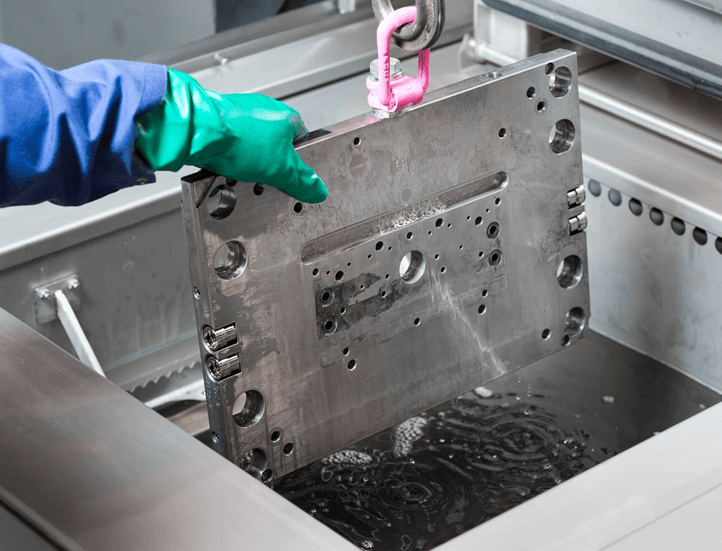
Ultrasonic cleaning uses high-frequency sound waves in a liquid medium to remove oil, debris, and other contaminants from aerospace parts, ensuring exceptional cleanliness, maintaining dimensional accuracy, and supporting AS9100-compliant traceability for mission-critical components.
Preserves tight tolerance, maintains part geometry with ±0.005mm. It ensures no material removal, enabling flawless fit, consistent assemblies, and accurate precision for aerospace parts.

Removes microscopic contaminants without altering geometry, preserving ±0.005 tolerance

Guarantees clean substrates for reliable bonding, coating, and plating applications

Reduces contamination-related failures, supporting mission-critical aerospace performance.

Cleans away contaminants that could trigger premature corrosion or failure

Faster repeatable cleaning compared to manual or chemical alternatives

Compatible with CMM, 2.5D, and microscopic inspection requirements.
Frequency
25 – 40 kHz for heavy-duty cleaning, 40kHz for general purpose, 80 – 130kHz for delicate parts.
Power density
Typical 10W/L or less, around 100W/gal depending on tank and part complexity
Cavitation Intensity
Bubble collapse strength needs to be optimized to remove contaminants without etching surfaces.
Cleaning Time
Often less than 10 minutes – efficient and thorough for most aerospace parts
Bath Temperature
Ideal cleaning at 40 to 60 degrees Celsius
Cleaning Chemistry
Use aqueous alkaline detergents ( pH 10 – 12.5) for metals, highly caustic (pH 14) for heavy degreasing.
Filtration system
Maintains fluid purity by continuously removing debris and particles from the cleaning bath
Standards
Cleaning is validated to AS9100, NADCAP, and aerospace cleanliness standards for reliability.

Micro-drilling of intricate orifices requiring total contaminant removal.
Inconel 718, Stainless Steel 316L
Deep bore machining requiring removal of trapped internal particles.
Aluminum 6061-T6, Titanium 6Al-4V
Precision turning ensuring hydrocarbon-free surfaces for safety compliance.
Brass C36000, Monel 400
Aerospace-aligned quality system

Documented and auditable processes

Deposits are removed to ensure fuel flow and consistent combustion efficiency
Fuel Deposit Removal
Microscopic debris is cleared from internal channels, maintaining smooth and reliable actuation
Valve Channel Cleaning
Grease and particles are eliminated, extending bearing life and ensuring safe operations
Precision Bearing Degreasing
Oxide scale and residues are removed, improving surface readiness and fatigue resistance
Oxide Scale Removal| Finishing Treatment | Purpose | Cleaning Medium | Drying Requirement | Residue Risk | Notes |
|---|---|---|---|---|---|
| Aqueous Cleaning | General metal/structural cleaning | Water + detergents | Essential, hot air/Vacuum | High, if poorly rinsed | Eco-friendly, widely used. |
| Solvent Cleaning | Heavy oil/grease removal | Organic solvents | Minimal, Quick drying | Very low, evaporates | Fast effective, and regulated |
| Semi Aqeous Cleaning | Mixed soil and assemblies | Solvent + water rinse | Required, adds process step | Moderate, needs rinsing | Balanced, versatile. |
| Advanced/Speciality Cleaning | Sensitive alloys and composites | Enzyme-based, neutral pH, or custom aerospace approved. | Low, depends on the mix | Minimal controlled formulations | Suitable for premium high-value parts |
Common Questions on Ultrasonic Cleaning for Precision Parts
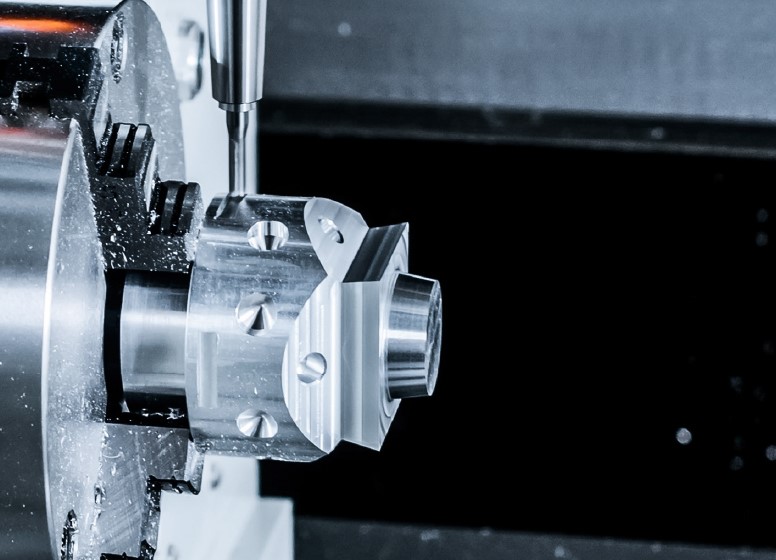
Full material traceability, 100% inspection, AS9100-ready process