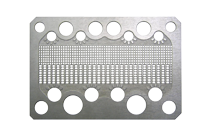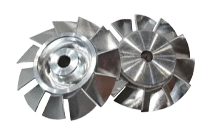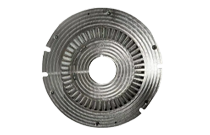
High Precision Stainless Steel for Aerospace Components

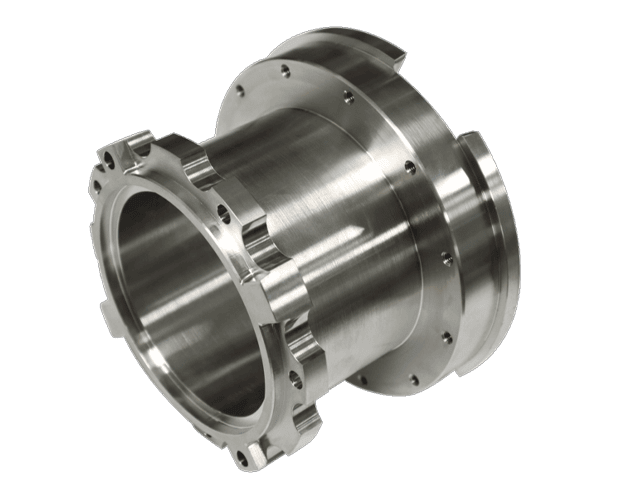
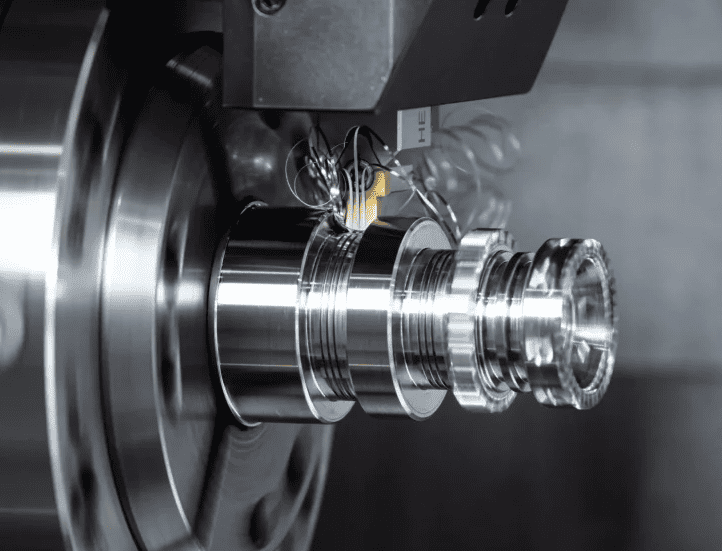
Stainless steel is a strong and durable alloy valued in aerospace for its high strength, oxidation resistance, and longevity in harsh conditions. With accurate machining speeds and parameters and cooling control, it delivers smooth finishes and tight tolerance accuracy.
Request Technical Review
What it is

AeroCNCParts's Expertise in Aerospace Stainless Steel Machining

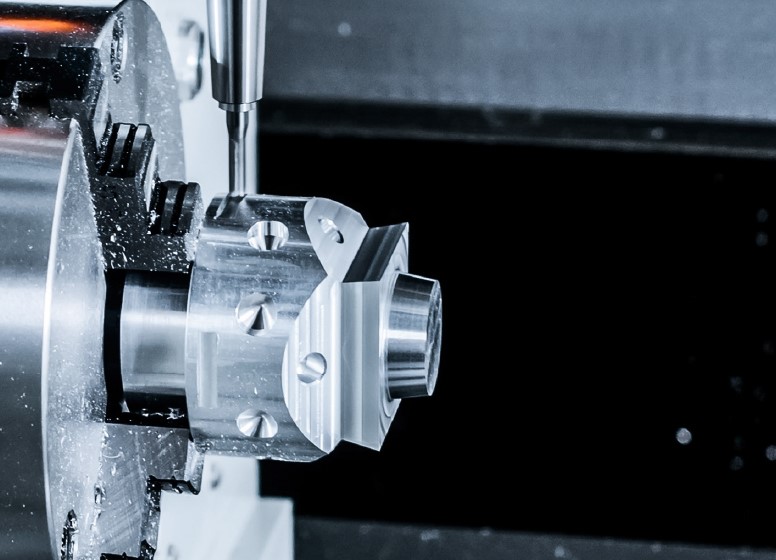
AeroCNCParts’s aerospace machining of stainless steel meets AS9100D and NADCAP standards, achieving ±0.005 mm precision with advanced 5-axis systems and CMM inspection. Every process guarantees stable repeatability, high surface quality, and reliable performance.

  • 5-axis machining for intricate and contoured geometries
  • Comprehensive FAI documentation
  • CMM, SPC, and certification traceability.
  • Aerospace-grade passivation and other finishing solutions
At a Glance

Stainless Steel Key Properties

Density

7.7 – 8.0 g/cm³

Ultimate Tensile Strength

520 – 1100 Mpa

Yield Strength

210 – 1000 Mpa

Hardness

20 – 40 HRC

Elastic Modulus

190 – 200 Gpa

Machinability

Moderate to Good

Weldability

Excellent

Corrosion Resistance

Excellent

Finishes

Typical Surface Treatments for Stainless Steel

Passivation

Removes surface iron to improve corrosion resistance.

  • Removes surface contaminants and forms a stable oxide layer for enhanced corrosion resistance and long-term protection.

Electropolishing

Smooths and brightens metal by removing a thin layer.

  • Refines surface smoothness, reduces drag, and improves fatigue life for flight-critical stainless steel components.

Shot Peening

Blasts media to strengthen the surface and improve fatigue life.

  • Increases surface compression, strengthening fatigue performance, and minimizing crack formation under cyclic stress.
Advantages

Stainless Steel Material Advantages

  • Exceptional Corrosion Resistance

    Performs reliably in oxidation-prone and high-humidity aerospace conditions.

  • High Mechanical Strength

    Supports heavy loads and high vibration, ideal for propulsion and landing components.

  • Excellent Weldability and Machinability

    Allows complex part geometry, strong weld joints, and precise forming.

  • Thermal and Oxidation Stability

    Retains shape and strength in both cryogenic and high-temperature aerospace environments.

Comparison

17-4PH VS 316 VS 304

High-level comparison of common aerospace stainless steel grades. Always align to your program spec.

Grade Strength Corrosion Resistance Fracture Toughness Machinability Note
17-4PH Very High Excellent High Moderate Used for high-load aerospace shafts and turbine elements.
316 High Excellent Excellent Good Performs best in marine and corrosive aerospace environments
304 Moderate Very Good High Excellent Economical, versatile choice for structural and cabin assemblies.
FAQ

Frequently Asked Questions

How does AeroCNCParts ensure dimensional accuracy for complex stainless steel components?
Precision is guaranteed through 5-axis machining, real-time measurement, and thorough CMM inspection on every production batch.
What documentation do buyers receive with each stainless steel order?
AeroCNCParts provides complete material certificates, FAI documentation, and full traceability to meet aerospace audit requirements.
Does AeroCNCParts provide corrosion testing or validation for stainless steel components?
Yes. Corrosion and surface finish tests are performed under ASTM and aerospace quality standards before shipment.
Which stainless steel grade offers the best balance of strength and corrosion resistance?
17-4PH provides the greatest strength, while 316 delivers superior corrosion protection for humid or marine aerospace conditions.
How does AeroCNCParts manage lead times for stainless steel aerospace machining?
By combining optimized setups, multi-axis production, and stocked material grades, AeroCNCParts ensures on-time delivery with full certification.
Materials

Related Materials