The Importance of 5 Axis Machining in Aerospace Component Manufacturing
The aircraft sector requires highly intricate components that can function reliably in severe flight conditions to ensure safety. 5-axis machining is an advanced manufacturing process that enables the production of accurate, complex parts while enhancing production efficiency.
In this blog, we will walk you through all you need to know about 5-axis machining in aerospace component manufacturing.
What is 5-Axis Machining?
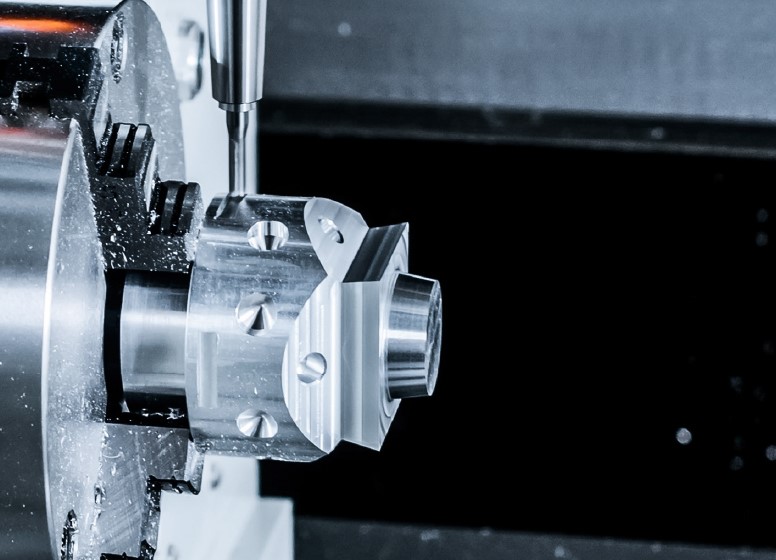
5-axis machining is a CNC machining process that allows for the cutting and removal of material through the three conventional X, Y, and Z axes, as well as two additional rotational axes, A and B or C.
This machining method enables us to efficiently shape a component from five different angles and sides, resulting in accurate precision, minimal errors, and flexibility.
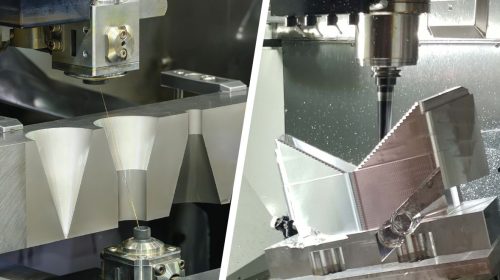
It is a sought-after method for machining aerospace components, as it can produce complex shapes, including deep cavities and pockets, curved patterns, and angled shapes, all in a single setup.
Comparison: 3-Axis vs. 5-Axis
3-axis machining only allows a part to be machined in three linear axes: X, Y, and Z. This means the process can only machine simple components and often requires repositioning and setup, thereby introducing errors.
These errors affect precision, which might inhibit safety in aerospace component machining. Moreover, it increases production time as there might be a need for rework.
5-axis machining, on the other hand, allows a part to be machined in five different directions, eliminating the need for repositioning.
This helps us eliminate errors and achieve tight tolerances, enabling the manufacture of complex parts and improving production efficiency. Intricate parts can therefore be repeatedly produced with the same level of tolerance and quality.
Importance of 5-Axis Machining in Aerospace Component Manufacturing
Five-axis machining in aerospace component manufacturing offers numerous benefits, as explained below.
Precision and Accuracy
The aircraft industry requires components that fit and align well, ensuring high performance and safety in operation.
Aerospace 5-axis machining helps ensure precision and accuracy, as there’s no need for readjustment and multiple setups, thereby reducing errors.
Machining Complex Geometries
5-axis aerospace machining enables us to create complex aircraft parts, ranging from contoured components to angled and twisted-shaped parts that cannot be achieved with conventional milling methods.
Simultaneous 5-Axis
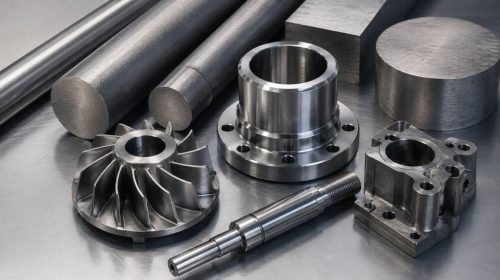
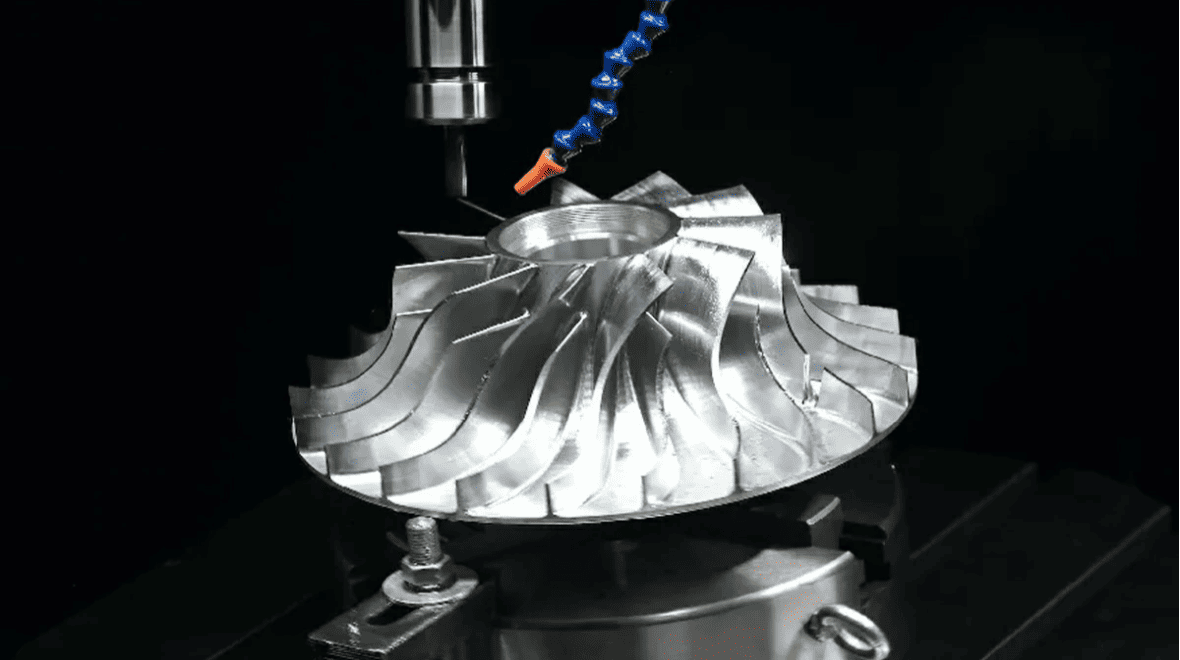
This is also known as continuous 5-axis machining, which allows cutting tools to move across all 5 axes simultaneously, enabling them to reach every part of the material at once. We use this method for contoured surfaces, turbine blades, and impellers, etc.
3+2 Positional Machining
This method also allows us to utilize the two rotational axes to maintain the material at a fixed angle while it is machined across the three linear axes.
The method enables us to machine more complex shape components, and it is suitable for structural parts and housings.
Increased Efficiency and Reduced Cost

Aerospace 5-axis machining helps us improve production efficiency while reducing costs. With its 5 axes, machining becomes faster, resulting in a shorter turnaround time.
Moreover, it requires us to use less fixturing compared to other methods. This helps reduce cost. 5-axis machining offers adequate accuracy, which helps eliminate errors and minimize scrap or waste.
Aerospace materials are expensive, and a high scrap rate could lead to high costs.
Consistent and Repeatable Quality
The machining technique also enables us to produce consistent parts across several batches. We can maintain an exact tolerance level even when producing hundreds of parts. This helps ensure alignment and a proper fit for parts that require assembly.
Improved Surface Quality
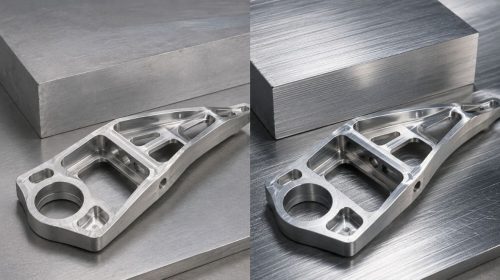
Compared to many production techniques, 5-axis machining allows us to produce parts with better surface quality. The 5 axes allow for perfect machining and finishing, eliminating the need for further finishing processes.
Compatibility with High-grade Aerospace Materials
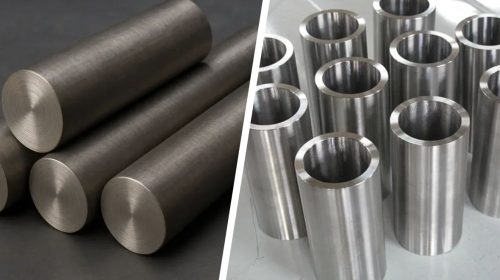
The aerospace sector utilizes high-grade, lightweight, and high-strength materials. 5-axis machining can effectively process these materials, despite the machining challenges associated with many of them. These materials include titanium, Inconel, PEEK, and others.
Overcoming Material Challenges
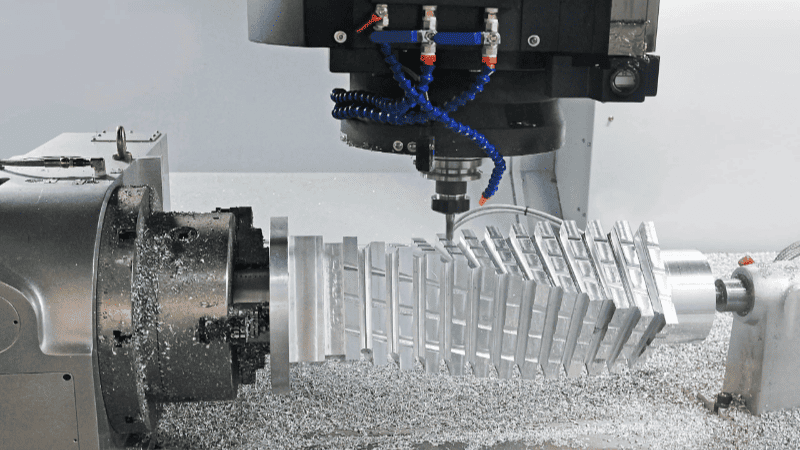
Working with Hard Metals
The aircraft industry requires high-strength materials, but these materials pose a machining challenge.
Titanium and Inconel, for example, generate a high amount of heat during machining, which, in most cases, causes tool wear, thereby affecting the surface finish and precision.
With 5-axis machining, the cutting tool can be set at an optimal angle, which reduces vibration, enhances tool stability, and improves surface finish.
Extending Tool Life
5-axis machining enables effective machining strategies that improve tool life compared to many other methods. It ensures a specific engagement angle is used, thereby distributing load effectively and reducing tool wear, which in turn enhances overall tool life.
Critical Aerospace Applications
Here are some specific critical aerospace components that we produce using 5-axis machining.
Engine Components
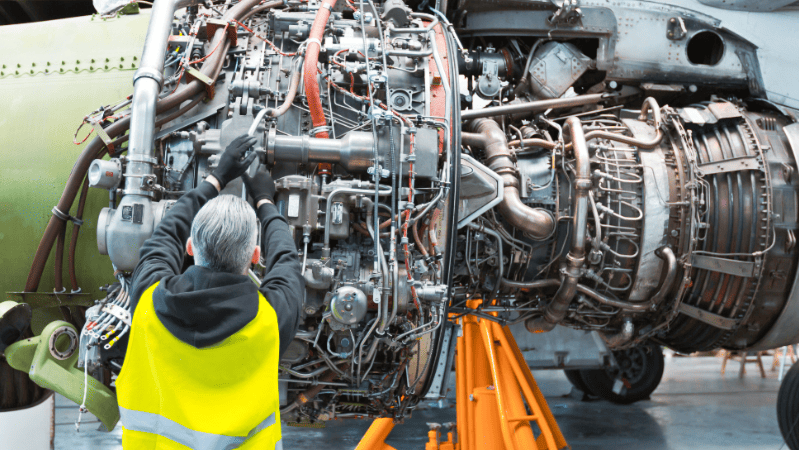
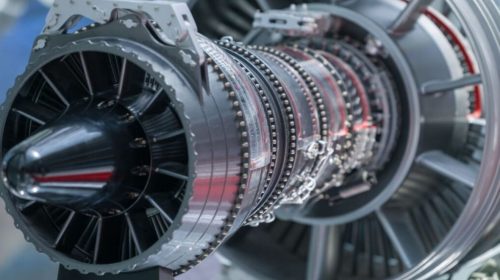
These parts operate under severe temperature, pressure, and vibration conditions, and must be designed with precise accuracy and reliability for consistent high performance.
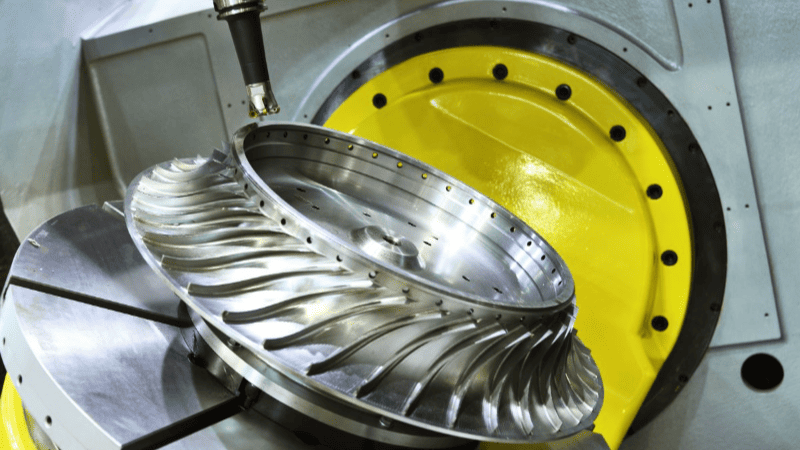
Blisks (Blade Integrated Disks): Consist of a disk and blades that form a single component. They must be machined with high accuracy to maintain their form and reliability, even when used for an extended period.
Impellers and Rotors: These manage airflow within the engine. 5-axis machining helps these parts maintain vibration control and ensure longevity.
Structural Airframe Parts
Structural airframe parts are usually large in size but must be machined to tight tolerances with low weight and high strength. Examples include fuselage frames, landing gear units, brackets, etc.
Satellite and Space Components
Satellite and space components must also be lightweight and highly reliable to withstand harsh conditions. 5-axis machining helps ensure the precision and performance of these parts, which include antenna mounts, satellite housings, and structural panels.
The Future of 5-Axis in Aerospace
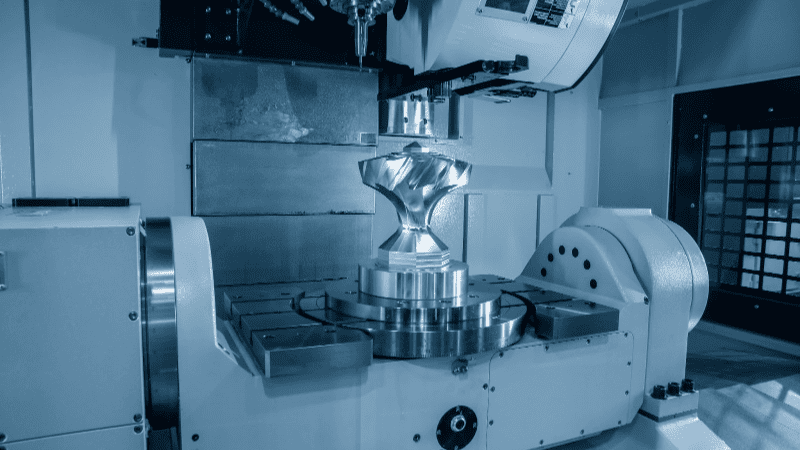
5-axis machining will continue to evolve within the aerospace industry in the years to come. Here are some of the projected developments to expect
Integration with Automation
Five-axis machining, combined with automation integration, will transform aerospace component machining in the years to come.
The introduction of robotic systems and pallet changers will allow continuous machining with little to no human supervision. With that kind of light-out manufacturing, labour costs will be reduced, leading to higher production output.
Advanced CAD/CAM Software
In recent years and years to come, there’ll be more sophisticated CAD/CAM software to program complex tool paths, and they’ll integrate adequately with 5-axis machining.
This software will improve machining accuracy, enhance surface quality, and reduce lead times. With specific simulation tools, programmers will be able to detect errors and collisions earlier, thereby preventing mistakes, rework, and machining time.
Sustainable Manufacturing
5-axis machining also integrates well with near-net-shape manufacturing, enabling manufacturers to produce parts from workpieces that are similar to or closely match the final parts in terms of size and dimension.
This helps us ensure that only minimal material is removed, and as such, there’s less waste while expensive aerospace materials are conserved.
Conclusion
The importance of 5-axis machining in aerospace component manufacturing cannot be overemphasized. From manufacturing complex parts to ensuring precision and consistency, to improving production efficiency, there is a lot to consider.
AeroCNC parts specializes in 5-axis machining procedures, ensuring that quality, tight-tolerance parts are produced and delivered globally. From ensuring quick lead times to offering flexible order quantities, we provide a tailored collaboration based on your project needs.
We are AS9100, ISO 9001, and NADCAP certified, and we offer a complete process inspection and traceability. Contact Us Today

Kim
Kim oversees engineering operations, including complex process planning, DFM reviews, and solving challenges associated with high-precision aerospace parts. He specializes in strict tolerance control and machining complex geometries essential for avionics, turbine components, and structural frames. Outside of work, he enjoys the precision and strategy of playing snooker.