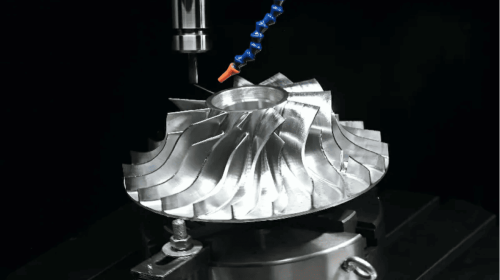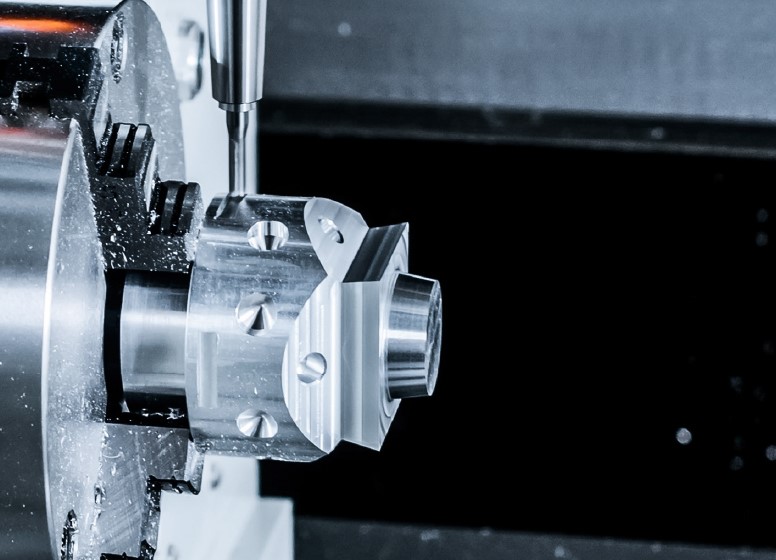
Applications of 3D Printing in Aviation and Aerospace
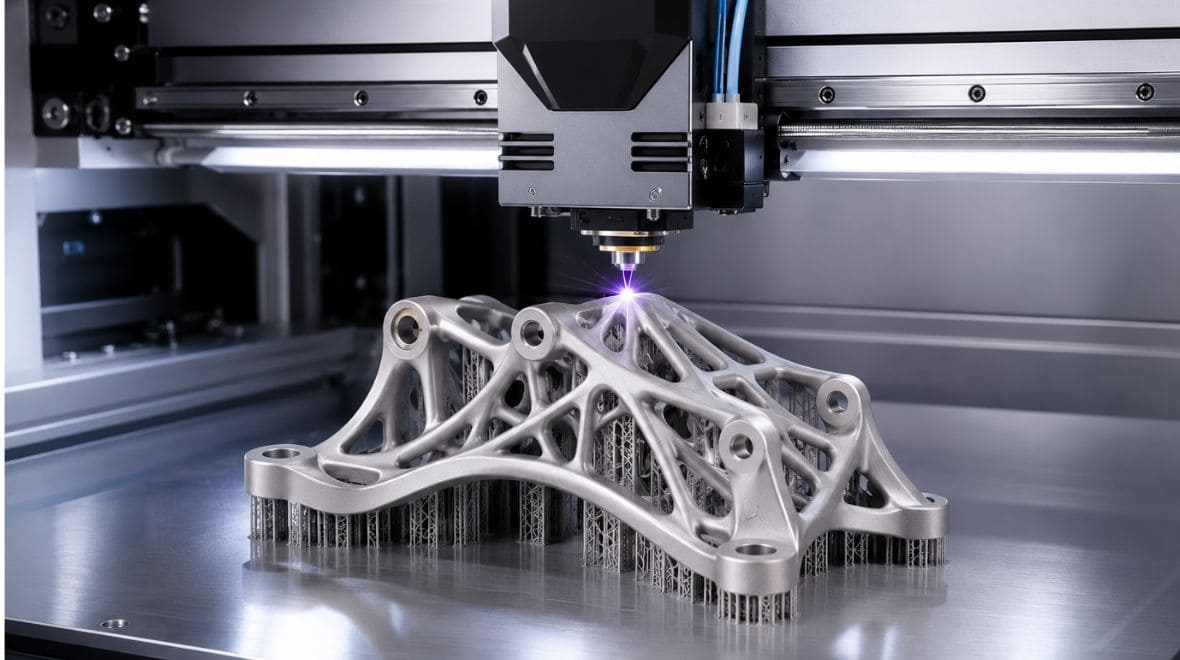
3D printing technology allows for the production of lightweight, strong, and durable aerospace parts. Beyond that, it can create complex structures, is cost-effective, and enables fast production and prototyping cycles.
This post, therefore, explores the specific applications of 3D printing in aviation and aerospace.
What is 3D Printing?
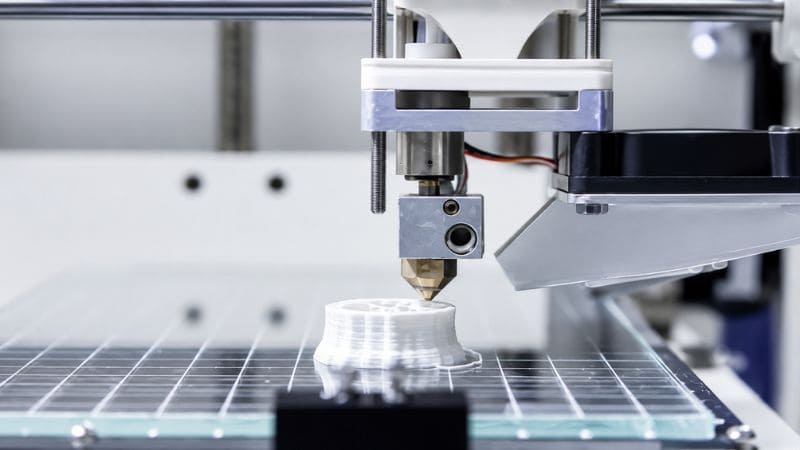
3D printing is an additive manufacturing method used in creating three dimensional structure layer by layer and following a computer-aided design till the component is formed.
It’s crucial for complex aerospace parts like turbine blades, brackets, actuators, and gear parts.
Key Applications of 3D Printing in Aviation
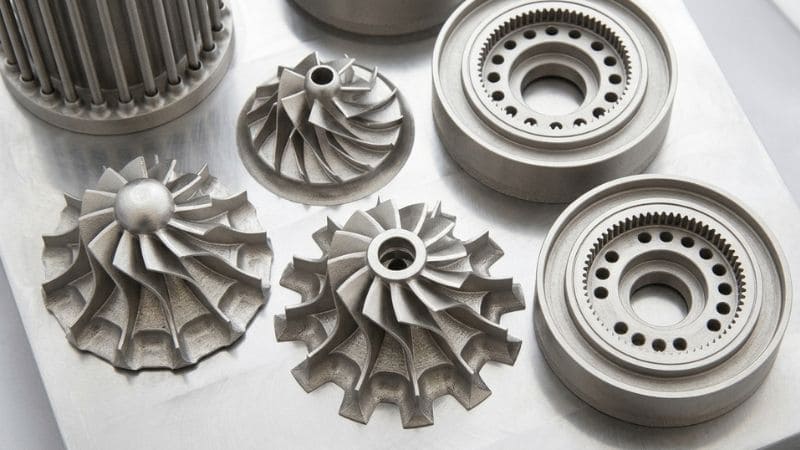
Here are specific applications of 3D printing in the aerospace industry.
Complex Engine Parts
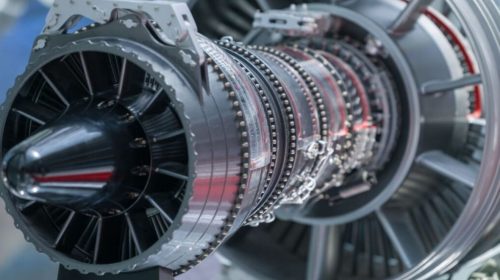
One crucial application of 3D printing in aerospace is the production of complex engine parts, including turbine engine parts and fuel nozzles.
These components have complex internal designs, and as such, 3D printing is the effective method to use as it helps eliminate excess engine structure weight, enhances durability, and reduces fuel usage.
Custom Tooling
3D aerospace companies can easily and quickly produce custom tools like jigs and fixtures based on client demand without any heavy investment or cost.
These tools are important in eliminating mistakes and enhancing ergonomics during production and assembly.
Mounting Bracket
3D printing in the aviation industry is also crucial in producing strong and durable mounting brackets used in securing aircraft structure from interior components to sensors and avionics.
The production technique allows manufacturers to create a custom mount bracket based on weight, geometry, and strength requirements.
Maintenance, Repair, and Overhaul Operation
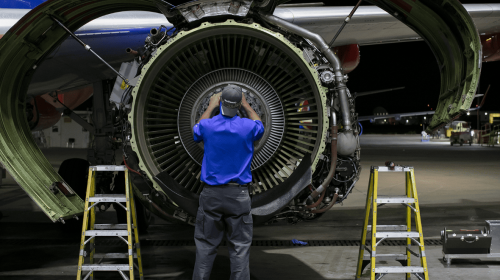
With 3D printing, MRO operations can avoid delays since parts can be replaced quickly when needed. As such, operators can keep processes moving without bothering about the time requirement for repair and replacement.
Rapid Prototyping and Validation
Another significant applications of 3D printing in the aerospace industry are rapid prototyping and design validation.
The production technique allows manufacturers to quickly create a component prototype, test, and iterate.
How 3D Printing Enhances Aerospace Manufacturing
Geometric Design Freedom
The aerospace industry requires high-grade materials and complex geometry parts. 3D printing works well in creating intricate thin walls, internal structures, and angled parts, and so on.
With that, the method helps eliminate excessive weight while enhancing part performance.
Surface Finish
3D printed parts most often require little to no post-processing method. Techniques like material jetting usually give a perfect finish similar to injection-molded parts.
Other methods, like SLM and binder jetting, can undergo polishing to enhance surface quality.
Consolidating Assemblies into a Single Part
The technique allows multiple parts to be designed as a single consolidating structure, thereby eliminating weight and reducing cost.
Part Orientation
For load-bearing structures that must undergo stress or handle weight, components can be designed so they remain strong and durable even in the vertical (Z) direction, since 3D printing builds parts layer by layer.
Materials for 3D Printing Aerospace and Aviation Parts
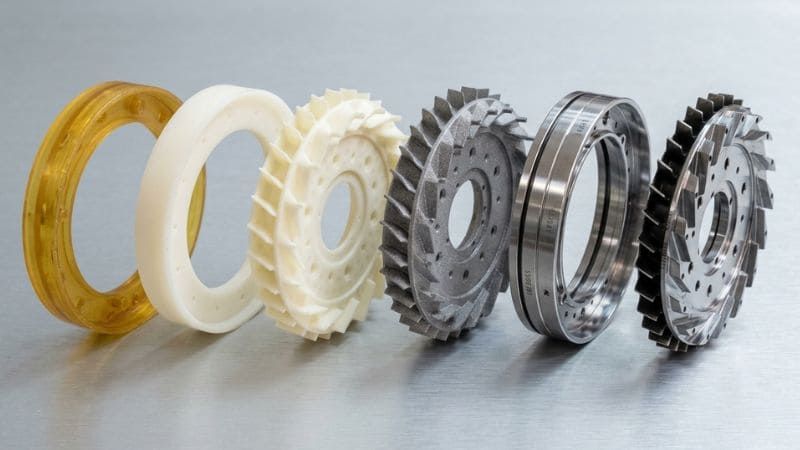
Not all metals and plastics are suitable for 3D printing in Aviation. Here are specific, suitable ones.
Titanium Alloys
Titanium alloys like Ti-6Al-4V offers a high strength-to-weight ratio, corrosion resistance, and ability to remain functional even in high temperatures, and as such, it is valuable for engine parts, landing gear units, etc.
Aluminum
Another valuable metal for 3D printing in Aviation is aluminum. The metal is also lightweight, with excellent electrical and thermal conductivity. It is used for components like airframe parts, heat exchangers, etc.
Inconel
Inconel is valued for 3D printing in the aviation industry due to its ability to maintain performance at high temperatures. It also offers great strength, durability, and oxidation resistance. It is used in creating turbine parts, engine nozzles, etc.
Stainless Steel
Stainless steel offers high strength, durability, and corrosion resistance, and as such, it is used in producing components like interior units, mounting brackets, etc.
PEEK
This is a lightweight and high-performance plastic. It also offers mechanical, chemical, flame-resistant, and electrical insulation, and as such its used for cabin units, cable components, ducts, etc.
Ultem
Ultem is used by 3D printing aerospace companies because of its extreme heat resistance, flame retardant, dimensional stability, and low outgassing. Specific applications here are cabin units, aircraft enclosures, etc.
Carbon-Fiber Reinforced Nylon
This is a high-strength, lightweight material with extreme stiffness and dimensional stability. Specific applications of 3D printing in aerospace for this material include fixtures, low-weight structural units, etc.
Comparison Table Explaining Key Aerospace Materials, Key Applications, and Suitable 3D Printing Process
| Material | Specific Aerospace Applications | Suitable 3D Printing Process |
| Titanium | Landing gear parts, airframe components, engine units | DMLS/SLM |
| Aluminum | Heat exchangers, electronic housing, and airframe parts | DMLS/SLM |
| Inconel | Turbine blades, exhaust components | DMLS/SLM |
| Stainless Steel | Actuators, fasteners, and interior components | Binder jetting/DMLS |
| PEEK | Electrical insulator, seals, cabin components | FDM/FFF |
| Ultem | Cabin panels, ducts, aircraft enclosures | FDM |
| Carbon-Fiber Reinforced Nylon | Fixtures and jigs, low-weight UAV frames | FDM/SLS |
Benefits of 3D Printing in Aviation
Weight Reduction
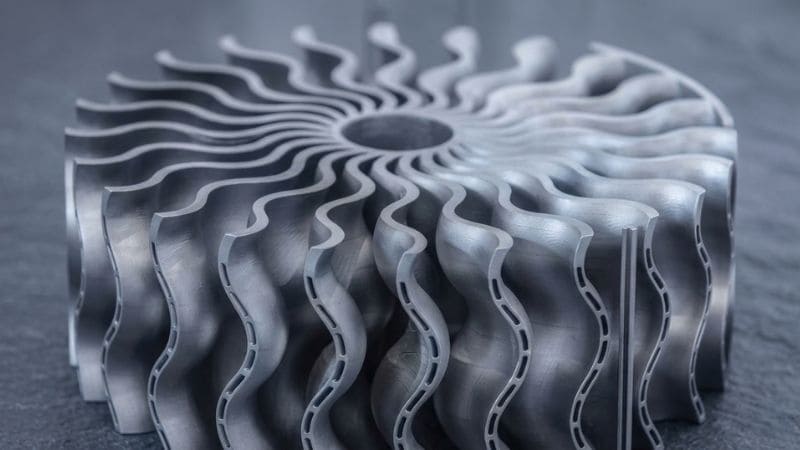
3D printing in aviation allows for the design of lightweight and high-strength parts. The technique is compatible with high-grade materials like titanium, aluminum, PEEK, etc. With less weight comes better fuel efficiency.
Cost Savings
By creating components in layers, the technique eliminates material waste. Moreover, there is no need for expensive tooling, which helps save costs.
Production Speed
3D printing allows for on-demand manufacturing, eliminating the need for warehousing. Parts can be manufactured within a few days, and iterations can be made quickly when needed.
Challenges in Implementing 3D Technologies
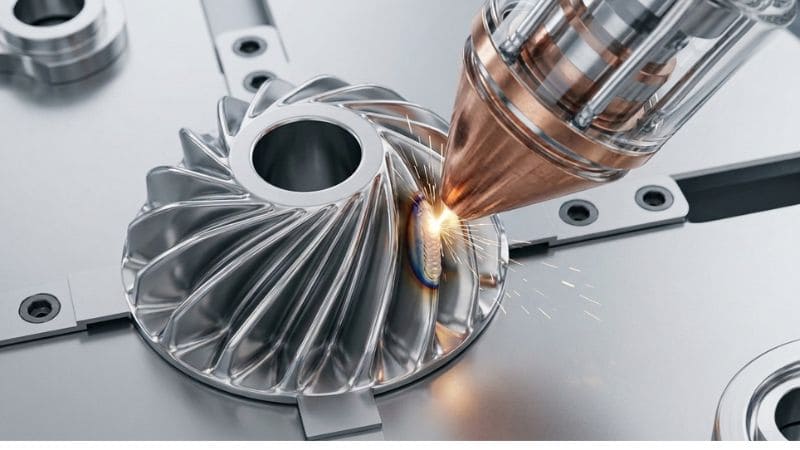
While 3D printing in aviation offers a lot of benefits, there are a few challenges associated with the technique.
Availability of Materials
Materials like titanium and inconel are generally expensive to produce, which makes them more scarce and difficult to source. As a result, parts made with them are usually costly.
Certification and Regulatory Requirements
Aerospace printed parts must meet critical certifications and regulatory standards. Components used in turbines, airframes, gears, etc., must withstand harsh aerospace conditions while maintaining performance and longevity.
However, there are still no globally accepted standards for 3D printing, which bodies like the FAA and EASA are working on.
Material Performance
While there are many high-grade materials that are compatible with 3D printing, not all can maintain performance in critical aerospace conditions.
For example, some materials cannot withstand fatigue and remain thermally stable when used for a longer time, and this is specifically crucial for parts like turbine blades
Support structures
Support structures for 3D printing in aviation help secure components to the build plate so as to prevent warping or bending.
However, components may be prone to visible marks that affect surface finish. Processes such as SLS and binder jetting don’t require support structures and can be the best option when surface quality matters.
The Future of Aerospace 3D Printing
In a few years to come, 3D printing in the aviation industry will undergo some advancements that will enhance aerospace part performance. Here are a few of them to expect.
Advanced materials
While high-performance metals, plastics, and carbon reinforced polymers are vital for lightweight and strong aerospace components, nanomaterials are more likely to enhance thermal conductivity, and this is valuable in space and defence structures.
On-Demand 3D Printing
Instead of the traditional manufacturing methods that take longer lead time and warehousing, on-demand 3D printing will create room for a smooth and fast supply chain, which is especially useful for MRO operations.
Multi-material and hybrid manufacturing systems
By combining different alloys for 3D printing in aviation and introducing a hybrid production system, including additive and subtractive methods, manufacturers can create more integrated structures.
These are components with electronics, sensors, and heat management properties.
Conclusion
3D printing in aviation is essential in creating complex, lightweight, strong components. The technique also offers production speed, cost-effectiveness, and faster market release.
At AeroCNCParts, we produce precise and high-quality aerospace 3D printed parts. From gear parts to turbine components and actuators, etc., we’ve served many clients across the globe. Our processes follow complete inspection and traceability, and our materials are fully certified. Get a Quote Now.

Kim
Kim oversees engineering operations, including complex process planning, DFM reviews, and solving challenges associated with high-precision aerospace parts. He specializes in strict tolerance control and machining complex geometries essential for avionics, turbine components, and structural frames. Outside of work, he enjoys the precision and strategy of playing snooker.