EDM vs 5-Axis CNC: Choosing the Right Process for Complex Aerospace Manifolds
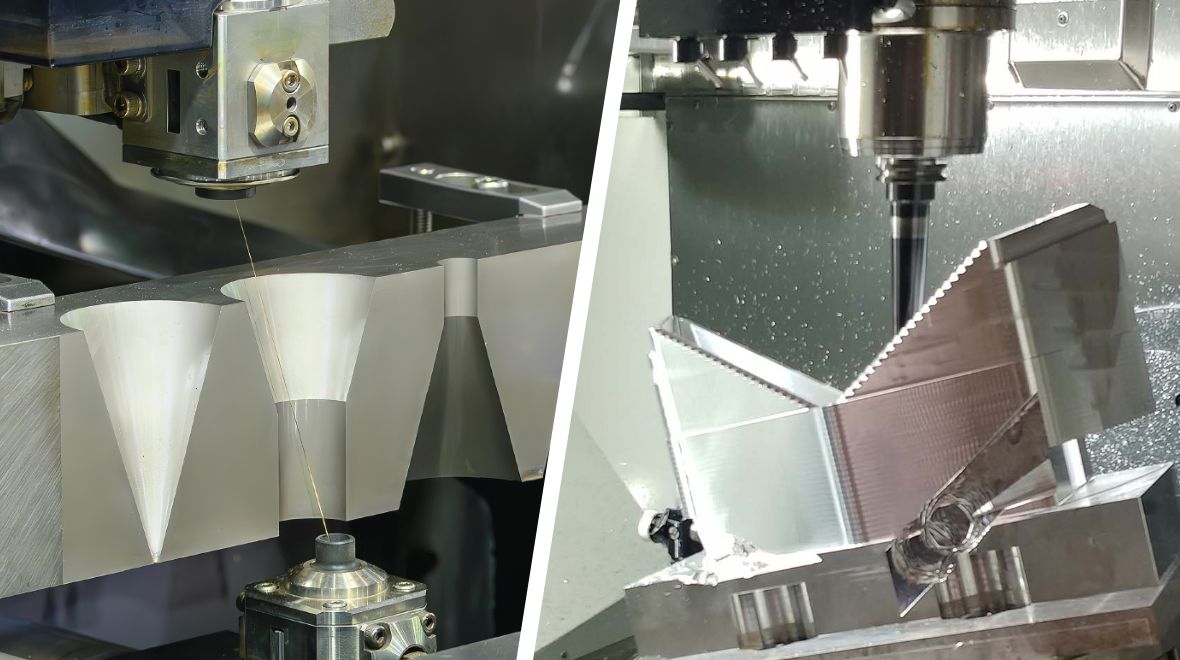
The aerospace industry needs advanced machining techniques, including both EDM and 5-axis CNC, to produce its intricate aerospace manifold designs.
Each process provides its own advantages based on the complexity of the design and the required materials. The selection of an appropriate method guarantees accurate internal structures and reliable performance throughout the entire lifespan of the product.
What are Aerospace Manifolds?
Aerospace manifolds serve as precise components that direct fluid or gas movement within aircraft systems. They function in various applications such as fuel systems, hydraulic circuits, and air distribution assemblies.
The components’ design needs to withstand high-pressure and high-temperature conditions while retaining their original material strength. Machining operations produce precise components that deliver uninterrupted flow through leak-proof systems.
Design Challenges in Aerospace Manifolds
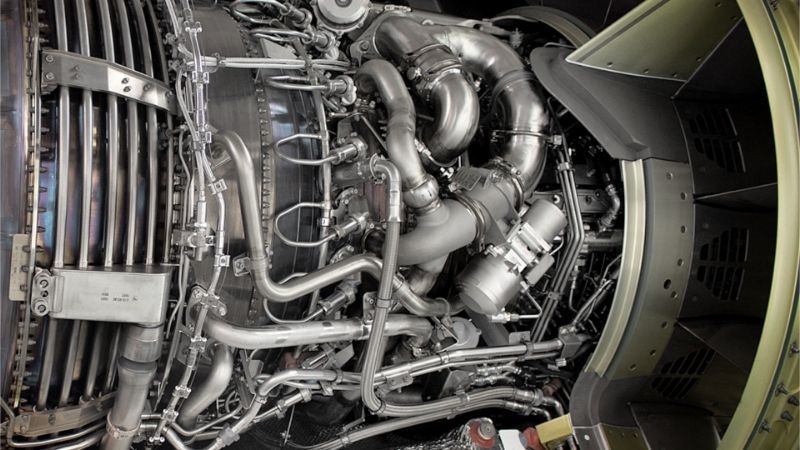
The process of creating aerospace manifolds encounters difficulties because of the multiple technical factors involved. All challenges lead to direct impacts on the performance, safety, and reliability of the system. The major challenges that need to be overcome include:
Complex Internal Geometries
The design of aerospace manifolds contains complicated internal channels that traditional machining methods find difficult to produce. The pathways need to be cut with extreme accuracy so that their flow characteristics will operate at their expected levels. The structures need to be constructed to achieve flawless internal geometry, which contains no defects.
Strict Structural Integrity
The components need to withstand ongoing stress and vibration, which requires designers to create dependable structures. Any material weakness will reduce performance capacity because maintaining structural integrity becomes essential for long-lasting material performance.
High Pressure Requirements
All aerospace manifolds need to function flawlessly during high-pressure situations because errors will result in system failure due to damage. The manufacturing process needs high precision to produce products that maintain their durability during operation in extreme conditions.
Why Manufacturers Use 5-Axis CNC for Aerospace Manifolds
The process of 5-axis CNC machining serves as the optimal technique for producing detailed external shapes while achieving exacting standards. The advantages of 5-axis CNC technology are based on these primary benefits, which are listed below:
Rapid Material Removal
5-axis CNC machining improves material removal efficiency through its multiple cutting angles, which enable better tool operation. The process decreases manufacturing time while boosting operational efficiency. The technique proves most effective for processing complicated outer shapes.
Superior Fatigue Life
Fewer setups during machining help to decrease internal stress, improve structural strength and enhance fatigue resistance over time. As a result, the part performs reliably under repeated load conditions.
Continuous Path Control
The tool operates continuously along complex surfaces, which allows for consistent outcomes throughout the machining process. The procedure decreases alignment mistakes. It enhances distance measurement precision and continuous path control functions.
Why Aerospace Manufacturers Use EDM for Manifolds
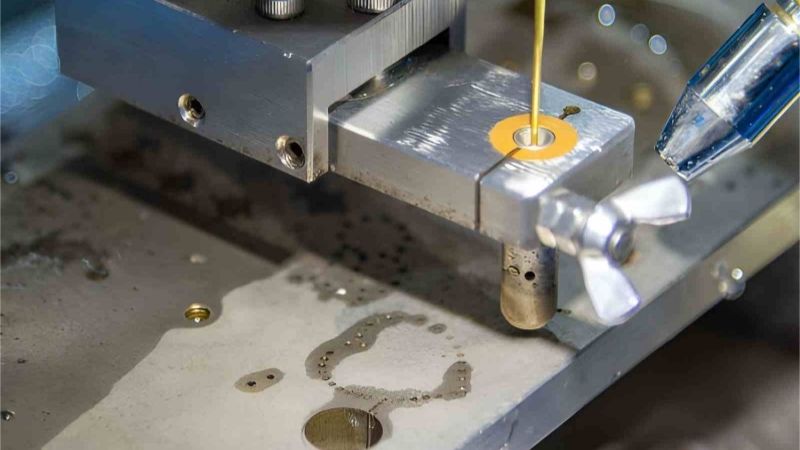
The process of EDM becomes necessary when internal components contain features that exceed the capabilities of standard machining techniques. The following advantages show how EDM benefits manifold production:
Deep Channel Access
EDM can easily machine deep and narrow internal channels that are difficult to reach with cutting tools. The method produces complex internal pathways required for aerospace manifolds. It provides accurate results that work properly in narrow working areas.
Sharp Internal Corners
EDM technology allows for the precise production of sharp internal edges. The traditional machining methods cannot produce because of the tool restrictions. The process enables manufacturers to create detailed designs that achieve accurate product dimensions.
Zero Tool Deflection
EDM operates as a non-contact process because it does not employ cutting forces during its machining activities. Tool deflection and material deformation cannot occur now because the process executes precise operations on delicate materials.
EDM vs 5-Axis CNC for Aerospace Manifolds
EDM and 5-axis CNC exhibit distinct operational principles that lead to differing capabilities between these two machining methods. The following aspects highlight how each process performs in real manufacturing conditions.
Mechanical vs Thermal
5-axis CNC machining operates as a mechanical system that cuts material through the application of tools and force. The two processes operate differently, which leads to reduced accuracy, deteriorated surface quality and changed material properties during the cutting process.
Tooling Path Constraints
The operation of 5-axis CNC depends on the availability of tools. It creates restrictions for performing operations in deep or complex internal spaces. The process of EDM makes all areas accessible for machining because it uses electrical discharge to operate throughout machines.
Precision Machining Comparison
The two methods achieve great precision. Their strengths depend on specific uses, so 5-axis CNC provides outstanding accuracy when handling outside features and complicated surface structures. The method of EDM creates internal features with narrow tolerances, which enables the production of extremely precise internal specifications.
EDM vs 5-Axis CNC: Internal Channel Machining
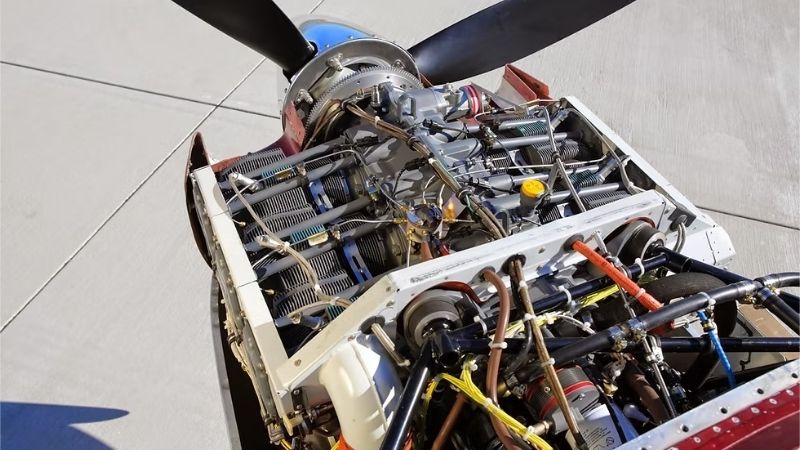
Aerospace manifolds depend on internal channel machining as their most important working process. The internal pathways present a complex challenge that needs precise machining method selection. The following points explain how both processes handle internal features.
Tortuous Path Navigation
The EDM technique excels at creating internal pathways that have both complex shapes and curved sections. The system can operate through complex channel patterns because its tool movement does not restrict its ability to work. The 5-axis CNC system faces challenges with these geometric designs because its tools cannot reach all areas.
Bore Diameter Limits
The maximum bore diameter that 5-axis CNC machining can produce depends on the cutting tool dimensions. EDM enables the creation of narrow channels and small holes, which require precise measurements, making it ideal for internal features.
Aspect Ratio Capabilities
EDM supports high aspect ratio machining, which enables the creation of deep, narrow features while maintaining exact precision. The 5-axis CNC machine shows reduced performance when facing this problem because its tools experience deflection and vibration issues.
EDM vs 5-Axis CNC: Accuracy in Aerospace Manifolds
Aerospace manufacturing demands high accuracy standards, which become critical when producing essential components like manifolds. The two machining techniques create precise results through different methods for achieving accuracy. The following factors highlight these differences.
Positional Tolerance Control
The 5-axis CNC system delivers precise positional results through its advanced control technology, which controls toolpaths while preserving tool alignment across different surfaces. The EDM system achieves precise positional results through its ability to handle intricate internal structures.
Feature Repeatability Standards
The production process requires repeatability to create multiple identical parts. The 5-axis CNC system delivers stable output through its regulated machining operations. EDM produces stable results that work well for creating small details and micro features.
Geometric Dimensioning Limits
The aerospace industry needs precise dimensional control to assess complex geometries. The 5-axis CNC system can achieve precise external shape accuracy for all external geometric elements. The traditional tools struggle to maintain proper accuracy for intricate internal shapes, which makes EDM a better option.
EDM vs 5-Axis CNC: Surface Finish and Integrity
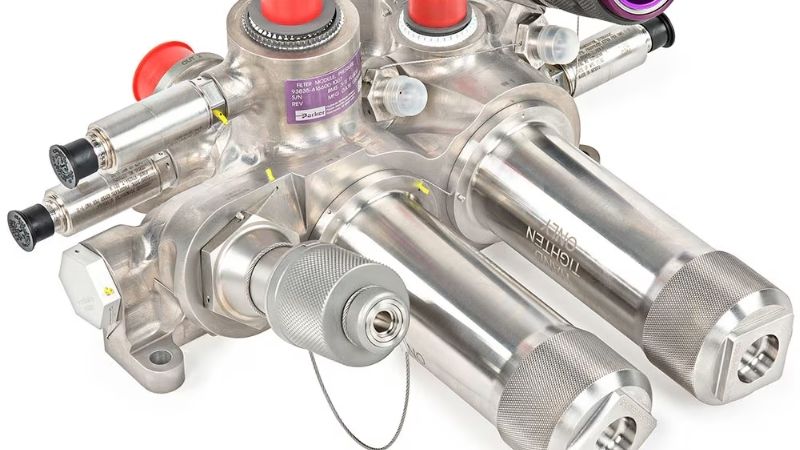
Surface quality determines how aerospace manifolds perform and how long they last. The two methods create different effects, which determine how the final product will turn out. The following factors explain their impact on the final part quality.
Recast Layer Management
The EDM process produces a recast layer because of its thermal characteristics. The layer needs to be taken away because it does not satisfy performance requirements. The negative effects of the treatment can be reduced by control methods together with appropriate finishing procedures.
Residual Stress Profiles
The mechanical stresses of 5-axis CNC machining occur when cutting forces are applied. The non-contact nature of EDM results in decreased mechanical stress, but it brings thermal effects into the process. Part reliability needs stress management as its essential requirement.
Post-Processing Requirements
The superior surface quality of 5-axis CNC parts eliminates the need for extensive finishing work. The surface imperfections of EDM components require additional polishing or treatment to achieve smoother surfaces. The aerospace standards require post-processing to verify that all completed parts achieve compliance.
EDM vs 5-Axis CNC: Material Compatibility
Aerospace engineers select machining processes according to material compatibility requirements as a primary decision factor. The various materials exhibit distinct responses to the applied cutting forces and thermal energy. The following compatibility factors exist:
Hardened Superalloy Performance
The extreme hardness of materials causes 5-axis CNC tools to experience wear problems. The EDM process enables effective material handling through its method of electrical discharge, which eliminates material without using mechanical pressure.
Thermal Conductivity Factors
In 5-axis CNC, this can result in two problems, which are tool overheating and decreased accuracy. The localized heat of EDM makes it suitable for aerospace alloys, which require protection against excessive heating.
Workpiece Machinability Ratings
The optimal performance of 5-axis CNC occurs with materials that enable smooth cutting and efficient chip removal. For materials that have low machinability, EDM becomes the preferred method when precise results take precedence over fast processing times.
Hybrid Machining Strategies for Aerospace Manifolds
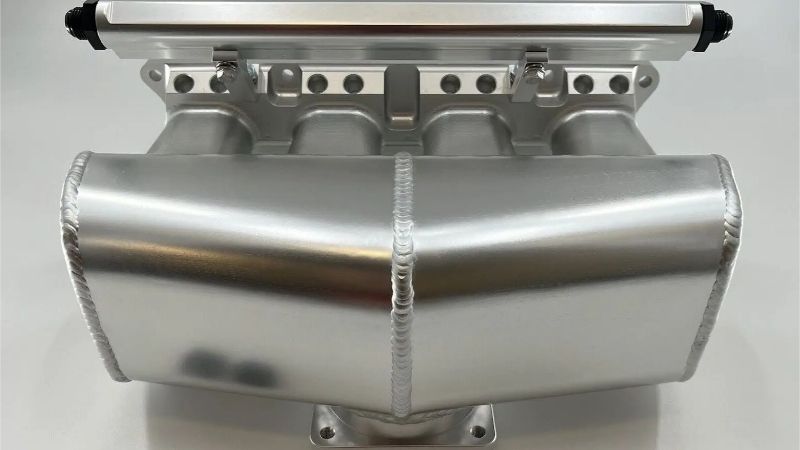
Hybrid machining uses EDM and 5-axis CNC together to enhance operational efficiency while achieving precise manufacturing results. The aerospace industry extensively uses this particular method. The following methods form the core of the system:
Combining Process Strengths
Manufacturers use 5-axis CNC to perform tasks that involve removing large amounts of material while shaping objects. The process uses EDM to create detailed features that require complex internal structures. The combined techniques provide manifold production with both speedy and precise results.
Sequential Production Flows
A structured workflow enhances manufacturing efficiency across all production stages. The process begins with CNC machining to create the primary geometry, followed by EDM, which finishes the detailed parts. The sequence takes less time to produce results while delivering accurate outcomes.
Error Stack-up Prevention
The setup process for complex parts introduces multiple setups, which can lead to cumulative errors. Hybrid machining achieves its error reduction benefits through its ability to decrease repositioning requirements. The process results in more accurate dimension control, which directly improves the quality of the final product.
Choosing the Right Process for Aerospace Manifolds
The best choice between EDM and 5-axis CNC requires assessment of several technical aspects and multiple production conditions. The following factors need to be understood because they enable businesses to achieve their maximum operational results:
Evaluate Internal Geometry Complexity
Parts with simple geometries are ideal for 5-axis CNC machining. The process of EDM becomes necessary when internal channels become extremely difficult to access. The process selection starts with assessing the geometry complexity of the workpiece.
Assess Material Hardness Requirements
CNC machining of hard materials results in increased tool damage during operational tasks. The operation of EDM becomes more effective when handling hardened alloys and heat-treated materials. The selection of which process to use depends on the material’s hardness characteristics.
Analyze Surface Integrity Standards
Different applications establish various surface quality requirements that must be met. The use of 5-axis CNC delivers excellent surface finishes, which apply to all external parts. The internal structure of EDM provides exceptional accuracy for delicate internal parts and reliable surface protection.
Compare Total Production Volume
The manufacturing process benefits from increased production volumes, which enable faster CNC machining operations. The slower speed of EDM delivers higher precision, which makes it suitable for the production of parts with intricate designs that require low-volume manufacturing. The total production volume impacts both cost and operational performance of the manufacturing process.
Conclusion
The manufacturing process of aerospace manifolds receives distinct benefits from both EDM and 5-axis CNC technology. The best material selection requires assessment of material characteristics, geometric design, and accuracy requirements.
The best outcome for advanced aerospace components occurs when both processes combine. AeroCNCParts provides high-precision machining solutions tailored to complex aerospace applications. Contact us to optimize your local or any kind of business in the advanced manufacturing process.

Kim
Kim oversees engineering operations, including complex process planning, DFM reviews, and solving challenges associated with high-precision aerospace parts. He specializes in strict tolerance control and machining complex geometries essential for avionics, turbine components, and structural frames. Outside of work, he enjoys the precision and strategy of playing snooker.