Most Common Machined Components Used in Aircraft Engines
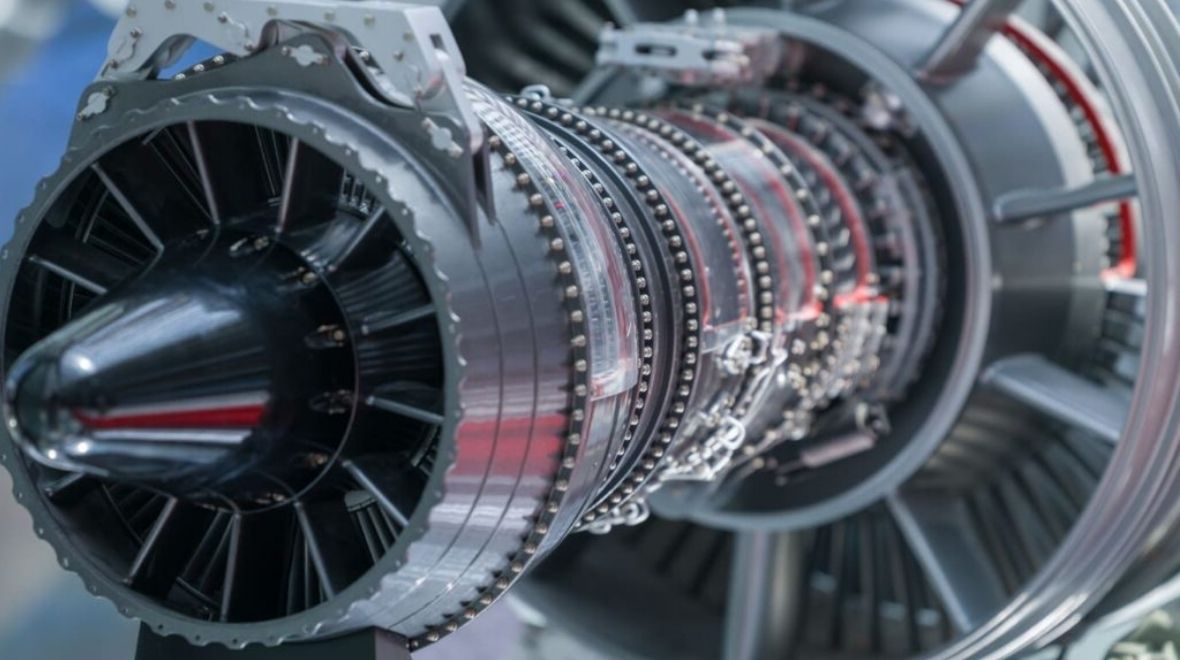
Today’s aircraft engines are complex systems with several components that all must operate together. Each component must be designed to perform under high pressure. As a result, engine efficiency and safety rely heavily on precision engineering.
In this blog, we will look at the most typical examples of aircraft engine components that are machined and explain why they are machined using complex processes and strict quality control protocols.
What are Aircraft Engines?
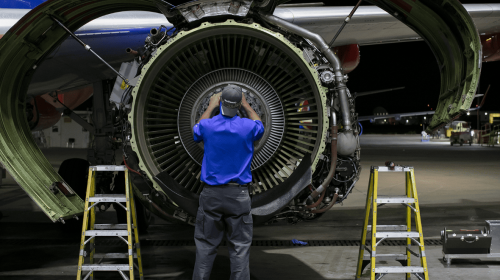
Aircraft engines are complex pieces of technology designed to produce power, which is then converted into thrust. These are designed to operate consistently throughout all phases of flight, including takeoff and cruise altitude. Engines must respond fast to throttle changes while maintaining stable combustion and consistent airflow. This is accomplished by the well-designed engineering of these engines.
Importance of Precision-Machined Components in Aircraft Engines
Ensuring Safety Standards
Aircraft engines can be extremely dangerous; safety precautions must be built into the design and mechanics of the engine. High-quality machined components can be used to ensure proper alignment and spacing of moving and stationary components as part of safety measures.
Maximizing Fuel Efficiency Levels
The design and machining of individual components can make a difference in how much fuel the engine consumes. Components that are designed and machined to optimal standards can improve the engine’s internal airflow and combustion process, resulting in increased thrust and fuel economy.
Managing Extreme Thermal Stress
Machined components are also designed to withstand thermal stresses ranging from beyond the normal operating temperatures of the engine. Components are designed to endure repeated cycles of heating and cooling without compromising their strength or shape.
Most Common Machined Components Used in Aircraft Engines
Different types of aircraft engines, such as turbofan, turbojet, turboprop, and turboshaft engines, have unique designs, but they all rely on critical machined components to perform safely and efficiently. Regardless of size or configuration, engines in all aircraft types must meet the same rigorous tolerance, balancing, and strength standards.
The following are the most common machined components that we produce:
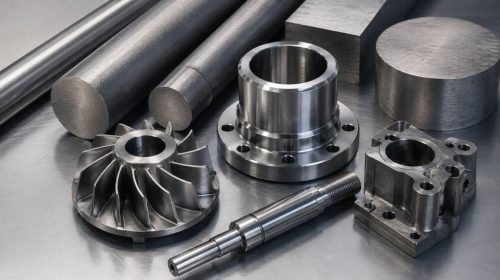
Turbine Blades
These are components that perform the function of extracting energy from the high-temperature exhaust gases and converting that energy into rotational force. Turbine blades are subjected to extreme heat and rotational speeds. We machine turbine blades with very intricate airfoil shapes to meet strict dimensional requirements that result in optimal aerodynamic efficiency and longevity.
Compressor Blisks
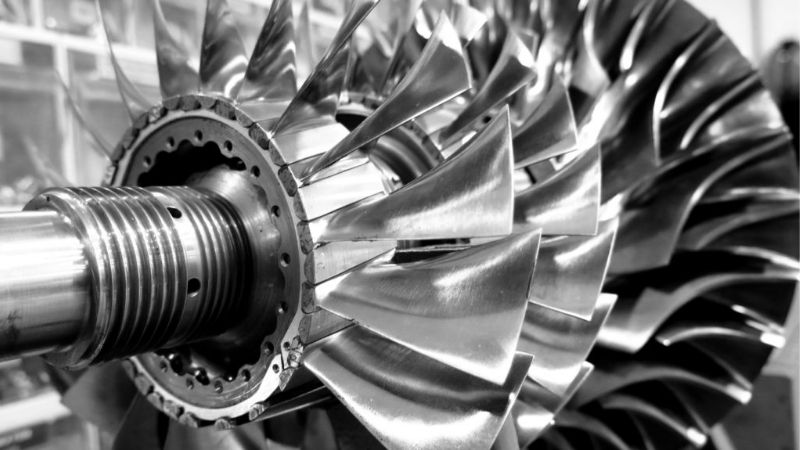
Compressor blisks are components of an aircraft engine that consist of both blades and a disc, but instead of being separate components, they are integrated into a single, solid piece. This integration reduces weight and increases the overall structural strength of the blisk.
Main Propulsion Shafts
Main propulsion shafts are components that transfer power between the compressor and turbine components of an aircraft engine. Because those shafts must rotate at very high speeds, we must pay close attention to concentricity, straightness, and surface finish to minimize vibrations and maintain stability.
Structural Engine Casings
Engine casings provide structural integrity and protection for the aircraft engine’s internal assemblies. They need to be lightweight but handle a lot of pressure. We ensure tight tolerances for mounting features and sealing surfaces when they are to be assembled.
Fuel Injectors
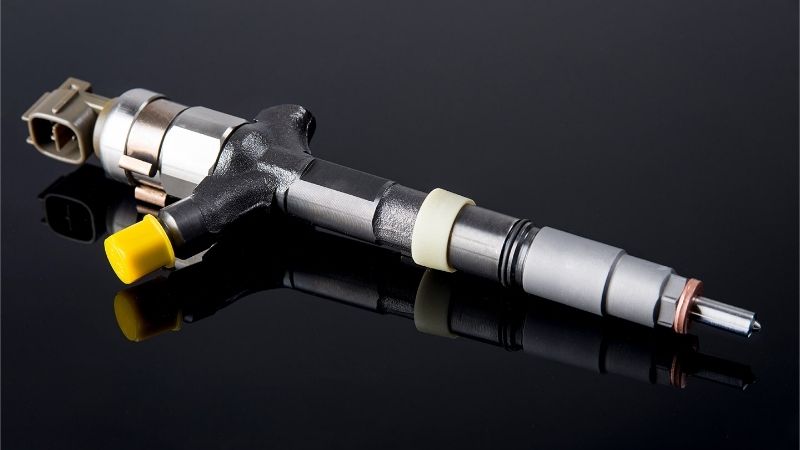
Fuel injectors control the fuel that is injected into the combustion chamber. The fuel is required to be optimally atomized for the fuel to be mixed adequately into the air; internal passages and openings of the sprayer have to be accurate. We achieve that through precision drilling and tight-tolerance control.
Turbine Disc Assemblies
The turbine discs are the parts that retain and support the blades and are subjected to significant centrifugal force. Dimensional accuracy and surface finishing free of imperfections are what is needed to achieve the needed rotor balance and avoid the occurrence of stresses during the operating cycle.
Bearing Support Housings
Bearing housings keep the rotating shafts aligned and provide support for the shafts. The dimensions of the bores and the presence of defined alignment features are fundamental to preventing friction and premature wear.
Combustion Chamber Liners
Combustion liners are made to shield the rest of the aircraft engine from high temperatures. They are made with the highest quality materials and design. The design and manufacture of the cooling channels and thin-walled areas are the manufacturer’s primary focus to achieve the necessary levels of rigidity and airflow control.
Exhaust Nozzle Assemblies
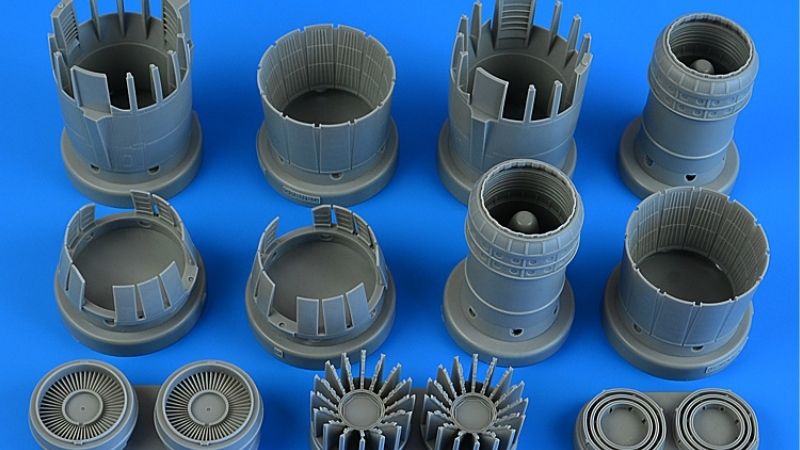
The design of exhaust nozzles focuses on shaping and directing hot gases to optimize thrust generation. For example, the precision of the nozzle geometry plays a crucial role in improving engine efficiency and performance across a wider range of aircraft engine types.
Diffuser Section Components
The components of the diffusers regulate airflow throughout the aircraft engine’s different stages by actively reducing and redirecting the flow of compressed air. For example, smooth and accurate transitions help maintain stable pressure and reduce engine turbulence.
Precision Machining Techniques for Aircraft Engine Components
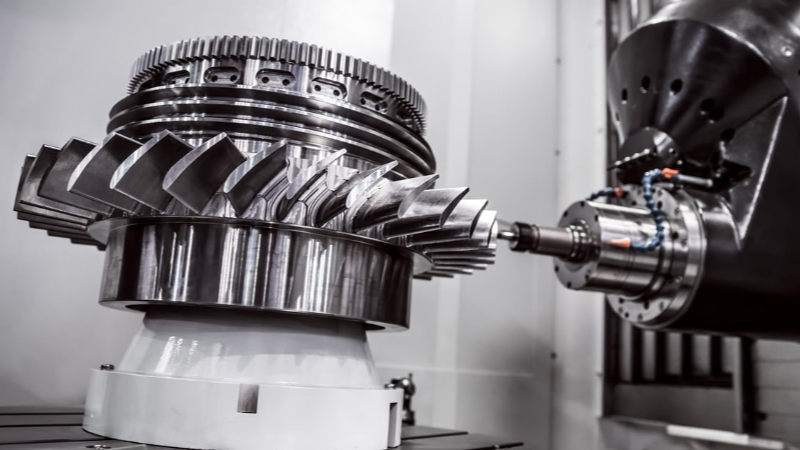
5-Axis CNC Machining
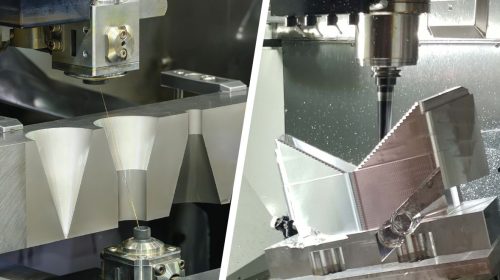
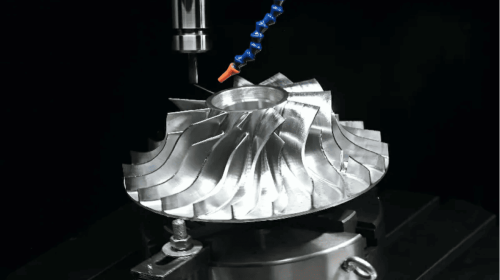
We use 5-axis CNC machining for aircraft components that range from simple to complicated, with varying angles and fine details in small geometry and pocket areas. This means that we can cut and machine a blade’s complex profile while also handling and contouring curved surfaces in a single configuration.
CNC Turning
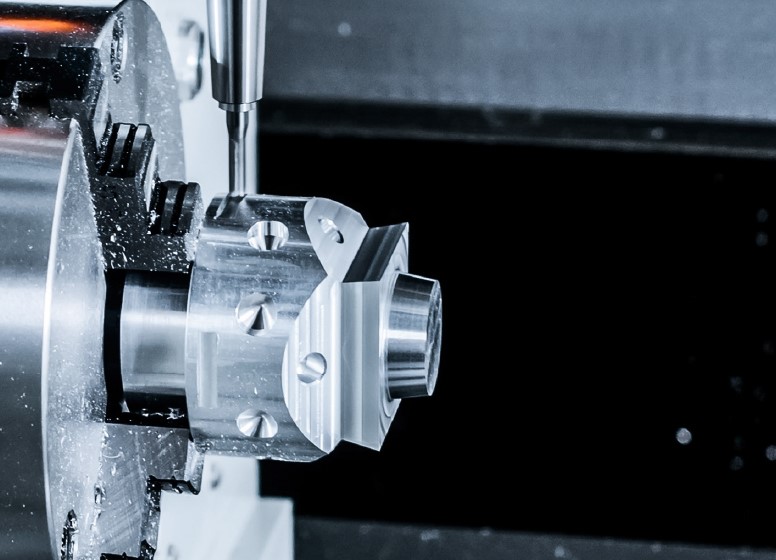
CNC turning works well for round and rotary items, such as shafts, spacers, and turbine discs. Cutting settings are precisely managed to provide exact diameters, smooth finishes, and good concentricity. Proper turning ensures consistent, high-speed rotation. This method contributes to the rotor’s durability and balance.
Electrical Discharge Machining (EDM)
When working with one of the strongest and most heat-resistant materials, EDM is usually the chosen method. The material will be sculpted, rather than cut, using controlled electric sparks. This enables the burning of fine features, and, if applicable, the thicker or finer the feature. EDM is extremely useful for items with delicate features and internal complicated geometry.
Micro-Machining
Micromachining allows for excellent accuracy and precision when producing small features. We use specialized tools and controlled machining settings to finish microscopic holes and exquisite details. This technique is crucial for components that regulate airflow or fuel.
Laser Drilling
Laser drilling generates small and accurate cooling holes in hot components. It is a useful method to produce small or angled holes with minimal distortion, and it works well to support thermal management. This technique increases the durability and reliability of the aircraft engine under extreme operating conditions.
Advanced Materials Used in Aircraft Engine Components
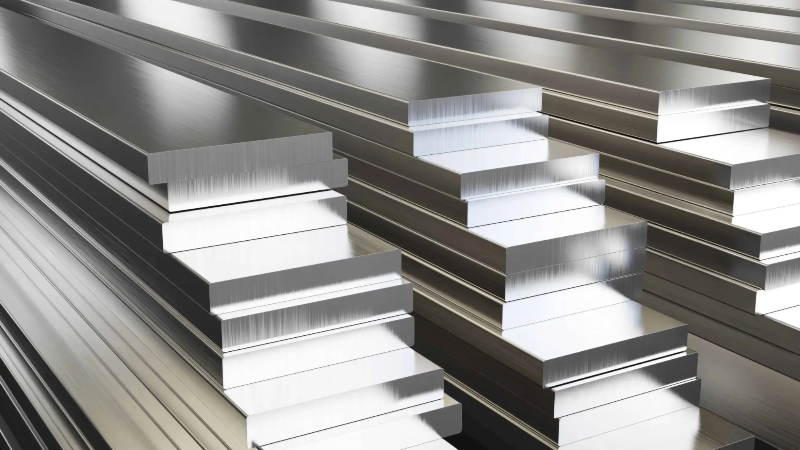
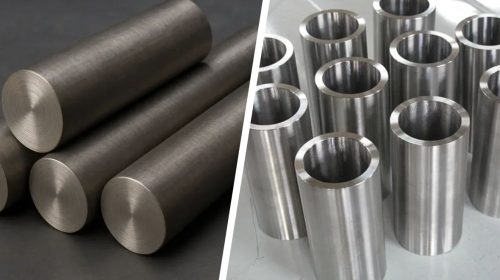
Nickel Superalloys: Superalloys are best known for their ability to retain strength and resist alteration due to deformation, which occurs at high temperatures.
Titanium Alloys: They are best for rotating parts that need high durability and endurance without adding too much weight. They offer good resistance to corrosion as well.
High-Strength Aluminum: High-strength aluminum alloy is chosen for parts where it is important to minimize the weight of the entire aircraft engine assembly.
Stainless Steel: Stainless steel offers good corrosion resistance and good toughness. It also reduces moisture, pressure, and heat.
Cobalt Alloys: We choose cobalt alloys for their extreme wear, corrosion, and high-temperature resistance. These are the only alloys that are used in most parts that endure mechanical friction and thermal stress.
Innovative Surface Finishing and Stress Relief Techniques
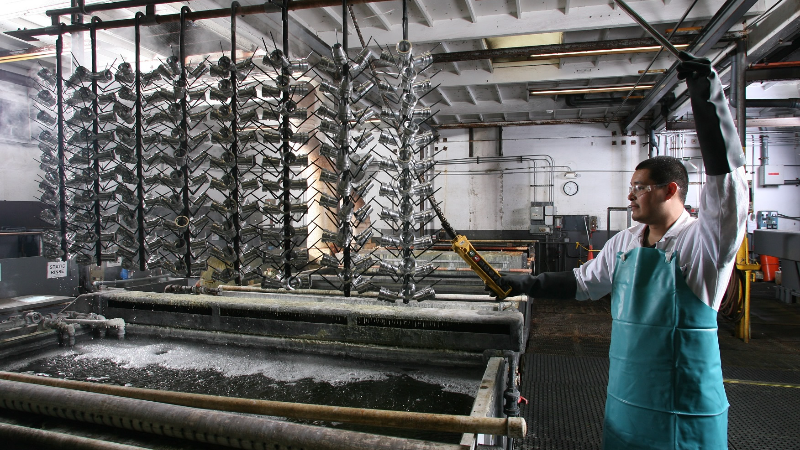
Shot Peening: Fatigue strength is improved by introducing compressive stresses.
Electropolishing: Surfaces are made smoother by an electrochemical process that reduces surface resistance to airflow.
Passivation: The corrosion resistance of stainless steel components is improved with a chemical solution that removes free iron from the surface.
Anodizing: The aluminum surface is hardened and protected by thickening the natural oxide layer through an electrochemical process.
Thermal Stress Relief: Internal stresses are reduced after machining by subjecting components to a controlled heat-treatment cycle.
Overcoming Technical Challenges When Machining Components for Aircraft Engines
Managing Hard-to-Cut Metals
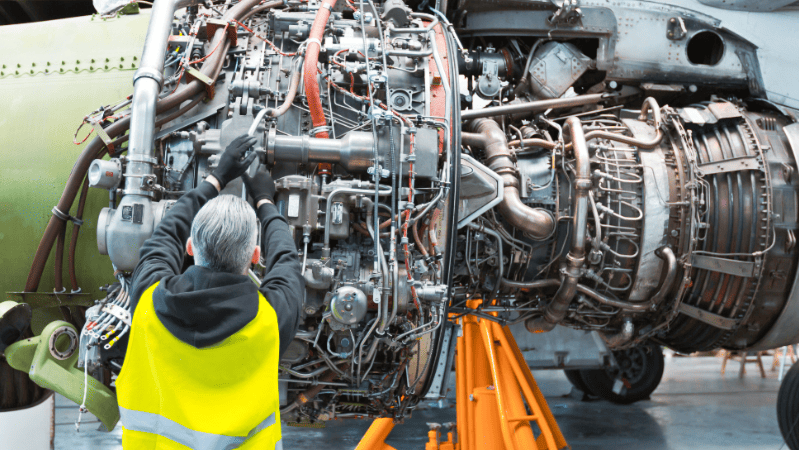
Nickel and cobalt alloys are used in aircraft engines, providing high-temperature and cutting resistance during machining. To solve these challenges, we carefully arrange cutting speeds, feed rates, and coolant applications. We also use coated carbide or ceramic tools intended for high-temperature alloys to ensure dimensional precision and surface integrity.
Controlling Thin-Wall Vibration
Thin-walled components of an aircraft engine are likely to be prone to vibration and deflection while machining. Vibration, if uncontrolled, may lead to chatter marks or dimensional distortion of the components being machined. We implement rigorous fixturing, balanced toolpaths, and controlled cutting forces to ensure stability and preserve the part’s geometry.
Tool Wear Optimization
Machining aerospace materials at high speeds results in rapid tool wear. To avoid abrupt wear, we continuously monitor the tool’s condition and adjust machining parameters to maintain a consistent surface finish and ensure all components meet quality criteria. We ensure that all components produced are within the prescribed limits.
Achieving Micron Tolerances
Many aircraft engine components are designed to operate with micron-level tolerances. To achieve these standards, we ensure that we have stable setups for machining and implement in-process measurement components. We utilize high-level metrology tools at the various stages to ensure that all critical components adhere to the stringent standards of aerospace engineering.
Emerging Trends in Aircraft Engine Component Manufacturing

Additive Hybrid Production
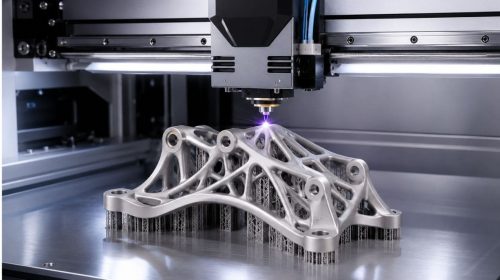
The aerospace industry has begun adopting additive hybrid production, combining metal 3D printing with CNC machining. This combination enables the production of complex interior structures, such as lightweight lattice structures and cooling conformal channels, that are not possible with conventional techniques.
Digital Twin Integration
Digital twin solutions are changing the way aircraft engine components are planned and produced. The use of digital twins as real-time virtual replicas of individual parts, machining tools, and machining/tooling setups allows for the simulation of production steps, prediction of thermal distortion, evaluation and modification of cutting forces, and optimization (i.e., ultra-precision, mirror-like surface finishes) before beginning machining operations.
Sustainable Lean Manufacturing
Both sustainability and efficiency are very important in aerospace manufacturing today. We implement construction recycling systems for high-value alloys, optimize cutting parameters to reduce energy consumption, and use intelligent scheduling to minimize machine idle time. Process control systems help minimize scrap and rework, balancing our lean initiatives so we reduce environmental impact while maintaining the quality and reliability of core aircraft engine parts.
Automated Quality Inspection
Modern aircraft engine component manufacturing requires advanced inspection technology. We use laser scanning, in-process probing, and coordinate measurement machines (which monitor and control machine operations) to control complex geometries to the micrometer level. When inspection data is incorporated into our CAD/CAM models, we can discover and repair deviations during the run, ensuring that all parts are designed for the aircraft engines’ harsh operating conditions.
Conclusion
When it comes to aircraft engines, performance really depends on how the parts are machined. These machined components must be able to handle a lot of heat, pressure, and constant spinning.
At AeroCNCParts, we specialize in making these parts with precision and care. We make sure that every project we work on is of the highest quality and consistency. Contact us today if you’re getting ready to start a new aerospace project and build components that will perform exceptionally well.

Kim
Kim oversees engineering operations, including complex process planning, DFM reviews, and solving challenges associated with high-precision aerospace parts. He specializes in strict tolerance control and machining complex geometries essential for avionics, turbine components, and structural frames. Outside of work, he enjoys the precision and strategy of playing snooker.