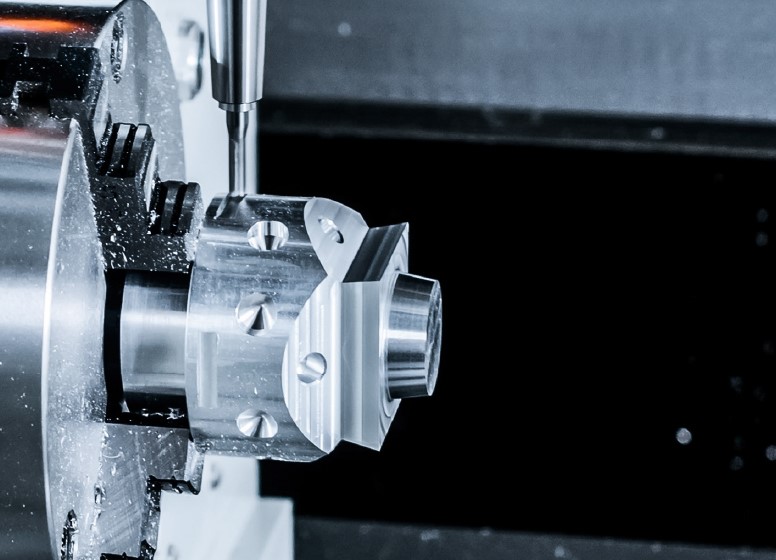
How Are Aerospace Machining Quotes Calculated?

Aerospace machining quotes often seem complicated, but they are not. The aerospace industry is a critical sector that demands safe, reliable, compliant products. All part production must adhere to 100% inspection, traceability, and documentation requirements.
High-performance materials must be used, each with its own machining challenges. All of that and more contribute to the quote. In this guide, we will walk you through everything you need to know about how aerospace machining quotes are calculated.
Why Are Aerospace Machining Quotes Different?
Safety Requirement
Aerospace machining doesn’t only focus on part performance and efficiency; every part must also be designed to meet safety requirements.
And as such, we produce every part so they can withstand extreme flight conditions without failing or posing adverse effects, even when used for a long time.
Compliance Standards

Following compliance standards such as AS9100, ISO 9001, and NADCAP is a significant requirement in aerospace machining. These standards require thorough process inspection, documentation, and traceability, all of which contribute to the quote.
Higher Liability and Insurance requirements
The aerospace sector is a critical industry that must ensure reliability and high performance. And since aerospace parts significantly influence aircraft safety, insurance requirements and costs are high compared to other industries.
Type of Materials
Aerospace parts aren’t made with just any metal or plastic. They are made from high-performance materials, such as titanium and nickel-based alloys. These materials present their own machining challenges and thus require a strategic process.
Tight Tolerance Machining
Compared to other industries, the aerospace sector requires micron-level machining, which typically requires advanced machines and tools, slow machining parameters, and highly skilled professionals, all of which contribute to our quote.
Aerospace Machining Quotes Core Calculation

Aerospace machining quotes include every expense, including materials, labour cost, certification, tooling, machines, maintenance, inspection, engineering, and so on. However, to simplify things, we provide our quote using a single formula.
Quote = (Direct Costs + Indirect Costs + Non-Recurring Engineering) + Profit Margin.
Direct costs are expenses directly related to the part being produced and can vary depending on the material used, part geometry, and production volume. As such, they include material costs, milling tools, machining time, labor, shipping costs, surface treatment, etc.
Indirect costs are all expenses necessary to fully bring a machining project to life, although they may not be directly related to a specific part. It includes the cost of facility overhead, machine maintenance, quality management system, insurance, compliance, and so on.
Non-recurring engineering includes the cost of setting up and engineering before actual manufacturing begins, and it includes CAM programming costs, First Article Inspection, Fixtures, process verification, etc.
How Are Aerospace Machining Quotes Calculated?
Below is a detailed list of the costs that comprise aerospace machining quotes.
Cost of Exotic Raw Materials

Material Price
The aerospace industry requires high-performance materials that can resist corrosion, exhibit high strength and durability, and have low weight.
Most of these materials, including titanium (Ti-6Al-4V), Inconel 718, and high-grade aluminum, are generally more costly than most other metals. The price of titanium alone is five to ten times that of regular steel.
Machinability
When we machine aerospace parts, specialized techniques are used to ensure accurate results. Feed and speed rate must be kept low to maintain tight tolerances and prevent tool wear. This, in turn, increases machining time, leading to higher costs.
Tool Wear
Machining high-performance metals is usually challenging. Titanium, for example, has low thermal conductivity, which causes heat to accumulate during machining.
This, in most cases, weakens tools and affects aerospace machining tolerances. Investing in high-quality tools, repairing and replacing them, controlling temperature, and using coolants all add up to a high cost.
Material Certification and Paperwork (C of C)
Material Traceability
Material traceability is crucial. Every material we utilize, from metals to plastics and composites, comes with a Certificate of Conformance that indicates its origin, chemical composition, and mechanical properties, ensuring that the materials align with aerospace requirements.
Documentation Cost
Beyond obtaining the certificate, we also verify and maintain adequate records of these documents over several years, in accordance with AS9100 requirements.
The combined documentation process brings about data management, administrative, and record-keeping costs for adequate traceability.
Material Waste and Yield
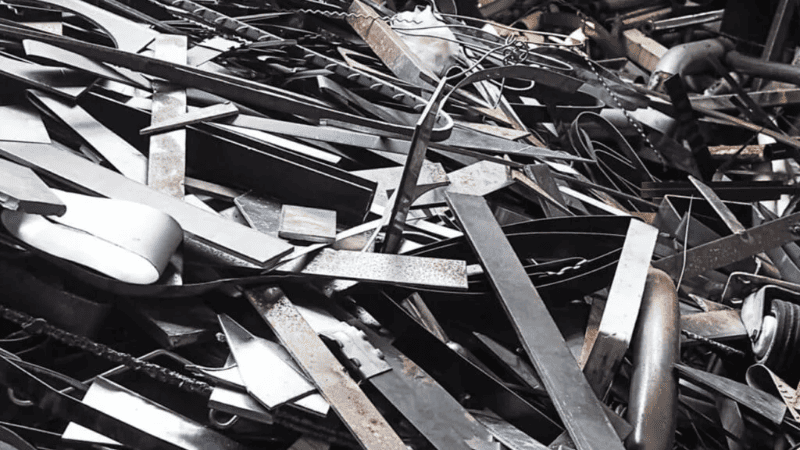
When we machine aerospace parts, especially intricate ones, large amounts of material are removed compared to the original material block.
This is typically represented as a buy-to-fly ratio. That is the ratio of the material block used compared to the machined part.
Beyond some materials, such as titanium and nickel alloys, which require careful disposal, all of which contribute to aerospace machining quotes.
Calculating Machine Hourly Rate
Capital Investment
Machining aerospace parts requires advanced 5-axis CNC machining and tools, high-speed spindles, and metrology equipment.
These are costly equipment that must be maintained over the years, and as such, quotes must include the depreciation and maintenance costs.
Operating Overhead
Operating overhead isn’t left out, as it covers the cost of keeping operations running and delivering as expected. It includes the cost of utilities, high-pressure coolant, CAM software licensing, etc.
Setup and Programming Time (Non-Cutting Time)
CAM Programming
Many aerospace parts feature intricate designs, including contours, angled points, thin walls, curved surfaces, and deep pockets. As such, we follow a strategic CAM programming before any cutting operation is done.
We spend hours and days going through simulation processes and setting tool paths to ensure accuracy, and all of these contribute to the overall cost.
First Article Inspection (FAI)
Before actual mass production begins, we manufacture the first component to verify that it meets the exact specifications. Documentation is complete, and consistency and precision are validated. Although FAI is done once, it is included in the quote.
Operator Skill Level
Skilled Professionals

Aerospace-grade materials, advanced machines, and tools require highly skilled experts. Moreover, strict tolerances and high quality must be maintained to ensure compliance.
We therefore consistently invest in expert training and certifications to meet the demands of the aerospace industry and build competency.
Inspection Cost
We also ensure a comprehensive inspection from design to completion. The inspection technician spends more time verifying measurements and part features, which adds up to the quote.
Impact of Deep Pockets and Thin Walls
Aerospace parts with complex geometry require specialized tooling and machining. Deep pockets and thin walls require tools that can access hard-to-reach designs.
As such, we use a slower cutting speed to prevent vibration, control heat, and chatter that could affect tolerance. This increases machining time and influences cost.
Required Axis Count (3-Axis vs. 5-Axis)
Compared to 3-axis machining, 5-axis machining eliminates the need for frequent adjustments and setups, thereby reducing errors, improving accuracy, and decreasing machining time.
However, the machine itself is expensive and requires expertise to operate and advanced programming. This increases the hourly rate compared to the 3-axis model.
Internal Radii and Tool Size
Specific part designs with small internal radii require us to use smaller diameter cutters, which are easily prone to damage. These tools must be handled carefully, set to run at low speed, and require more machining passes to achieve the design.
Tight Tolerances
Increased Inspection
Aerospace machining tolerances could be as tight as 0.002mm, depending on the specific part. With this, we ensure thorough in-process and final inspection using an advanced Coordinate Measuring Machine, which increases inspection cost.
Reduced Throughput
When machining tight-tolerance parts, we use a slower machining speed and maintain a regulated temperature to ensure precision remains within the required range.
High temperatures can distort tools and machined parts, which affects tolerances. The tighter a part is, the more complex it is to machine, which slows down processes and increases costs.
Specified Surface Finish (Ra)
Finishing Passes
Many aerospace parts require a smooth surface finish to enhance sealing capacity, ensure aerodynamic capability, improve fatigue resistance, and enhance performance.
As such, we allow for more finishing passes, use lower cutting speeds and rates, and specialized tools to eliminate surface roughness while improving smoothness. This consumes more time and adds to the cost.
Specialized Post Finishing Processes
In addition to the regular finishing procedure, some parts require an extreme level of smoothness, which can only be achieved through the post-finishing process. As such, we utilize processes like vapour polishing, which takes more time and cost.
Specialized Surface Treatments
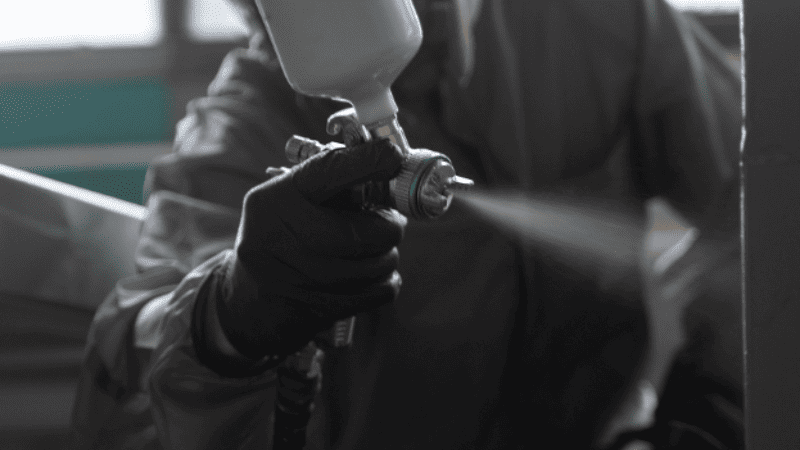
Many aerospace components also require specialised surface treatments, such as hard anodizing, thermal coating, and plating, which necessitate the services of a certified vendor or subcontractor.
Working with such vendors involves verifying their certificates, ensuring traceability, arranging logistics, ensuring thorough documentation, paying for services, etc.
All of these increase the cost and time spent. Moreover, all these processes must be carried out with deep scrutiny and carefulness to eliminate reprocessing or rework.
Non-Destructive Testing (NDT)
Testing and Validation
Non-destructive testing and analysis allow us to verify and validate the mechanical properties, features, and defects in a part while still maintaining component performance.
These include processes such as Liquid Penetrant Inspection, Ultrasonic Testing, Magnetic Particle Inspection, and Radiographic Testing, among others. This step is vital and must be included in the quote.
Stress Relief Process
Stress relief heat treatment processes are typically carried out before and after machining to reduce internal stress, enhance performance, increase strength, and improve resistance to corrosion and fatigue.
It is a crucial step that should be carried out on most aerospace-grade alloys.
AS9100/ISO 9001
Quality Management System Overhead
Ensuring an excellent quality management system involves staying in compliance with AS9100 and ISO 9001 standards.
These involve taking active steps to consistently train employees, maintain adequate internal and external auditing, manage documentation and traceability, ensure effective calibration and process monitoring, and more. All of these come with a higher cost that adds up to the quote.
Process Control
Adequate process control is also essential for effective aerospace machining; therefore, we utilize statistical process control. This allows us to use statistical and real-time data-driven techniques to manage, document, and control the quality of critical manufactured parts.
Inspection Time and Equipment
Metrology Lab
Aerospace machining quotes also include the cost of investing in a metrology lab. These are labs that are equipped with Coordinate Measuring machines CMMs, surface measurement tools, laser scanners, calibrated gauges, etc, which are vital for verifying part measurement or geometry and ensuring precision.
A metrology lab must be a temperature-regulated space. The cost of maintaining the lab, providing equipment, and ensuring a controlled setup all necessitate additional costs.
Inspection Time
Our inspection process for aerospace parts covers a comprehensive 100% inspection from start to final processing, unlike many other industries. This increases the overall time spent and significantly adds to the cost.
Volume, Logistics, and Non-Recurring Charges
Economies of Scale
Ordering a high-quantity batch most times equates to a lower cost per unit compared to a lower-volume order. Fixed costs, such as setup, programming, and FAI, are relatively spread over every unit’s order, reducing the cost per piece.
Beyond that, materials are purchased in large quantities, and machining is completed in a single setup, resulting in increased production efficiency.
Non-Recurring Engineering (NRE) Fees
NRE fees include the cost of design and engineering specific to a particular project. It is a one-time fee that may also include the cost of fixtures and specialized tooling, all of which are targeted towards a specific job, and must be added to the quote.
Lead Time and Rush Fees
When we work with expedited orders, resources available are retargeted toward them. The schedule is disrupted to meet the new target; machines are prepared, and staff take extra working shifts, which come with additional costs.
Beyond that, material sourcing is expedited, and subcontractors for specialized surface finishing and heat treatment are also given priority. This comes with an additional cost, as it requires extra effort. The lower the lead time, the higher the fees, which also influence quotes.
Conclusion
Aerospace machining quotes include various costs, including direct and indirect expenses, as well as non-recurring fees, all of which are explained in this guide. These are essential since they ensure safe, quality, and industry-standard and compliant parts that can withstand extreme aircraft conditions
AeroCNCParts is a leading aerospace parts manufacturer with more than 20 years of experience. When you work with us, we offer you Design for Manufacturability options to ensure production efficiency.
We have no minimum order quantity, and our pricing is generally fair; we do not compromise on quality. We are AS9100, ISO 9001, and NADCAP certified, and our processes adhere to 100% inspection and traceability standards. Get a Quote Now.

Bin
Bin manages daily production, covering scheduling, workflow coordination, and shop-floor control. He has strong experience in machining processes, tooling, and practical problem-solving. In his free time, he likes outdoor exploration and adventure trips.