Top 7 Common Aviation Abbreviations to Know

Aviation abbreviations help simplify many aircraft terms, thereby ensuring effective communication and documentation. It also offers other valuable benefits as outlined in this blog.
Read on to learn the 7 most commonly used abbreviations in aircraft.
Top 7 Common Aviation Abbreviations
Outlined below are 7 common aviation terms and abbreviations:
A/C (or AC)

A/C in aviation means aircraft, and it encompasses all flying machines used in air transportation, both personally owned and those designed to carry passengers.
Commercial aircraft are divided into two main types: narrow-body and wide-body. The narrow body features only one passage or pathway and is used for short travel, primarily for local trips.
The wide body is designed with two pathways or aisles that can travel long distances and can transport up to 850 people at a time.
AOG
Another aviation terminology abbreviation is AOG, which means Aircraft on Ground. This abbreviation indicates that an aircraft cannot operate as it usually does or take off due to specific issues.
The issues can be unfavourable environmental conditions or other technical problems. However, in a situation where an aircraft is grounded due to a mechanical issue, it needs to be properly repaired, examined, and authorized for usage.
MRO
This means Maintenance, Repair, and Overhaul, and it is used to express the three crucial services that guarantee the effective functioning of the aircraft.
Maintenance refers to the periodic check-up given to an aircraft to ensure that its systems consistently remain in good condition over its lifetime. Repair means the fixing of a part, unit, or system within the aircraft to restore it to its good working condition.
During an overhaul, critical aircraft structures are selectively removed, thoroughly inspected, and treated as required, following the Original Equipment Manufacturer (OEM), Component Maintenance Manual (CMM), and other relevant requirements.
IATA

IATA stands for International Air Transport Association, and it is the international airline trade organization. It was established in 1945 to provide regulations that ensure the protection, effective performance, and security of aircraft operations.
AO
AO is used to express an air operator, and it means an individual or organization that owns, manages, or operates an aircraft. As such, they are required to obtain an Air Operator Certificate, which provides guidelines to ensure safety and remain in compliance.
ACMI
ACMI stands for Aircraft, Crew, Maintenance, and Insurance. It is used to describe a type of rental arrangement between two airlines.
Usually, one of the airlines provides the other with an aircraft, crew, or staff, maintenance, and insurance. The other airline, known as the lessee, pays the lessor depending on the timeframe during which the airplane was flown.
This type of arrangement is primarily used when an airline requires additional airplanes for various reasons, and it’s commonly employed for both passenger and cargo travel.
GSE
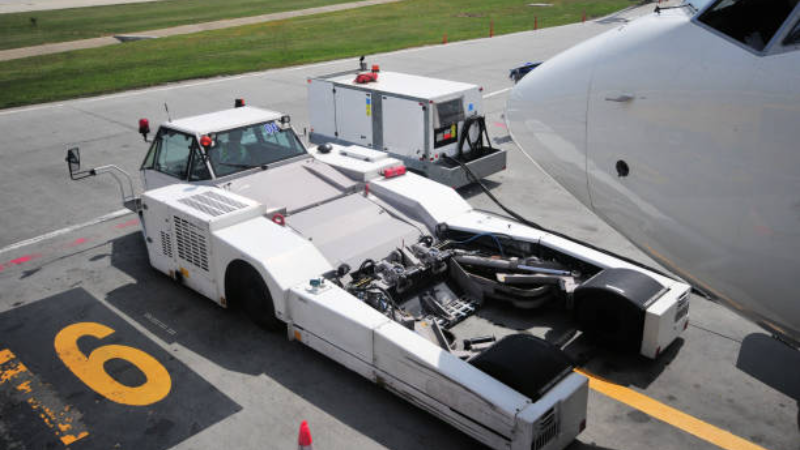
Ground Support Equipment, as its name implies, refers to all machines and equipment used in handling and aiding aircraft while on the ground. It includes tow vehicles, pushback tractors, and other equipment.
While not all aviation abbreviations are listed, the above ones are the most popularly used in daily aircraft services.
Importance of Aviation Abbreviations
Safety
Safety is of importance in aircraft systems. With aviation abbreviations, aircraft operators and personnel can quickly pass information across without using ambiguous or lengthy words.
In emergency situations, communication is faster and more effective, thereby ensuring safety.
Standardized Language
With aviation terms and abbreviations, aircraft experts across many countries and regions can communicate in a common language. This eliminates misunderstanding and enhances effective joint operations and collaborations.
Clarity
Aviation terminology abbreviations also help provide simple forms of complex, lengthy aircraft terms. This means aircraft personnel don’t have to communicate in complex terms, and as such, information exchange is easier.
Effective Documentation and Reporting

Manuals, files, records, and other documents’ information is kept accurate, simple, and easy to understand. Abbreviations help reduce the need for lengthy words, thereby reducing the likelihood of mistakes.
Moreover, it helps professionals remain compliant by storing only accurate and consistent documents and reports.
Efficient Learning and Mastery
Incoming aviation personnel and students also gain quick mastery of aircraft terms through the use of abbreviations.
They can easily learn the abbreviation and understand the specific procedures, operations, regulations, processes, etc. that it stands for.
Conclusion
This blog has provided the 7 most popular of all aviation abbreviations. From ensuring safety and adequate documentation and reporting to providing clarity, aviation abbreviations offer many functional benefits.
AeroCNCParts is a prominent manufacturer of aircraft parts. We specialize in a range of aerospace structures, from simple to highly intricate ones. We are globally recognized for delivering high-quality, durable, and precise components that meet AS9100 and NADCAP standards. Whether you want a single component or batch production, we ensure smooth logistics right to your doorstep. Get a free quote now.

Eva
Eva is a Key Account Manager and Head of AeroCNCParts, a division of DEK. She has over ten years of international sales experience, with strong expertise in market management, customer partnerships, and precision parts manufacturing. Outside of work, she enjoys reading, tea culture, and is a certified tea specialist.