Top 10 Aerospace Materials in CNC Machining
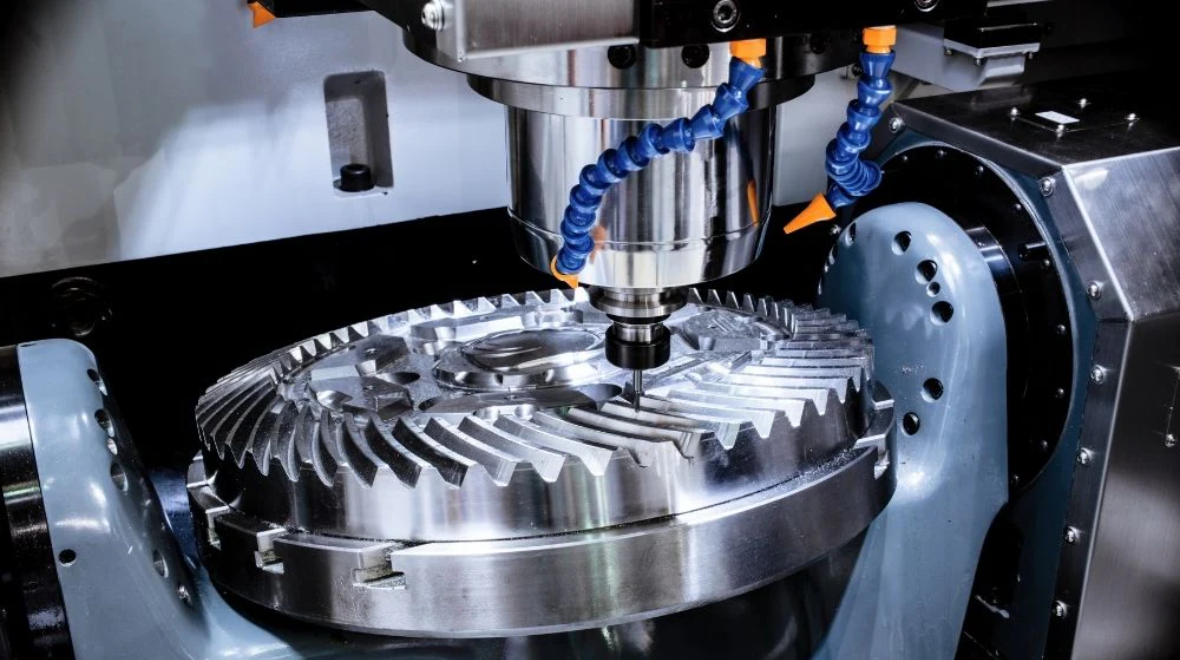
The aerospace field is a delicate sector that demands structures with optimal functioning and reliability. As such, these structures must be designed with specialized fabrication procedures and carefully selected materials that can withstand severe environmental factors and demanding working conditions.
This blog presents a comprehensive breakdown of the top 10 aerospace materials used in CNC machining.
What is a CNC Machine Used for in the Aerospace Industry?
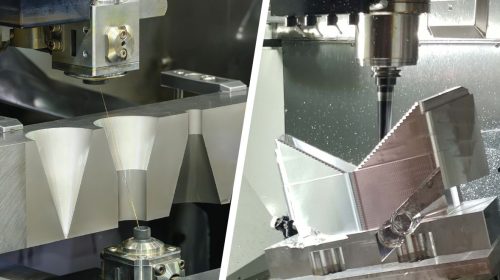
CNC machining in the aerospace industry is valuable for producing parts that require tight tolerances and high accuracy.
It is used in creating highly complex and intricate components that other conventional methods cannot handle. These include the turbine blade, gear assemblies, actuators, and so on.
The technique helps improve production efficiency, ensure safety, and help manufacturers stay compliant.
Prototyping and Custom Parts
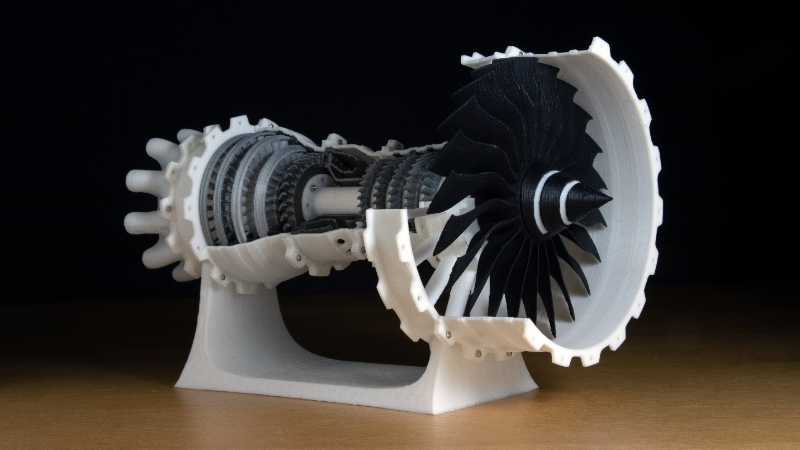
CNC machining offers speed, accuracy, and efficiency. As such, it remains the best technique for testing and validating designs. It quickly helps aircraft professionals to bring ideas to life.
With this, the design is rapidly manufactured (prototyped), examined, and verified before committing to actual production.
Mass Production of Critical Components
After the prototype is tested, verified, and authorized, CNC machining is used for mass production. The technique is capable of producing highly accurate and consistent parts that look and function just like the first design.
Top Aerospace Materials in CNC Machining
CNC machining requires high-performance materials that meet specific requirements. Here are the top aerospace-grade materials, ranging from metals to plastics and composites.
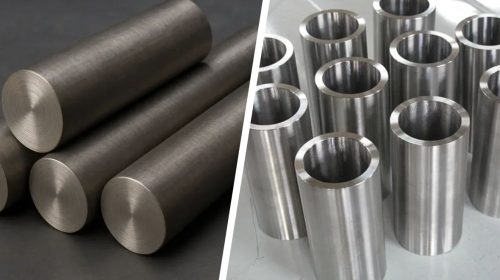
Titanium Alloys
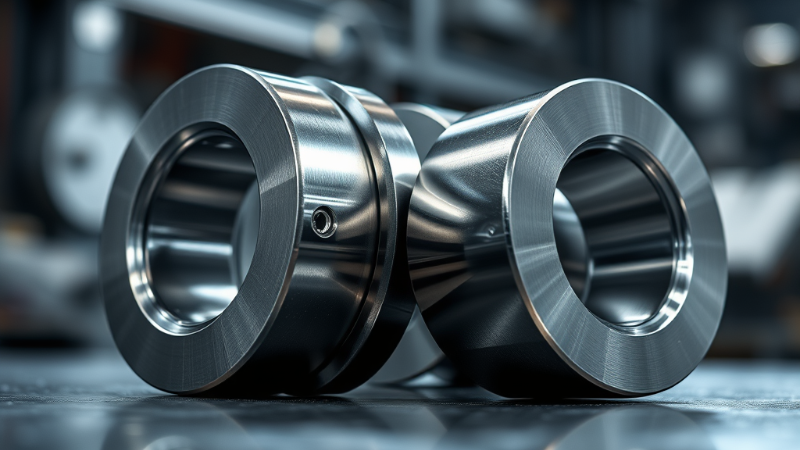
Titanium has outstanding qualities that make it valuable in aerospace CNC machining. It possesses a high strength while also maintaining a low weight.
It can resist corrosion, extreme temperature, and other unfavourable environmental factors. Despite this, machining titanium requires careful strategies, advanced equipment, and accuracy, which is why CNC machining is best applied.
Types
Titanium Grade 5 (Ti-6Al-4V): This is a quite popular titanium alloy, containing 90% titanium, 6% aluminum, and 4% vanadium.
It offers characteristics such as high strength, resistance to extreme temperatures, and corrosion resistance. It is valuable in manufacturing engine units, structural parts, and other components.
Titanium Grade 23 (Ti-6Al-4v ELI): Grade 23 contains a few oxygen condensates, making it quite challenging, which makes it susceptible to surface fracture.
Due to its exceptional features, it is utilized in producing components that require high durability, such as gear assemblies.
Titanium Grade 9 (Ti-3Al-2.5V): This grade offers improved machinability and weldability, and is used in the manufacture of parts requiring moderate toughness, such as hydraulic units and fasteners.
Beta Titanium Alloys (Ti-10V-2Fe-3Al): These alloys offer high strength and are thus used in the manufacture of structures with extreme durability and fatigue resistance.
Applications
Gear Assemblies: The gear unit is exposed to shock and stress during landing and takeoff, and thus requires materials that can withstand these factors.
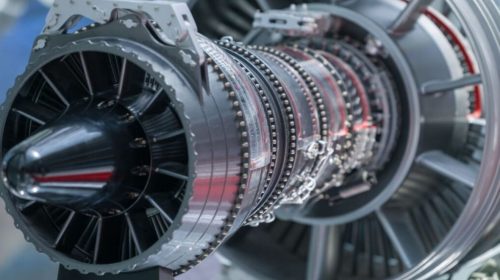
Aircraft Engine Units: Parts such as the compressor blades and discs are also exposed to extreme temperatures and pressures, and as such, must be highly durable.
Wings and Fuselage: These units benefit from titanium’s low weight, high strength, and durability.
Hydraulic Structure: Hydraulic structures constantly exposed to fluid require material that can survive corrosion and wear.
Aluminum Alloys
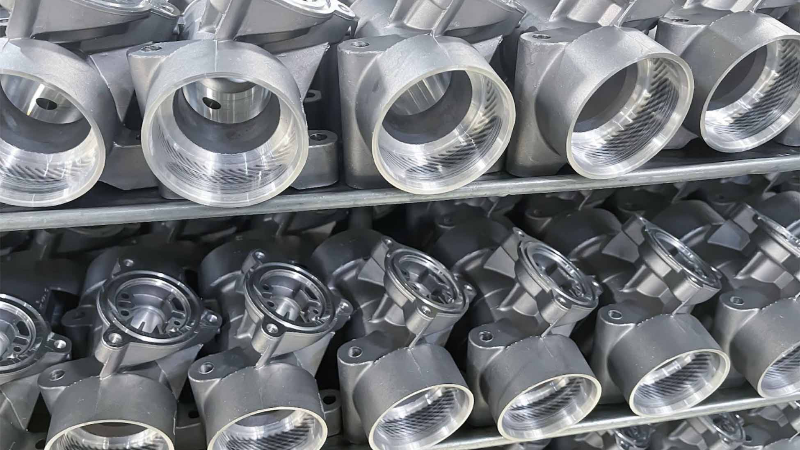
Another advanced aerospace material is aluminum. The metal is highly valued in aerospace for its low weight and exceptional durability. It is also easy to work on CNC machines, and it can be easily anodized to improve its strength, corrosion resistance, and appearance.
Types
2024: This is strong and can survive fatigue. It requires protective surface treatment to improve its corrosion resistance and is commonly used for wing components.
6061: This can be easily processed and, as such, utilized for structural units. It is also strong and corrosion-resistant.
7050: It offers exceptional strength, durability, and can also survive corrosion. Also suitable for structural parts and wings.
7075: Extremely strong alloy with low weight. It is valuable in producing aircraft gear components.
Applications
Wing Components: This component also needs to be durable, stiff, and lightweight, which makes aluminum a suitable choice.
Fuselage Skins and Panels: Outer structural components requiring durability, lightweight, and an extensive life span.
Seat Frameworks and Cabin Units: These components must also be lightweight, durable, and ensure safety.
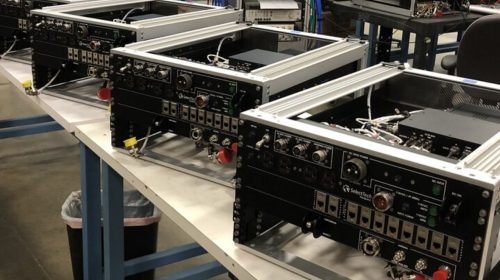
Electronic Casings and Brackets: Facilitate excellent thermal management and are lightweight, making them ideal for electronic parts.
Stainless Steel
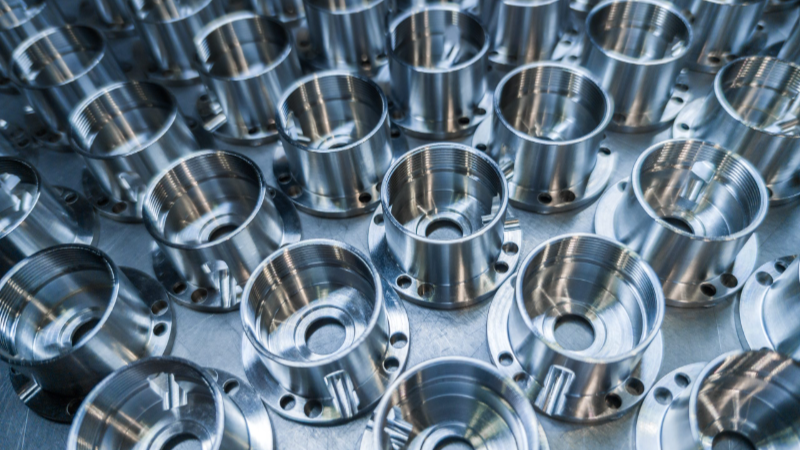
Stainless steel is widely recognized for its exceptional temperature, wear, and corrosion resistance.
The metal retains its durability even at high temperatures. It is composed of approximately 10.5% or more chromium, which is responsible for protecting it against extreme environmental factors.
Types
304: 304 is widely used in aerospace. It is easy to fabricate, can survive corrosion, and is excellent for structural units.
316: Part of its constituents is molybdenum, and this helps it improve its ability to withstand corrosion and other harsh conditions.
17-4PH: This offers outstanding strength, and it can undergo heat treatment. It is suitable for structures requiring high durability and dimensional stability.
321: This alloy features titanium as a constituent, which helps it improve its ability to withstand extreme temperatures. Commonly used for exhaust components.
Applications
Fasteners and Clamps: highly durable and strong components that keep components firm even in high stress and vibration.
Sensor Enclosures: Stainless steel provides resistance against harsh conditions for this part, helping to control heat accumulation.
Hydraulic Structures: These work effectively under pressure and extreme temperatures, maintaining their fluid content.
Fuel Units: Resist high pressure and corrosion even in extreme working conditions
Inconel
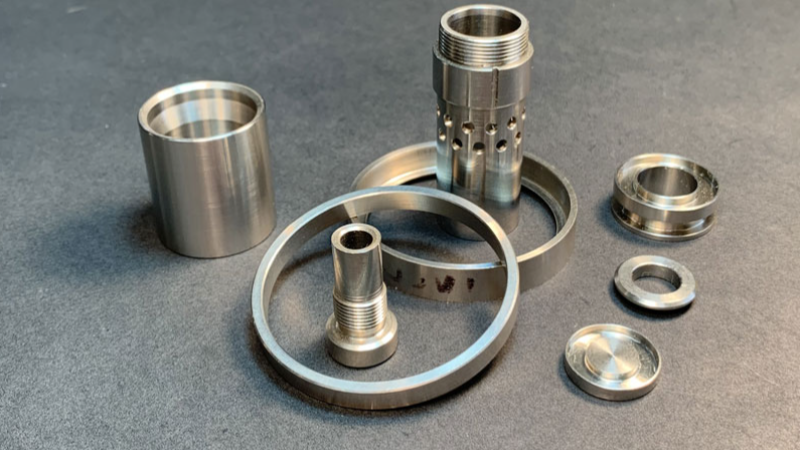
Inconel is another popular aerospace raw material. It is a superalloy that is highly regarded for its exceptional performance, even under intense pressure, oxidation, and high temperatures.
It is a rigid metal, and thus requires advanced CNC tools and techniques for processing.
Types
718: This is the most widely used type, and it is valued for its ability to resist fatigue and maintain its form when exposed to intense pressure.
625: Inconel 625 offers outstanding ability to withstand intense temperatures, and it is used for making exhaust components.
X-750: This allows for precipitation hardening that helps enhance its strength. Suitable for turbine blades, as it offers resistance against vibration and high temperatures.
600: Offers resistance to high temperature and oxidation, and thus is suitable for engine components.
Applications
Exhaust Manifolds: Inconel makes this component durable and strong due to its exposure to high temperatures and gas release.
Turbine Blades and Disc: Highly durable cyclical parts that resist extreme temperature and RPMs ( revolutions per minute).
Fasteners: are consistently exposed to intense heat and vibration, making Inconel a suitable material for their production.
Combustion Chamber Liners: Made from Inconel alloy, they can withstand high temperatures and chemicals.
Nickel Alloys
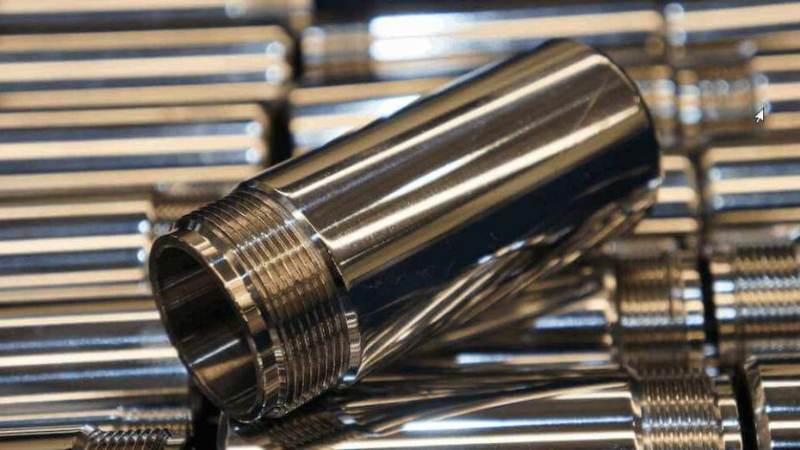
When resistance to stress, temperature, and corrosion is a concern, nickel is an excellent metal to use. It offers high strength, making it durable even in extreme, harsh conditions. It consists of nickel and other metals, including iron and molybdenum.
Types
625: 625 offers outstanding resistance to corrosion, temperature, and oxidation, and is valuable for making components like exhaust units.
718: can resist temperatures as high as 700 degrees Celsius. It’s hard and needs specialised tools to be effectively machined.
Alloy X (HX): This alloy offers a remarkable ability to be formed into shape, maintains its durability even at high temperatures, and is commonly used in combustion units.
Waspaloy: Waspaloy retains its physical properties even when exposed to stress and pressure, although it requires more expertise to be fabricated.
Applications
Turbine Blades: This component rotates quickly and consistently while maintaining its form and durability.
Combustion Liners and Chambers: Nickel constituents help withstand pressures and gas release without deforming
Exhaust Parts: They are also able to withstand high temperatures due to the nickel element.
Fuel Unit Enclosures: Fuel systems are designed to withstand corrosion and high pressure for an extended period, remaining durable throughout.
Magnesium Alloys
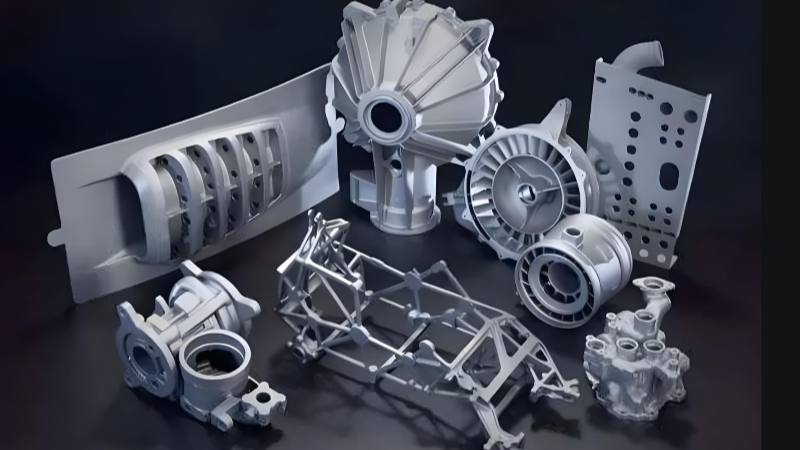
Magnesium offers a significantly low weight, which makes it suitable for aerospace manufacturing. It’s usually alloyed with metals like zinc to enhance its durability and ability to withstand temperature, vibration, and other harsh conditions.
Types
AZ91D: This is the most commonly used alloy, offering good strength with low weight and the ability to withstand corrosion.
Elektron21: This alloy performs well even in intense temperatures and vibration
ZK60: Offers better strength than other magnesium alloys. Due to its strength and durability, it’s suitable for structural components.
WE43: It also has a high resistance against temperature and thus is suitable for parts requiring thermal management up to 200 degrees Celsius
Applications
UAV Rotor Housing: Since magnesium is lightweight, it helps balance the weight of drones and their energy consumption.
Sensor Housing: Magnesium provides this component with the necessary strength while maintaining its weight.
Mount Frames and Brackets: Magnesium also offers a vibration-dampening quality, making it suitable for a camera mount, as it eliminates unstable capturing.
Cobalt-Chromium Alloys
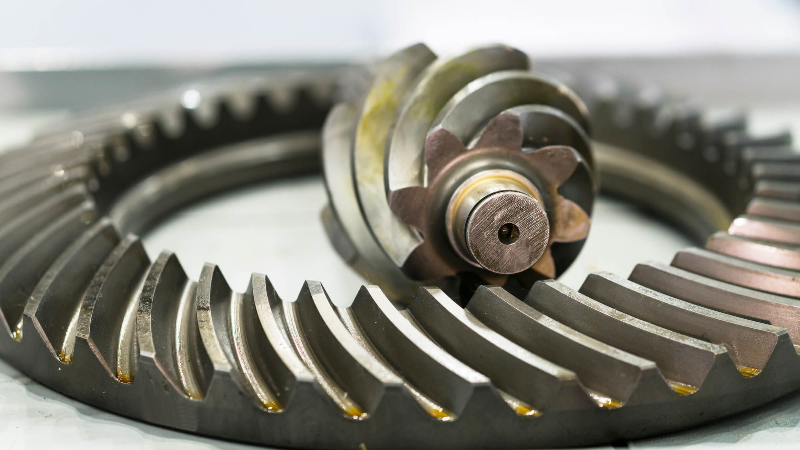
This is another aerospace engineering material composed of cobalt, chromium, nickel, molybdenum, and other metals.
Although it is very tough, it can be appropriately formed into shape using the right tools and techniques. It also offers qualities such as resistance to temperature, wear, and corrosion, as well as high strength.
Types:
CoCrMo: Mostly utilized for components requiring toughness and resistance to wear.
Haynes 25: Also offers exceptional strength and the ability to withstand oxidation, and is usually used for turbine engine structures.
Tribaloy Alloys: This alloy, composed of cobalt, molybdenum, and silicon, is used for components that require resistance to wear.
Applications
Actuation parts: this allows for smooth and consistent rotation without wearing out or losing their structural integrity, even when used for extended periods.
Valve Seat and Seals: This component requires material with high heat resistance, and cobalt chromium alloys are suitable.
Thrust Washer and Wear Pads: They have a tough layer that protects them from damage and reduces the need for repair.
Turbine Shroud Components: These components are exposed to consistent heat while helping to control airflow. They maintain their form and strength even in this condition.
High-Strength Steels
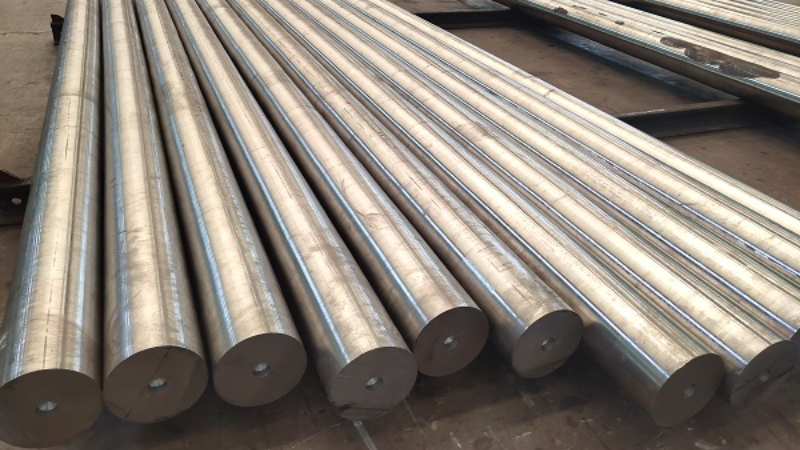
These advanced aerospace materials offer exceptional strength and toughness. It maintains its structural integrity even in extreme working conditions and load-bearing situations. It can withstand vibration and high pressure.
Types
4340: This is a hard alloy and can be heat-treated to improve its resistance to pressure and stress. It contains chromium, nickel, and molybdenum.
300M: Suitable for parts requiring high accuracy, toughness, and the ability to withstand stress
15-5PH: It features high durability and resistance to corrosion, making it suitable for parts constantly in contact with fluids.
Maraging Steels: This steel is highly valued for components that require exceptional strength and structural integrity, even under extreme loads and stress.
Applications
Gear Assemblies: these structures undergo stress and pressure during landing and takeoff, and thus require materials with high strength.
Actuation Components: High-strength steel helps actuation parts maintain their form even when subjected to consistent rotation.
Rocket Motor Enclosure: These components are designed to withstand high temperatures and pressure, ensuring the safety of the system.
Aircraft Tooling and Fixturing: Tooling and fixturing parts, such as jigs, can resist deformation events when bent and used repeatedly. High-strength steel makes this possible.
Composites
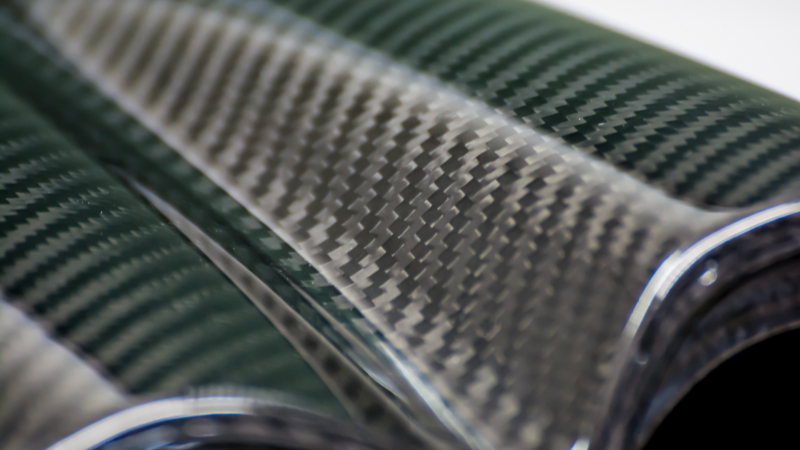
Composite materials also offer low weight and high strength, making them suitable for aerospace applications. They require specialized tools and machining to be processed and are resistant to corrosion.
Types
Carbon Fibre Composites: They offer high strength while also providing extremely low weight and durability.
Glass fibre: A relatively cheap polymer that is suitable for non-structural units.
Kevlar Composites: Suitable for parts that are exposed to high stress and vibration.
Hybrid: Constituents include carbon and Kevlar material. It also offers good strength, low weight, and reliability.
Applications
Rotorcraft Interior: Some composite types balance cabin weight and also help reduce vibrations.
Cargo Panels and Doors: Kevlar is used for these components due to its resistance to stress and load.
Satellite and Antenna Mounts: these parts are required to remain steady while in space, and carbon fibre aids this due to its ability to resist thermal expansion.
Engineering Plastics
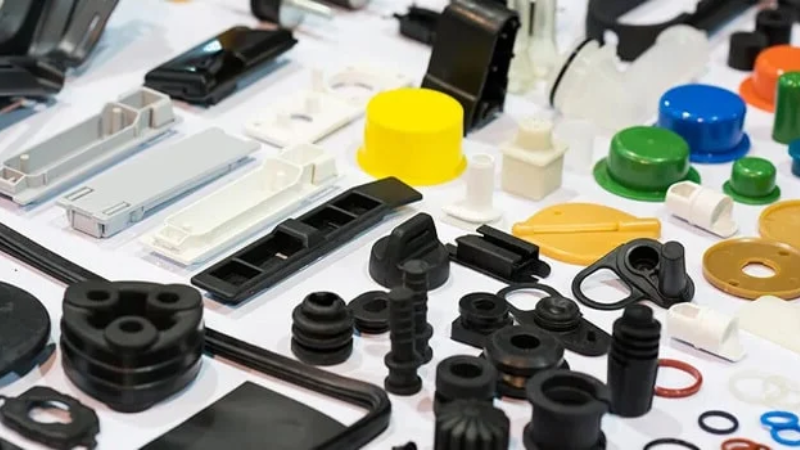
Engineering plastics are versatile materials used in modern aerospace manufacturing due to their lightweight nature, durability, ability to withstand chemicals, and ease of fabrication. It also offers insulation properties, corrosion resistance, and temperature resistance.
Types
PEEK: Offers outstanding characteristics, including resistance to temperature and environmental factors, as well as high strength and durability.
PEI: This material can withstand high temperatures and also offers insulating properties.
Nylon: Quite tough and durable, with a relatively low weight, which makes it suitable for brackets.
PTFE: It can be easily fabricated and offers non-stick features. It is a soft plastic with low friction.
Applications
Avionics Insulator: PEI is suitable due to its insulating properties, lightweight nature, and vibration resistance.
Seals and Fluid Channels: Require materials like PEEK that can resist exposure to chemicals and fluid content.
Interior Trim and Mount Panels: Nylon is used here because it is easily molded to shape and is suitable for parts that are typically removed and reassembled.
Quick Comparison Table of the Top Aerospace Materials in CNC Machining
While we’ve extensively examined aerospace materials and their applications above. This table provides a quick comparison of aerospace materials, structures, and characteristics.
| Material | Features | Applicable Aerospace Structures |
| Titanium Alloys | Outstanding strength, low weight, resistance to corrosion | Gear assemblies, structural components. |
| Aluminum Alloys | Easy to fabricate, affordable, low weight | Wing components, avionics housings, and interior units |
| Stainless Steel | Durable, corrosion-resistant | Fasteners, Exhaust units, sensor enclosures |
| Inconel | Oxidation and heat resistance, durable. | Turbine blades, exhaust parts. |
| Nickel Alloys | Durable even under high heat, corrosion-resistant | Jet engines, turbine shafts |
| Magnesium Alloys | Very low weight, resist vibration | Interior panels, gearbox enclosures |
| Cobalt Chromium Alloys | Heat and corrosion resistance, Tough | Valve seats, actuation parts. |
| High-strength Steel | High strength, resistance to load and pressure | Gear assemblies, actuator housing |
| Composites | Resist thermal expansion, high strength, low weight | Rotor blades, satellite mounts |
| Engineering Plastics | Resistant to chemicals, lightweight, and insulating | Avionics insulator, fluid seals |
Which CNC Machine is Best Suited for High-Precision Aerospace Components?
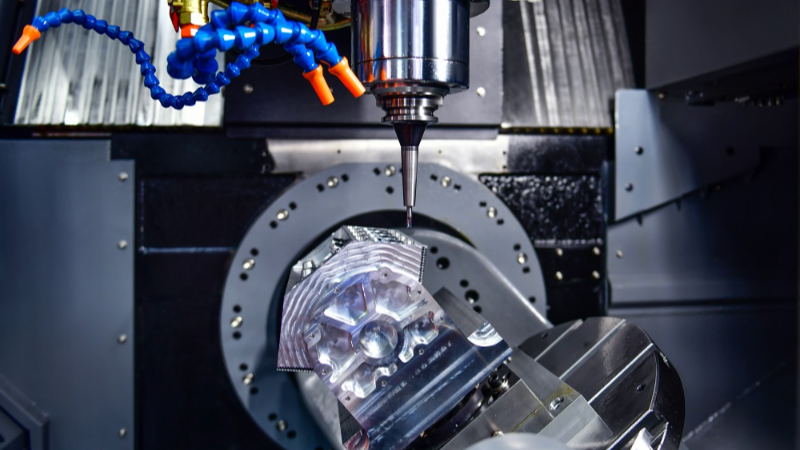
5-axis CNC is most suitable for high-precision aerospace components. The technique enables the milling equipment to reach the material from five angles in a single machining setup.
With this, it becomes easier to achieve intricate designs with less machining time and greater efficiency.
The Advantage of Fewer Setups
With a 5-axis process, machining is completed in a single setup, and the machine automatically adjusts the material to allow milling from different directions.
However, in 3-axis milling, you need to reset the material constantly so it can be machined from various angles. With this, there’s a chance for little errors to occur, thereby hindering accuracy.
Creating Complex Geometries
Most aerospace components, from turbine blades to gear assemblies and structural parts, have complex designs that necessitate the use of 5-axis CNC machining. With the technique, accuracy and consistency are guaranteed compared to any other method.
Conclusion
Aerospace materials possess numerous exceptional properties and benefits, making them suitable for various aerospace structures. With CNC machining, production of complex aerospace components becomes even easier.
When precision and quality matter, AeroCNCParts is your go-to partner. We create a wide range of complex aerospace parts using high-performance materials, advanced 5-axis CNC machining, and highly experienced professionals. We are certified to AS9100, ISO 9001, and NADCAP standards, and we ensure full traceability and 100% inspection throughout our processes. Contact Us Now.

Robert
Robert specializes in the mechanical properties and thermal resistance of aerospace metals and high-performance plastics. He has extensive experience with flight-grade materials, including Aluminum 7075, Titanium (Ti-6Al-4V), Inconel, and PEEK. He optimizes machining strategies for difficult-to-process materials to ensure structural integrity under extreme conditions.