Advanced Ceramics for Aerospace Applications: A Simple Guide
As the aircraft industry continues to evolve, there is a growing need for materials that can remain reliable and effective in demanding operating conditions. Advanced ceramics are not only lightweight but also possess higher strength than most metals.
That said, this simple guide will walk you through all you need to know about advanced ceramics for aerospace applications.
What are Advanced Ceramics?
Advanced ceramics are specialized engineering materials produced using refined powders and specifically used in demanding, high-performance applications, such as the aircraft industry.
They offer outstanding qualities, including resistance to wear, corrosion, and heat, as well as durability, and are selectively made from constituents such as aluminum oxide and silicon carbide.
Properties of Advanced Ceramics
Advanced ceramics possess numerous remarkable characteristics that make them highly valuable in aerospace applications. Here are some important ones.
Extreme Temperature Resistance
Advanced ceramics are appreciated for their ability to function adequately even in high temperatures. They can retain their strength and hardness even in high heat beyond the point where a typical metal can hold.
As such, advanced ceramic applications are appreciated in environments where there is °C consistent exposure to intense heat.
Lightweight Composition
Although hard and possessing high strength, the material has a low density compared to some metals. This low density balances the overall weight of the aircraft, contributing to efficient fuel usage and functionality.
Chemical and Corrosion Resistance
In the aerospace industry, materials with exceptional corrosion resistance are highly valued, as they help ensure part longevity, reliability, and safety.
Ceramics possess a unique ability to retain their structural integrity and performance even in extreme conditions, such as exposure to chemical and corrosive gases.
Hardness
The material is also very hard, making it suitable for use in challenging situations. They can withstand scratches, wear, and pressure without deforming or degrading. As such, they enhance the service life of parts.
Wear Resistance
Due to their high strength, advanced ceramics can withstand stress, pressure, friction, and other extreme conditions without compromising their functionality.
With this, there is little to no need for repair or changing of parts, leading to more cost efficiency.
Electrical Insulation
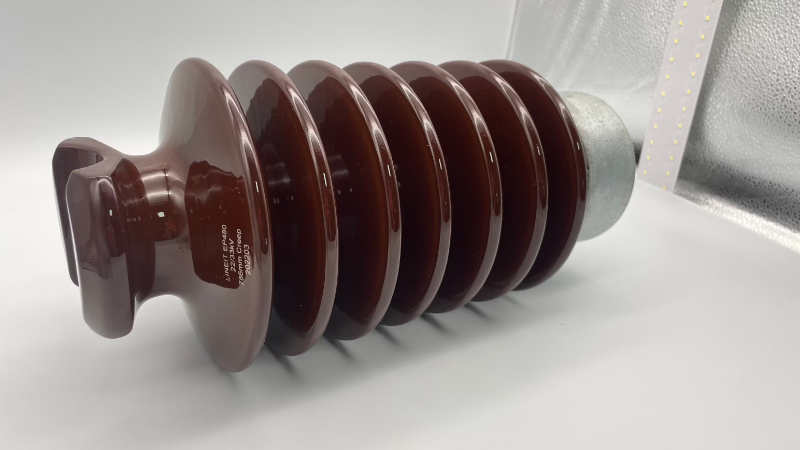
Unlike metals, this engineering material prevents the flow of electric current, making it suitable for aerospace applications where electrical conductivity must be avoided. Despite this, they still retain their ability to withstand heat and temperature.
Examples of Advanced Ceramics
Oxide Ceramics
Oxide ceramics are made up of metals chemically combined with oxygen. They offer outstanding properties, including durability, resistance to wear, corrosion, and an excellent melting point.
Due to their chemical composition, they remain very strong with long service life. Most oxide ceramics do not react, rust, or deform in extreme chemical conditions since the metals present have been fully oxidized.
With this, they are valuable in aircraft applications where there is continuous exposure to high temperatures, corrosion, and chemicals.
Oxide ceramics also offer photocatalytic and pyroelectric characteristics. With this, they are refined to produce complex oxides that comprise oxygen and any two or more elements.
Non-oxide Ceramics
Non-oxide ceramics are also durable and temperature-resistant. They are available in different types depending on their constituents.
Carbide
These are made of metal or semi-metal together with carbon. They are appreciated for their extreme hardness, toughness, and ability to withstand wear and tear. Examples include silicon carbide, titanium carbide, and tantalum carbide, among others.
Nitride
These contain nitrogen and metals and are valued for their durability feature, ability to withstand severe temperatures and chemicals, and low weight. Common examples include silicon nitride, boron nitride, and titanium nitride.
Boride
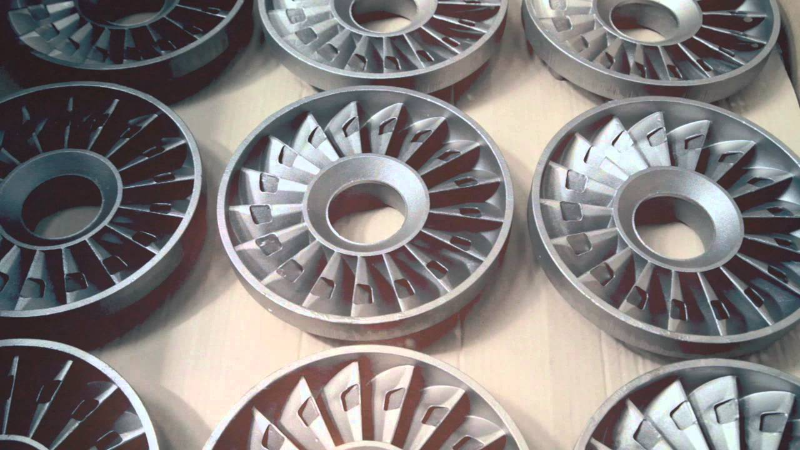
Boride ceramics are made up of boron and metals. They are known for their excellent qualities, including the ability to remain stable and retain their form when exposed to chemicals, as well as remarkable resistance to temperature and wear.
They include titanium diboride, zirconium diboride, etc.
Silicides
This is produced from silicon materials and transition elements, offering excellent qualities such as stability in high heat and metallic conductivity. Popular types are molybdenum disilicide and tungsten disilicide.
Ceramic Matrix Composites (CMCs) in Aerospace
Another advanced ceramics for aerospace applications are CMCs. These engineering materials are composed of ceramic fibre and ceramic matrix, which makes them even stronger and resistant to breakage or damage.
They also have a low weight, the ability to survive fatigue, and thermal resistance, among other benefits.
Comparison to Other Materials
| Characteristics | Plastics | Metals | Advanced Ceramics |
| Maximum Temperature Use (°C ) | 350 | 1500 | 2500 |
| Hardness | Low to Medium | Medium to High | High |
| Impact Resistance | Medium to High | High | Low |
| Flexibility | High | Medium to High | Low |
| Ideal Use Temperature (°C ) | 250 | 1000 | 1200 |
| Corrosion Resistance | Medium | Low to Medium | High |
| Density | Low | High | Medium |
| Electrical properties | Insulative to Conductive | Conductive | Insulative to Conductive |
How are Advanced Ceramics Made?
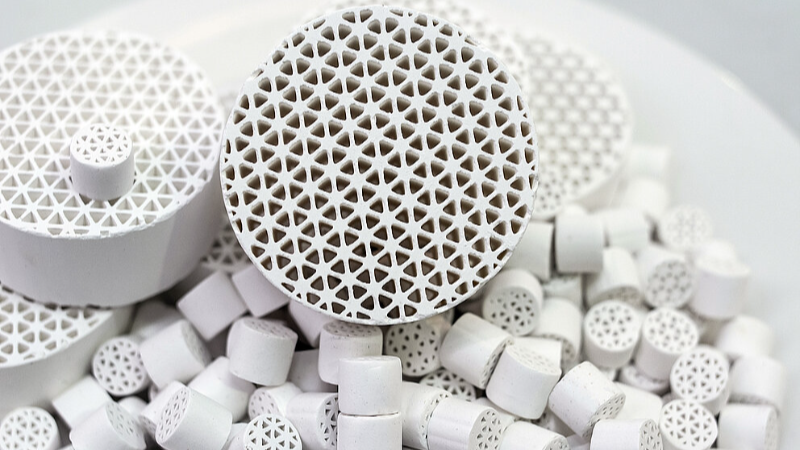
Advanced ceramics are made following three key steps:
Preparation of the Ceramic Powder
This is the first step, which involves preparing the ceramic materials. To enable efficient forming or shaping, the powdery material is combined with a small portion of binders.
The composition and quality of the ceramic powder must be checked here, as it influences the final output obtained.
Shaping of the Ceramic Material
Next, the desired shape of the ceramic is created, which can be achieved through various processes, including dry pressing, casting, and hot pressing, among others.
When shaping the material, precision must be maintained to ensure uniformity and prevent defects, as even minor errors can lead to cracks during the firing stage.
Firing or Sintering
At this stage, the shaped ceramic is treated to an extreme temperature, enabling it to form a strong, dense, and tightly bonded material.
This step helps eliminate any remaining binder or liquid, resulting in a high-strength, corrosion- and wear-resistant ceramic.
Advanced Ceramic Thin Film Fabrication
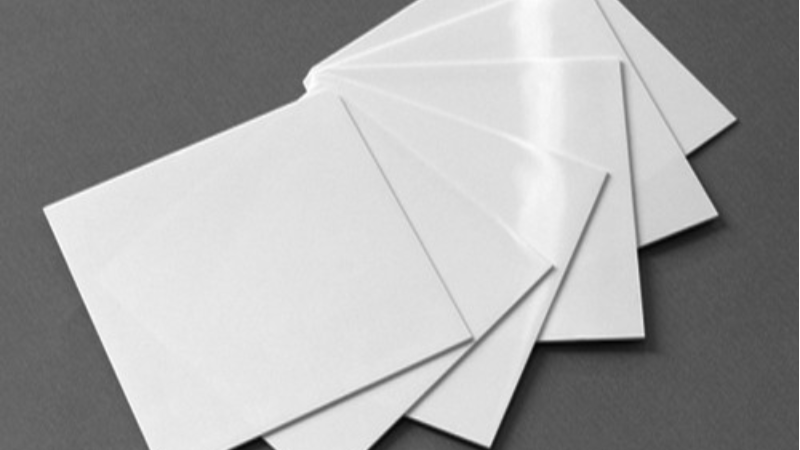
Advanced ceramic thin films are valuable in the manufacture of electronic components and sensors for aircraft.
Compared to regular ceramics made from shaped ceramic powders, thin films are made from thin layers of ceramic that are carefully released onto a substrate.
They are made through vapour or liquid-based procedures, which provide more accuracy in terms of thickness, chemical composition, and physical properties. Popularly used techniques for thin-film ceramics are:
Molecular Beam Epitaxy (MBE): This method enables precise and accurate thickness control, as ceramic film layers are deposited sequentially in a vacuum.
Pulsed Laser Deposition (PLD): This method utilizes a powerful laser to collide with a ceramic, converting part of the material into a gaseous state, which is then deposited onto a heated surface to create a thin film of ceramic.
Chemical Vapor deposition (CVD): In this technique, a thin film is produced from special gases as a result of the chemical activity on the material surface.
Sol-Gel & Spin Coating: This is a solution-based method in which a ceramic solution is applied to a surface and then heat-treated to form a solid ceramic layer.
Spluttering: This process creates a thin film by allowing specific ions to collide with the ceramic material, generating particles that form the ceramic film.
Advanced Ceramics for Aerospace Applications
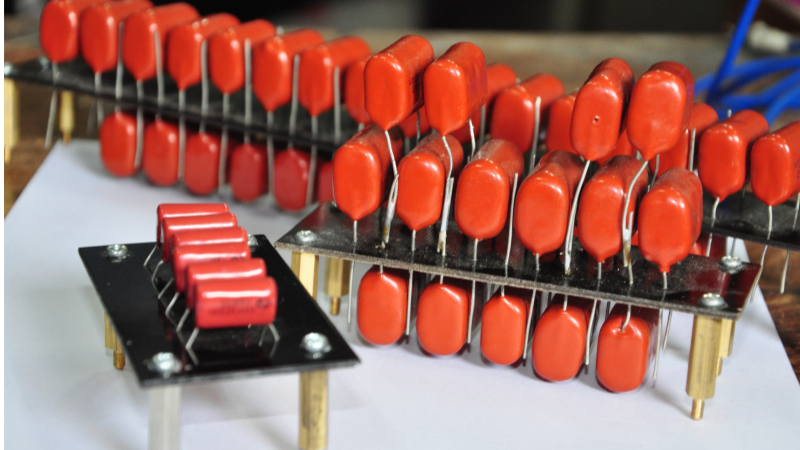
When we talk about advanced ceramics for aerospace applications, several specific components come into play. These are grouped into the following:
Electrical Applications
Advanced ceramics are utilized in the fabrication of various electronic and aerospace components, including sensors and capacitors.
These components are designed in compact sizes but are highly performing, making advanced ceramics even more valuable.
Ceramic materials, such as aluminum nitride, are also widely utilized in this area due to their electrical insulating properties and high thermal conductivity.
Structural Applications
Specialized hard structural ceramics are used in aerospace structural applications. They are usually utilized as thermal barrier coatings (TBC) in the engine component of the aircraft. Ceramics used here can withstand intense temperatures, wear, and corrosion.
Compared to metal, advanced structural ceramics are lightweight and retain their integrity under severe temperature conditions, making them ideal for use in harsh operating environments.
They are thus used for engine parts, exhaust systems, and other applications.
Turbine Applications
For many years, engineers have considered advanced ceramic applications for aircraft engines. One particular ceramic being explored is silicon carbide, specifically for the turbine blades.
This shift aims to minimize fuel consumption while enhancing productivity. Typically, metal turbine blades require a cooling system to prevent melting, as they are subjected to extremely high temperatures.
With advanced ceramics, these blades will function effectively even in temperatures as high as 1500 °C to 1600 °C without needing cooling systems. This helps manage fuel usage while improving efficiency.
Advanced Material Offering Thermal Protection for High-speed Aerospace Applications
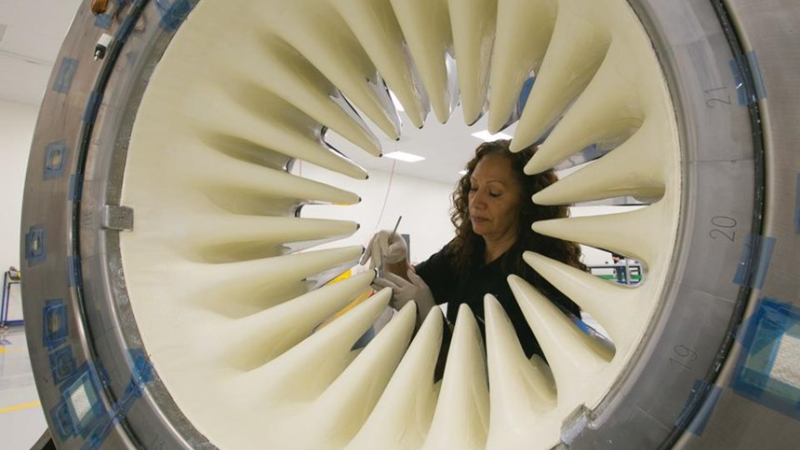
In 2020, a group of scientists created a new type of ceramic for high-speed aerospace use. The goal was to produce a material that can eliminate electromagnetic signals (EMI) while also providing thermal protection.
As such, they come up with a material consisting of the combination of silicon carbon nitride SiCN and yttria-stabilized zirconia YSZ. The YSZ serves as a thermal barrier, while the carbon nanotubes enhance the ceramic’s EMI property.
When this material was subjected to testing, the results showed that it provided extra thermal protection, reducing heat transfer by 22.5% compared to regular ceramics.
Additionally, it retains its strength even at extreme temperatures. Due to the combination of these unique properties, it’s been projected to be a highly valuable material for high-speed aerospace applications.
Conclusion
Advanced ceramics are highly valued in aircraft applications due to the outstanding qualities they offer. Despite being lightweight, they are highly durable and can withstand intense temperatures, corrosion, and wear and tear.
At AeroCNCParts, we guarantee high-quality and accurate aircraft components using carefully selected materials. From advanced ceramics to metals and plastics, we have over 20 years of experience machining a wide range of components, including engine components, structural parts, gear units, and many other components. Our production technique aligns with stringent AS9100, NADCAP, and ISO 9001 standards. Get a quote now.

Robert
Robert specializes in the mechanical properties and thermal resistance of aerospace metals and high-performance plastics. He has extensive experience with flight-grade materials, including Aluminum 7075, Titanium (Ti-6Al-4V), Inconel, and PEEK. He optimizes machining strategies for difficult-to-process materials to ensure structural integrity under extreme conditions.