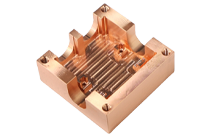
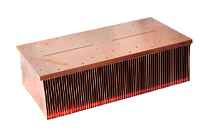
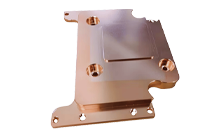
High-Performance Copper for Aerospace Systems

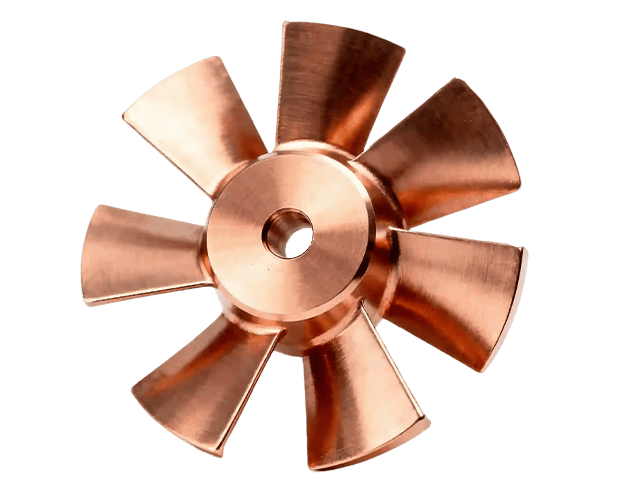
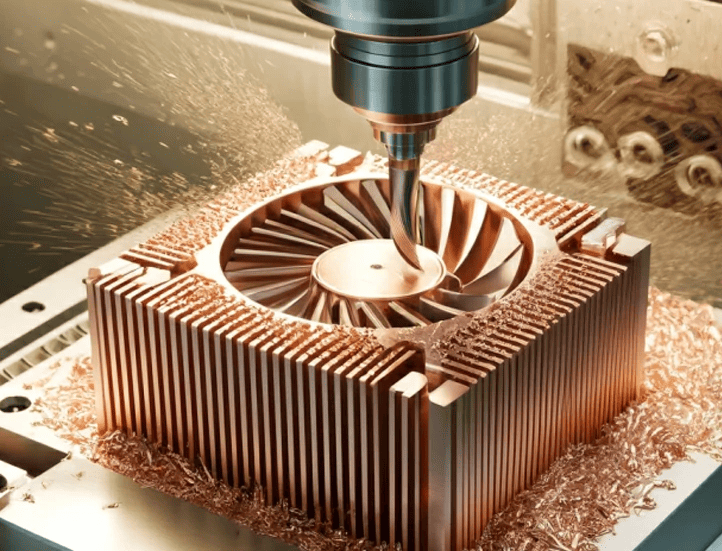
Copper is popularly known for its exceptional electrical and thermal conductivity, resistance to corrosion, fatigue, and malleability. It can be easily fabricated into complex aerospace parts under specialized cooling conditions and supports different finishing techniques.
Request Technical Review
What it is

AeroCNCParts’s Certified Copper Machining Expertise

AeroCNCParts provides precision aerospace copper machining with tolerances up to ±0.005 mm. Every project is controlled under AS9100D and ISO 9001 processes to ensure consistency, traceability, and repeatable performance.

  • Multi-axis CNC machining and advanced CMM validation
  • Complete FAI and lot tracking documentation
  • NADCAP-approved surface finishing and coating options.
  • Fully ITAR-registered for aerospace and defense applications.
At a Glance

Copper Key Properties

Density

8.9 g/cm³

Ultimate Tensile Strength

200 – 500 MPa

Yield Strength

70 – 450 Mpa

Hardness

45 – 110 HB

Elastic Modulus

110 – 130 Gpa

Machinability

Excellent

with precise cooling

Weldability

Very Good

Corrosion Resistance

High

Finishes

Common Surface Treatments for Copper

Nickel Plating

Adds a hard, corrosion-resistant nickel layer.

  • Adds wear resistance and oxidation protection while improving joint integrity in electrical assemblies.

Polishing

Smooths and shines the surface.

  • Produces smooth, low-resistance contact surfaces and improved sealing.

Passivation

Removes surface iron to improve corrosion resistance.

  • Cleans surface impurities and enhances long-term corrosion protection in humid or saline flight environments.
Advantages

Advantages of Inconel

  • Exceptional Conductivity

    Delivers excellent electrical and thermal performance, making it ideal for aircraft power grids and high-frequency circuits.

  • High Machinability

    Allows intricate designs and tight tolerances without warping, even in small precision components.

  • Corrosion and Oxidation Resistance

    Resists environmental degradation when plated or passivated, ensuring long service life.

  • Reliable Joining Capability

    Supports strong brazed, soldered, or welded joints for dependable aerospace integration.

Comparison

C101 VS C110 & C172

High-level comparison of common aerospace copper alloys. Always align to your project spec.

Alloy Strength Conductivity Corrosion resistance Machinability Note
C101 (OFHC Copper) Moderate Very High Excellent Good Oxygen-free alloy used for precision power connectors and sensor housings.
C110 (ETP Copper) Moderate High Very Good Excellent Standard aerospace copper for contacts, terminals, and electrical busbars
C172 (Beryllium Copper) High Good Excellent Moderate Combines high strength with conductivity for springs, actuators, and control parts.
FAQ

FAQs about Copper Machining

What is the best copper alloy for aerospace electrical assemblies?
C101 and C110 offer the highest conductivity, while C172 is ideal when both strength and conductivity are required.
Can AeroCNCParts maintain accuracy on complex copper geometries?
Yes. Our 5-axis CNC systems and CMM inspection ensure precision of ±0.005 mm, even on intricate components.
Are aerospace finishes, such as silver and nickel plating, available at AeroCNCParts?
Absolutely. We provide NADCAP-approved plating and passivation treatments to enhance conductivity and corrosion protection.
Does AeroCNCParts assist in design for manufacturability (DFM)?
Yes. Our engineers collaborate with buyers to recommend the right alloy, tolerances, and surface finish for each design.
What documentation is provided for aerospace compliance?
AeroCNCParts supplies complete CMM inspection reports, traceability records, FAI documentation, and NADCAP finish certifications.